Table of Contents
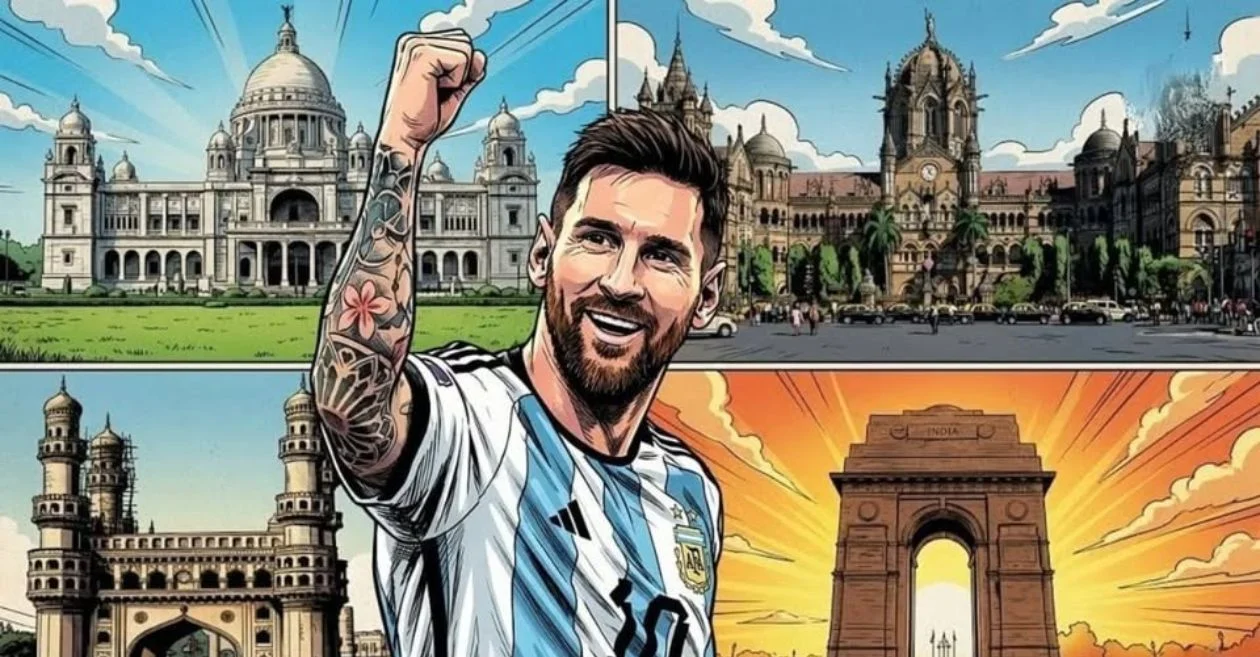
After fourteen long years, Lionel Messi’s return to India felt less like a football tour and more like the second coming. Since his brief 2011 appearance in Kolkata, Indian football followers had survived on grainy highlights, late-night Champions League broadcasts, and endless social media edits. The announcement of the ‘G.O.A.T. India Tour 2025’ detonated that pent-up longing.
Four cities in three days, Kolkata, Hyderabad, Mumbai, and Delhi, promised an intoxicating mix of football, celebrity spectacle, and national obsession. Messi arrived not as a player chasing trophies, but as a living monument to greatness, flanked by his trusted lieutenants Luis Suárez and Rodrigo De Paul. Tickets vanished instantly, resale prices went astronomical, and even before the first flight landed, murmurs of organizational strain began circulating. India was ready. The question was whether the tour was.
Leg 1: Kolkata - The city of joy, The theatre of chaos
Kolkata, football’s spiritual capital in India, greeted Messi like a long-lost deity. Fans camped outside airports and hotels through the winter night, hoping for a glimpse of a passing silhouette behind tinted glass. Inside Salt Lake Stadium, more than 60,000 people arrived hours early, draped in Argentina blue, singing songs Messi would never understand but somehow feel. Then reality struck.
As Messi stepped onto the pitch, he vanished, swallowed by a human barricade of politicians, officials, relatives, and VIPs who treated the ground like a wedding stage. The promised lap of honour dissolved into confusion, security panicked, and Messi was hurried off mid-event.
Bottles flew. Plastic chairs broke. Social media erupted. The celebration curdled into fury as fans realised they’d paid premium prices to watch the backs of bureaucrats. By evening, police intervention, organiser detention, and global headlines had transformed football’s holy city into a cautionary tale of mismanagement. Kolkata didn’t just host chaos, it trademarked it.
Leg 2: Hyderabad - The apology tour begins
If Kolkata was a collapse, Hyderabad became damage control executed with surprising competence. Security tightened, pitch access was restricted, and schedules were- miraculously- followed. Political figures were present but restrained, observing rather than obstructing.
For the first time on the tour, fans actually saw Messi with a football. A penalty shootout exhibition, simple yet sacred, delivered what people had come for: contact, connection, proof of existence. Messi addressed the crowd, smiling easily, as if the previous day hadn’t happened.
A laser show traced his journey from Rosario to Qatar, and his understated green t-shirt look went viral, an accidental symbol of calm after catastrophe. Young academy players exchanged passes with him, moments small in scale but enormous in meaning. Hyderabad didn’t erase Kolkata’s scars, but it reminded everyone what this tour was supposed to be.
Leg 3: Mumbai - Glamour, charity and controlled distance
Mumbai reimagined the tour as a luxury event. Less public frenzy, more curated exclusivity. The city delivered a crossover spectacle where football shook hands with Bollywood and cricket shared the frame.
At the Cricket Club of India, Messi laughed alongside Sachin Tendulkar, an image that alone justified the airfare. Wankhede Stadium buzzed, even without competitive football, as Messi stepped onto turf soaked in sporting mythology. A celebrity match unfolded, watched rather than played by Messi, followed by a charity fashion show and memorabilia auction that raised serious money. Everything worked because everything was controlled, perhaps too controlled. Entry prices excluded many genuine football followers, turning the GOAT into a museum exhibit: admired, photographed, but never approached. It was polished, profitable, and safe, yet oddly distant.
Leg 4: Delhi - The grand finale, minus the grand moment
Delhi promised symbolism and delivered ambiguity. Fog delayed arrivals, security tightened into a fortress, and anticipation peaked around a scheduled meeting with the Prime Minister, until it didn’t happen. The cancellation quietly became the tour’s final controversy. Still, Messi’s interaction with Minerva Academy players brought the focus, briefly, back to Indian football itself.
At Arun Jaitley Stadium, he completed a lap of honour, this time uninterrupted, sending signed balls into the crowd like peace offerings. Jay Shah’s presentation of a Team India jersey encapsulated the crossover ambitions of the tour. Messi’s farewell, soft, polite, and noncommittal, felt final. Traffic gridlocked the capital, security smothered spontaneity, and the event closed not with fireworks, but with relief.
A tour that reflected India more than Messi
The G.O.A.T. India Tour 2025 was never about football, it was about proximity. Seeing Messi, not watching him play. Breathing the same air, not analysing the same match. The tour succeeded financially, failed organisationally, and exposed uncomfortable truths: VIP culture, administrative fragility, and a persistent inability to manage scale.
Kolkata bore the brunt of that failure; Hyderabad redeemed it; Mumbai monetised it; Delhi sanitised it. Through it all, Messi remained patient, professional, and unfailingly composed, his calm a sharp contrast to the chaos orbiting him. The tour will be remembered as messy, historic, frustrating, and unforgettable. It wasn’t perfect. But for millions, it was the only chance they’ll ever get to see the G.O.A.T. in the flesh, and that, in India, is always enough.
Also READ: Mother-in-Law Meltdown 2025: The Peaty–Ramsay wedding that turned into Britain’s classiest civil war