There are matches at a World Cup that feel important and matches that feel genuinely unmissable. France against Norway at Gillette Stadium in Boston on Friday falls into the second category without any debate.
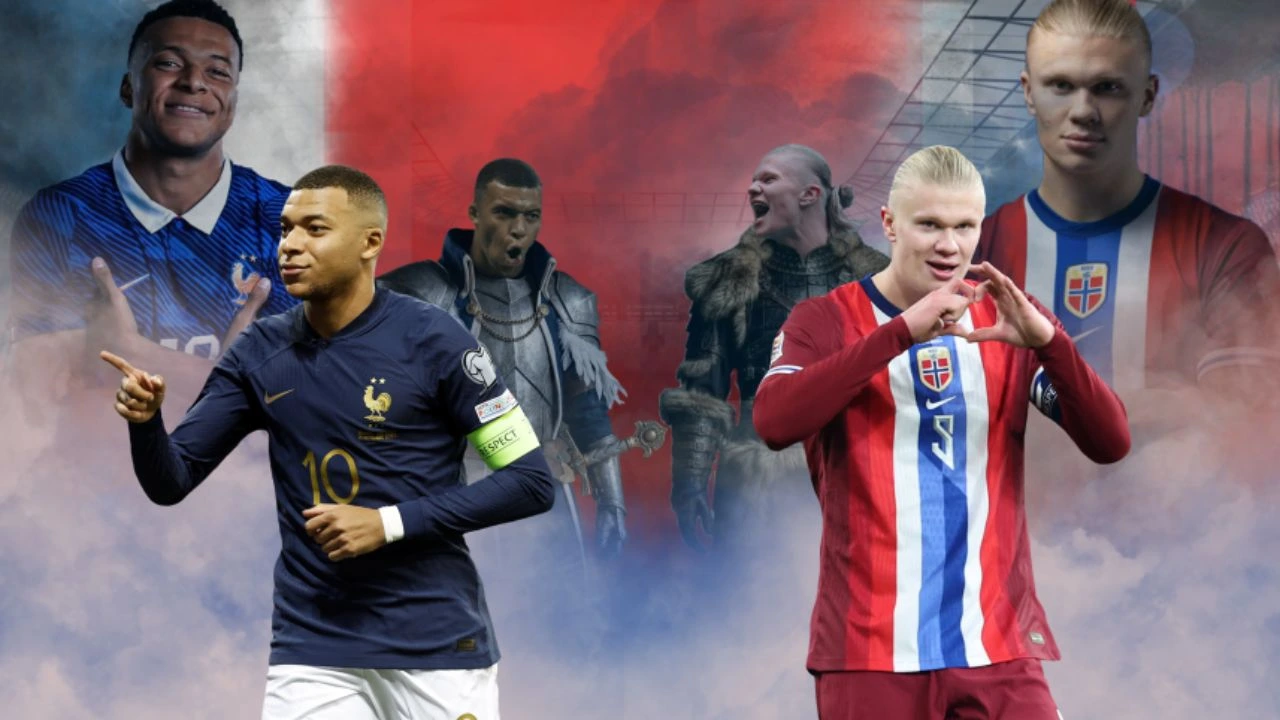
Both teams have already qualified for the Round of 32. Both teams have six points from two games. Both teams have been among the most entertaining sides at this tournament. And sitting at the centre of the whole thing is a head-to-head between Kylian Mbappe and Erling Haaland, each with four goals in two games, each chasing Messi’s five-goal lead in the Golden Boot race, and each representing a fundamentally different type of football genius.
There is no exaggeration involved in saying this is the most anticipated match of the group stage. The football gods owe us a proper game after England vs Ghana on Tuesday, and this has every ingredient to deliver one.
FIFA World Cup 2026: What is actually at stake
On paper, nothing catastrophic happens to either team regardless of the result. Both France and Norway are through. But first place in Group I matters enormously for what comes next, and the two paths look very different.
France currently lead on goal difference, plus five to Norway’s plus four, which means a draw sends France through as group winners. Norway need a win to take top spot. The group winner likely faces a third-placed team in the Round of 32 before a probable Round of 16 clash with Germany, who have won their group. The runner-up faces Ivory Coast or Sweden in the Round of 32, which sets up a different and arguably more manageable knockout route.
This creates a fascinating strategic dimension underneath the headline excitement. Norway’s Haaland has already said publicly that the match is meaningless to him, a statement that is either genuine relaxation or the most transparent piece of psychological warfare at this tournament, depending on how you read it.
France, without their manager Didier Deschamps on the touchline, his mother recently passed away, and assistant Stephane Guion takes charge for this fixture, have every reason to go out and win the group rather than settle for a draw. The mind games are entertaining. The football will be more so.
Mbappe's numbers are getting absurd
Sixteen World Cup games, sixteen goals. That is the ratio Mbappe takes into this match, and it is a number that puts him in a category entirely his own. Miro Klose’s all-time record of sixteen goals came in twenty-four games. Messi’s eighteen goals, the current record, broken at this tournament, came in twenty-eight.
Mbappe has matched Klose’s total in thirty-three percent fewer appearances. He has scored in two World Cup finals. He scored a hat-trick in one of them. He has now reached one hundred caps for France with sixty goals and forty assists, one hundred goal involvements in one hundred international appearances, and he has done all of this while consistently facing criticism about his team contribution, his lifestyle, and whether his performances for club and country are consistent enough.
The criticism has always been somewhat beside the point. If you have a striker who scores at the rate Mbappe scores, questions about his link-up play and pressing numbers become increasingly academic.
Against Norway, he will lead France’s attack in their 4-2-3-1 shape with Ousmane Dembele centrally behind him and Michael Olise, one of the most dangerous creators at this tournament, on the right. Desire Doue gives France a direct option from the left. The combination of pace and technical quality across the front four is something Norway have not faced in anything close to this form in either of their first two games.
The tactical setup France use is built on balance and transition speed. When Tchouameni or Rabiot win the ball in midfield, which they do regularly because they are among the best midfield pivots in world football, a single forward pass can release Mbappe in behind before a defence has time to reset.
France have conceded only one goal across their two group games against Senegal and Iraq. They have scored six. The ruthlessness is not accidental. It is the product of a system that is calibrated almost perfectly for the way Mbappe operates.
Haaland and what Norway actually are
The temptation is to treat Norway as the plucky dark horse who have a superstar striker and not much else. The reality is considerably more interesting. Norway have scored seven goals in two games, more than France, and four of those seven came from players who are not Haaland.
Defenders and midfielders have contributed four goal involvements. Sander Berge, Marcus Pedersen, David Moller Wolfe and Fredrik Aursnes have all had moments. This is not a one-man team hiding behind a superstar. It is a team with genuine collective quality that also happens to have the most complete goal-scorer in world football leading their attack.
Haaland’s numbers at this tournament are the kind that make you stop and check them twice. Four goals in two games. The fewest touches of any player to have played the full ninety minutes in both matches. Twenty-four percent of those touches converted into shots.
The highest expected goals figure of any player in the tournament despite barely touching the ball by conventional outfield standards. It is a portrait of a player who has reduced his game to its absolute essence, get into the right position, receive the ball in that position, score, and who executes each step with such reliability that the efficiency figures look almost fictional.
Martin Odegaard feeds him, and that combination is what makes Norway genuinely threatening against France. Odegaard acts as the creative engine of Norway’s counter-attacking system, whenever they win possession, the first objective is to find him, and his next objective is to release Haaland as quickly as possible.
Antonio Nusa and Alexander Sorloth provide width, pace and physical presence around Haaland that forces defenders to make difficult choices. If they double up on Haaland, Nusa and Sorloth find space. If they focus on Nusa and Sorloth, Haaland gets the ball in his preferred positions and the match is essentially over.
France vs Norway: The 3 tactical battles that define this game
The first and most obvious is Haaland against William Saliba and Dayot Upamecano. France’s centre-back partnership is excellent, Saliba in particular has been one of the best defenders in European football for two consecutive seasons, and they have the physicality and pace to compete with Haaland in ways that most international defenders simply cannot.
But Haaland only needs one moment. He has proven repeatedly at club level and now at international level that he converts chances at a rate that makes defensive excellence a necessary but insufficient condition for keeping him quiet. A single error, a single ball in behind, and it is in the net.
The second battle is Tchouameni against Odegaard. If France’s holding midfielder successfully limits Odegaard’s influence on the game and prevents him from finding those early passes that trigger Norway’s counter-attacks, Norway become considerably more predictable and easier to contain. If Odegaard finds space between the lines and starts operating freely, France’s defensive structure comes under a different kind of pressure, the kind that creates the exact situations Haaland specialises in exploiting.
The third battle is Mbappe against Julian Ryerson, who is not expected to feature here after picking up an injury, meaning Marcus Pedersen takes that right back role. Pedersen is a more attacking-minded player than Ryerson and is likely to push forward, which creates space in behind that Mbappe will identify and attack relentlessly. Every time Pedersen goes forward against France’s left side, there is a calculation to be made, the benefit of his attacking contribution versus the risk of Mbappe running at whoever covers behind him.
The Deschamps absence and Predicted XIs
This is not nothing. Didier Deschamps has managed France since 2012, fourteen years, and his assistant Guion takes the touchline for the first time in a competitive fixture of this magnitude.
Deschamps himself highlighted after the Iraq game that he was not satisfied with France’s positioning across the pitch, noting too many players were clustering on one side rather than providing balanced coverage. Whether Guion implements any tactical adjustments based on that feedback, and whether the players respond the same way to him in-game as they do to Deschamps, are genuine unknowns.
France are a team experienced enough at this level to not fall apart in their manager’s absence. They have the individual quality to execute even without optimal tactical management. But the hydration breaks and the additional stoppages in this format of the World Cup do give managers more opportunities to intervene and adjust in real time, which means the Guion factor is slightly more relevant here than it might have been under a more traditional match structure.
Predicted lineups
France predicted XI (4-2-3-1): Maignan; Kounde, Saliba, Upamecano, Digne; Tchouameni, Rabiot; Olise, Dembele, Doue; Mbappe.
Norway predicted XI (4-3-3): Nyland; Pedersen, Ajer, Heggem, Moller Wolfe; Berge, Aursnes, Odegaard; Sorloth, Haaland, Nusa.
France vs Norway: Match prediction
France win, but not comfortably and not without drama. The prediction of a nil-nil, which someone always makes before the game nobody wants to see turn into a nil-nil, is genuinely impossible to take seriously here.
France scored three goals in each of their first two games. Norway scored four and then three. There is too much attacking quality on both sides and too much individual ambition from Mbappe and Haaland in terms of the Golden Boot race for either side to sit back and play cautiously.
The most likely scenario is France score first, their transitional speed and the quality of the Mbappe-Dembele-Olise combination should create openings against a Norway side that has shown defensive vulnerabilities, and Norway then have to open up to chase the game, which creates the spaces that allow Mbappe and company to add more.
Haaland gets at least one goal because Haaland always gets at least one goal, and the final ten minutes are chaotic in the way this tournament has consistently delivered. France win 3-2, top the group, and Norway go through in second knowing they have just produced their best performance at a World Cup since 1998.
Frequently Asked Questions
Yes. Kylian Mbappé is expected to start as France look to secure top spot in Group I and maintain their winning momentum heading into the knockout stage.
Both Kylian Mbappé and Erling Haaland have scored four goals in their first two matches, making their head-to-head one of the biggest attractions of the group stage.
The winner will likely finish top of Group I, which could result in a more favourable knockout-stage path and avoid tougher opponents later in the tournament.
France manager Didier Deschamps is absent following a family bereavement, with assistant Stéphane Guion taking charge for the Group I fixture.
France enter the match as slight favourites thanks to their squad depth, defensive solidity and experience, although Norway have shown enough attacking quality to trouble any team.

Amar Pal Singh Bhalla is a sports writer covering cricket, football and tennis.
Based in India, he has followed the game for the last few years and writes
match analysis, previews and features for Beyond The Score