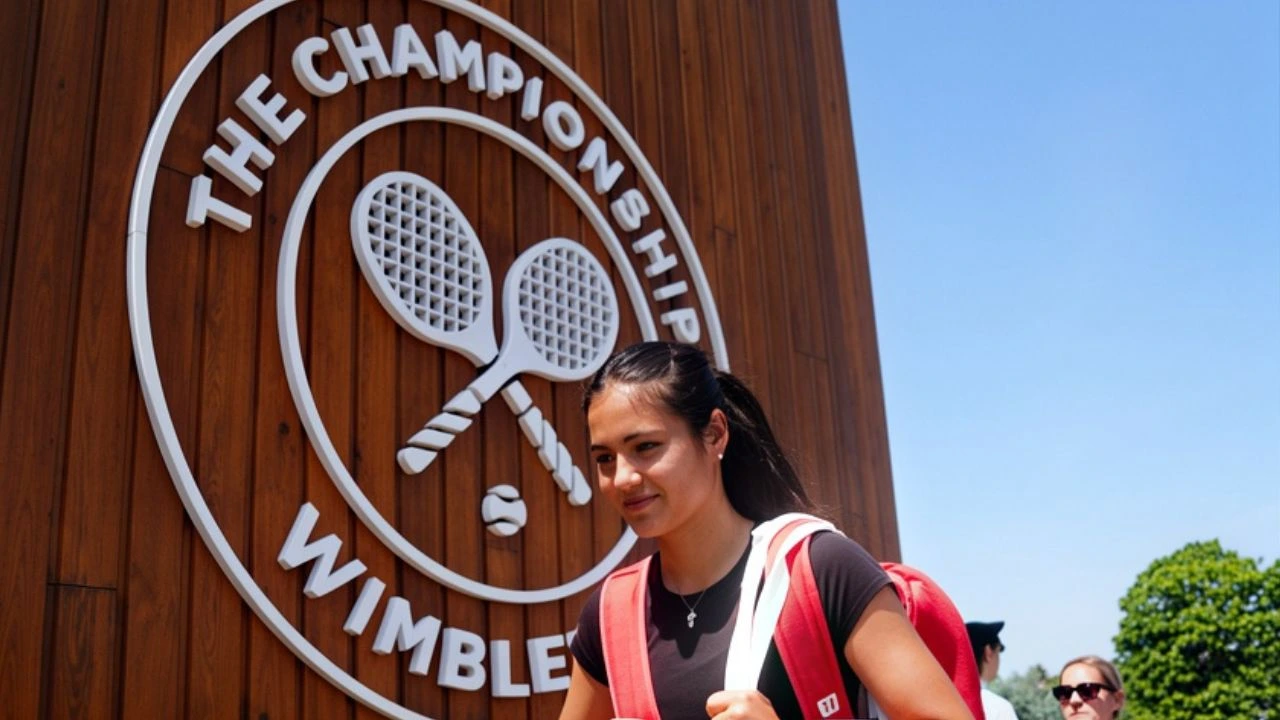
Emma Raducanu has not been on a practice court since Monday. She was spotted on Wednesday leaving Wimbledon‘s facilities wearing an orthopaedic boot on her right leg. She has no court booked at Aorangi Park for the days remaining before the tournament begins.
Three days before the first ball is struck at the All England Club, Britain’s best hope of a home grand slam title is managing what her team are carefully calling a nagging injury and the timing could not be more brutal, because the form she has carried into this Wimbledon is the best she has shown since that extraordinary summer of 2021 that made her famous.
The story of how Emma Raducanu got back to this point is genuinely fascinating. The story of whether she can actually play at Wimbledon is the one everyone is holding their breath over right now.
The five years that went wrong
When Emma Raducanu won the US Open in September 2021 as a qualifier, beating ten opponents without dropping a set, becoming the first qualifier in the Open Era to win a grand slam, the assumption was that a generational talent had arrived and the titles would follow. Instead, what followed was five years of coaching changes, injury setbacks, and a fundamental confusion about what kind of player Emma Raducanu actually was and wanted to be.
The numbers tell the story plainly enough. Before this year, her US Open victory had been her only senior final in nearly five years of professional tennis. Two finals in almost half a decade. For a player of her obvious ability, playing on a tour where she had demonstrated she could beat anyone on her best day, that record is extraordinary in the most frustrating sense of the word.
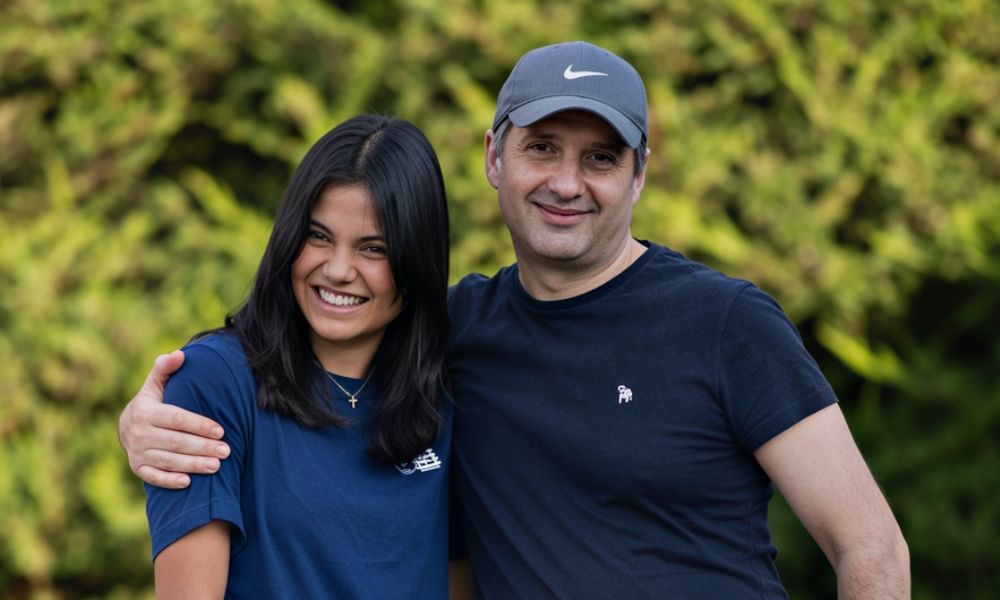
The coaching carousel was central to the problem. After the US Open, her father Ian, who has been an influential and at times controlling figure in his daughter’s career, was understood to have pushed for the dismissal of Andrew Richardson, the 6ft 7in coach known throughout tennis as Flex, who had been in her box for the entire US Open run. Richardson‘s departure left a deep wound between two families who had known each other for the best part of a decade, and it began a sequence of coaching appointments that would gradually pull Emma Raducanu away from the instinctive, attacking game that had made her so compelling.
The most significant of these was Francis Roig, a former coach of Rafael Nadal, who was fired in January of this year. Roig’s vision for Emma Raducanu was a more grinding, physical style, heavy balls hit cross-court, rallies extended, opponents worn down through consistency rather than beaten through aggression. It is a valid approach for certain types of players. It was precisely wrong for Emma Raducanu.
Why changing her game was always going to fail
Jelena Ostapenko, who sits in Emma Raducanu‘s potential draw at Wimbledon, offers the clearest possible case study for what happens when coaches try to change a player whose natural game is built on taking risks and hitting through the ball early in the rally.
Ostapenko won the French Open in 2017 at the age of 20 in one of the great shock slam victories, playing with the same instinctive aggression and willingness to go for winners that defines Emma Raducanu at her best. She has not won another grand slam since, and she is characteristically direct about why.
“There were a few coaches that tried to change my game style, which influenced me in a really bad way,” Ostapenko has said. “The kind of player like her, she was hitting the ball, she was going for the shots, and that brought her results. The big mistake for the coaches is when they come in and they try to teach the players to not hit the ball, to do the top spin, and it’s a big mistake. The player has to say how she feels, and if she feels like it’s not working, they should go with the player’s feeling, and especially if it brought good results for her. Why should you change anything?”
It is a statement that applies to Emma Raducanu so directly it almost reads as though Ostapenko wrote it with her specifically in mind. Raducanu’s game is built on playing close to the baseline, taking the ball early, and hitting winners to the corners before the point has time to develop into the kind of extended rally where a more consistent opponent might take control.
That style suits certain surfaces better than others, and it suits grass better than almost anything else. The fast, low bounce at Wimbledon means that one clean aggressive shot early in the rally is frequently enough to win the point outright. On clay, the ball sits up and gives defenders time to recover and extend the rally. On grass, the same shot ends the point immediately.
This is why Wimbledon has always been Emma Raducanu’s best chance and why the coaches who tried to turn her into a clay-court grinder were not just wrong tactically, they were wrong in a way that actively damaged her game on the surfaces where she is most dangerous.
“We have been working on the brand of tennis that I really want to play,” Emma Raducanu said recently, and the understated phrasing of that sentence carries everything that happened in the five years between the US Open and now.
The phone call that changed everything
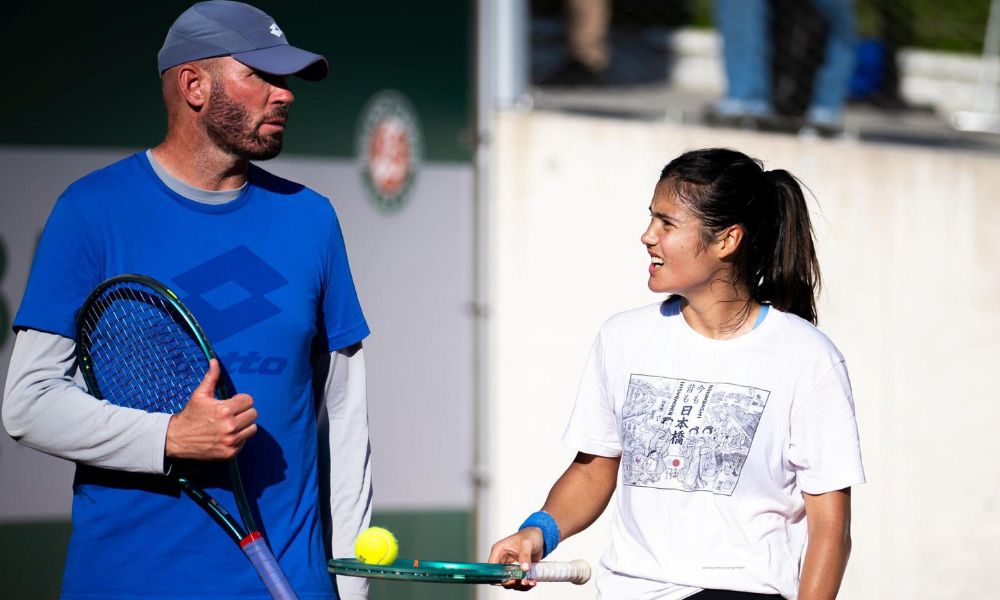
Earlier this year, Raducanu reached out to Andrew Richardson, the coach her father had effectively ended her working relationship with after the US Open triumph, for a spring training week in Alicante, where Richardson is now based. The rift between the two families had been significant. The termination had not been handled well. And yet Raducanu, recognising that she needed to get back to what had worked before the coaching carousel began, made the call.
The week in Alicante went well enough that she rehired Richardson a few weeks later. He is now a permanent presence in her setup alongside Alexis Canter, and his reappearance has coincided with the return of exactly the game style that defined her 2021 season, aggressive, instinctive, close to the baseline, going for winners early.
Former coach Mark Petchey, who has watched her development closely over the years, was unequivocal about what this means for her Wimbledon prospects. “She has still got a lot of runway ahead in tennis if she decides to use it. Especially on the grass, because there’s no question in my mind this is her best surface.”
What the Queen's run actually proved
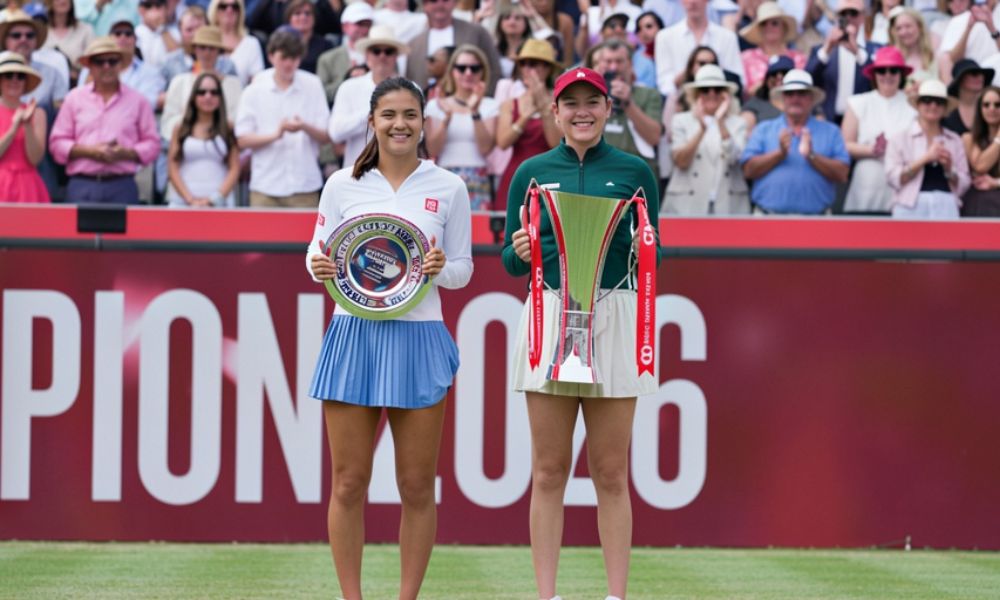
The evidence that the Richardson reunion is working showed up most visibly at the Queen’s Club Championships two weeks ago, where Raducanu reached the final, only her third professional final in five years of competing at the highest level. The route to that final included victories over Sorana Cirstea and Iva Jovic, both top-20 players, both beaten in straight sets on a grass surface that most players treat as a brief novelty on the way to Wimbledon rather than a genuine opportunity.
Raducanu does not treat grass as a novelty. Despite the injuries that have interrupted her career, she has played more matches on grass than the majority of players on tour, some of whom arrive at Wimbledon with only two or three competitive matches on the surface in their entire careers. The accumulated feel for the bounce, the timing, the way the ball behaves off a grass court is not something that can be replicated in practice. Raducanu has it. She has built it over years of actually playing on the surface.
The final against Donna Vekic ended in defeat, but the run to it told a more important story, this is a player who can compete with the best in the world on her preferred surface when playing the game she actually wants to play. The result against Vekic was Raducanu’s second defeat in a professional final, but the fact of being in a final at all, combined with an earlier final this year making it two in a single season, represents a level of sustained performance she has not been able to access in years.
“I have just been dealing with a few niggles over the past few weeks,” Raducanu said after the Vekic match, which in retrospect reads as a more significant statement than it seemed at the time. The right-leg concern that has emerged in the days since appears to be a new development rather than an extension of an existing issue, and that distinction matters because a fresh injury three days before a major carries’ different implications than a managed chronic problem.
Wimbledon 2026: The draw, the doubts and what comes next for Emma Raducanu
Raducanu is seeded 30th at this Wimbledon, and the draw has not been kind. Her first-round opponent is Croatia’s Antonia Ruzic, against whom she holds a losing 2-1 record. If she gets through that, Jelena Ostapenko, herself managing fitness concerns after withdrawing from her Eastbourne semi-final on Friday with illness, could await in the second round. And in the third round, in what would be a repeat of last year’s memorable battle at the same stage, world number one Aryna Sabalenka sits as the potential opponent.
The seeding at 30 has produced exactly the tough early draw she was hoping to avoid. Being seeded was supposed to help, Emma Raducanu has spoken about the importance of getting herself into seeded positions at grand slams specifically to avoid difficult early rounds, but 30th has not offered the protection she needed, leaving two dangerous unseeded players in her opening section before the potential Sabalenka encounter.
Her practice partner and close friend on tour, Fran Jones, has spoken about what makes Raducanu such a useful hitting partner, specifically the way Jones’s varied game, mixing shots and styles, provides challenges that are different from facing a purely aggressive player.
It is an interesting observation because Jones has identified something that has genuinely been a weakness in Emma Raducanu’s game: opponents who mix things up, who are not playing a consistent style that Emma Raducanu can read and attack early, have historically given her more trouble than those who play a straighter, more predictable brand of tennis.
Plan B – the ability to adapt and find a way through when the instinctive aggressive approach is not working, is something Emma Raducanu still needs to develop, even as she has rediscovered her best game style.
Why this matters beyond Tennis
If Emma Raducanu is forced to withdraw from Wimbledon before even playing a match, it will represent one more hammer blow in a career that has been defined as much by what has not happened as by the one extraordinary fortnight in New York that made her famous. The fifth anniversary of that US Open victory is approaching, and the questions about where her career is heading are still legitimate ones even in a year when she has shown the best form of her post-slam career.
The surgery on her ankle and both wrists that kept her out of Wimbledon in 2023 felt like the lowest point. Coming back from that, rebuilding, and arriving at this Wimbledon with genuine momentum and genuine form felt like the story completing its arc. The orthopaedic boot changes that feeling, not definitively but enough to send the familiar anxiety running through British tennis circles.
The excitement that had been building, quietly at first, then more audibly from people whose sober judgement usually keeps them away from big predictions, was real. Petchey is not given to overstatement. When he says grass is unquestionably her best surface and she has a lot of runway left, he is saying something meaningful. And the grass at Wimbledon, with its pace and its low bounce, is genuinely the one environment where Emma Raducanu‘s specific combination of athleticism, aggressive ball-striking and instinctive shot selection is most likely to carry her deep into a major tournament.
Whether she gets to prove that over the next two weeks is now a question that an orthopaedic boot and three missed days on the practice court have made genuinely uncertain. For now, the hope is simply that she makes the start line. The rest can follow from there.
Frequently Asked Questions
Emma Raducanu is managing a right-leg injury just days before Wimbledon, raising concerns over her fitness and availability for the tournament.
Raducanu has not withdrawn from the tournament, but her lack of practice and recent appearance in an orthopaedic boot have cast doubt over her participation.
Raducanu returned to Andrew Richardson in an effort to rediscover the aggressive playing style that helped her win the 2021 US Open.
If she progresses, Raducanu could meet Jelena Ostapenko in the second round before a potential third-round showdown with world No. 1 Aryna Sabalenka.
If fully fit, Raducanu has the game to challenge deep into the tournament, but her injury concerns make her fitness one of the biggest storylines heading into Wimbledon.

Amar Pal Singh Bhalla is a sports writer covering cricket, football and tennis.
Based in India, he has followed the game for the last few years and writes
match analysis, previews and features for Beyond The Score