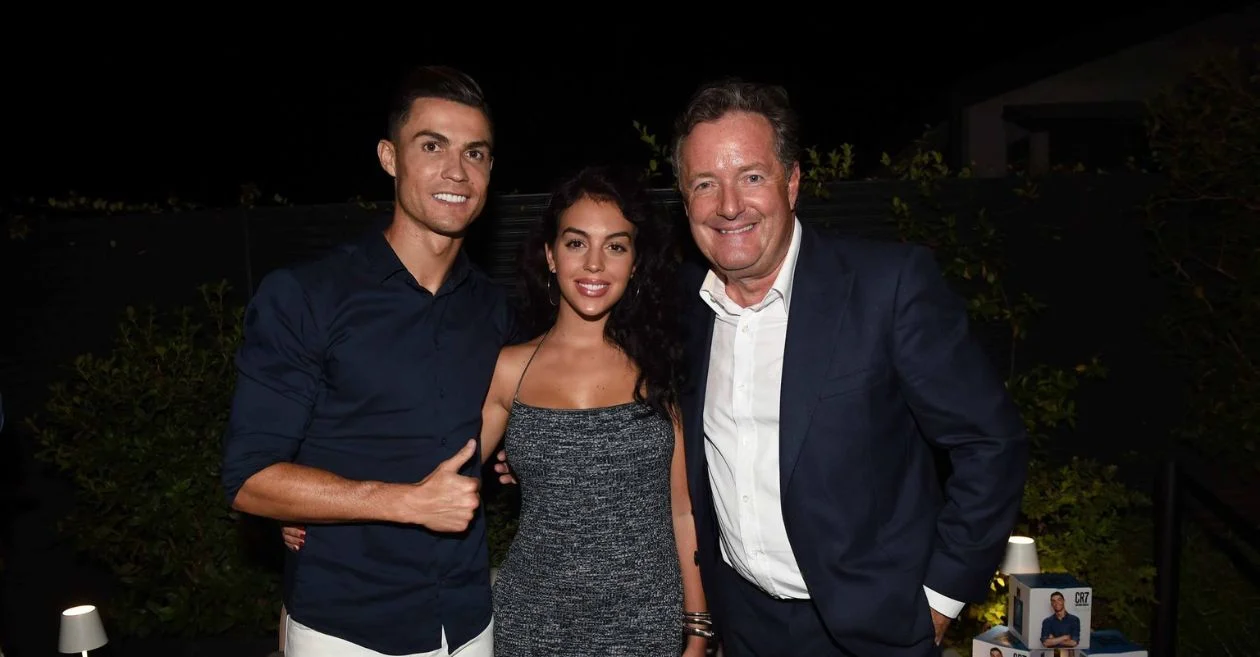
Ronaldo did not show up to chat. He arrived like a man clearing a battlefield with memory, precision, and the emotional clarity of someone who has run out of patience. The interview with Piers Morgan felt less like a conversation and more like a carefully timed demolition sequence.
No one was safe. Not the club, not the manager, not the ex-teammates who discovered microphone bravery, and definitely not the modern football generation that confuses talent for entitlement. Ronaldo spoke like a man who had seen the inside of excellence and returned to find mediocrity being celebrated. There was no ego without reason. There was frustration sharpened by experience.
He had carried expectations for years, globally, and he walked into Manchester United expecting an institution worthy of its name. Instead, he found comfort zones stitched into every hallway. This was not a legend seeking sympathy. This was a competitor pointing out rot that others politely ignored. The interview was not an explosion. It was a diagnosis.
Table of Contents
The training ground that stayed in 2009
Ronaldo returned expecting evolution but got nostalgia disguised as tradition. The training center felt like it had been locked in a museum exhibit while the entire sporting world accelerated into sports science and innovation.
The gym still carried the same machines, the same layout, the same approach that belonged to an era with flip phones and early social media. He saw modern clubs turning recovery into performance art with cryo chambers, altitude systems, and nutrition labs, while United seemed content polishing memory rather than upgrading reality. It was like reuniting with an old friend only to discover they had not grown, learned, or changed at all.
He was not disappointed because he is demanding. He was disappointed because he knows what standards look like when greatness is taken seriously. Manchester United still spoke the language of legacy, but everything inside the building whispered stagnation.
The manager respect equation
Ronaldo did not play the respect game like a guessing puzzle. For him, respect is a two-way transaction. When he was treated like a decorative inconvenience rather than a professional competitor, the relationship collapsed instantly. His presence was not viewed as leadership but as an obstacle to someone else’s tactical branding exercise.
Ten Hag wanted authority. Ronaldo wanted accountability. The two aims were never aligned. The public narrative framed Ronaldo as emotional, but internally he saw a manager who preferred theory to experience and control to collaboration.
He can accept being benched, rotated, repurposed, or instructed. He cannot accept being dismissed while being used as a performance prop. Once he understood the dynamic was personal rather than strategic, the bridge burned itself.
The feeling of betrayal inside the club
Ronaldo didn’t describe what happened at United as simple disappointment. For him, it was like walking into a room filled with familiar faces only to realize every handshake came with hidden knives. The betrayal wasn’t loud or dramatic. It came softly, quietly, from people who once smiled at him in corridors, who posed beside him in photos, who spoke about loyalty but treated it like a marketing slogan.
Ronaldo saw individuals inside the club positioning themselves for influence, shaping press stories, and whispering narratives behind office doors. It felt less like a football institution and more like a political boardroom where status mattered more than standards. He wasn’t hurt because he expected special treatment. He was hurt because he expected honesty.
The club had become a place where survival instincts replaced shared purpose. Ronaldo understood he was no longer being seen as a leader returning home. He was being seen as an asset whose nostalgia value could be maximized until it became inconvenient. That realization didn’t break him emotionally. It clarified how far the club had drifted.
Wayne Rooney’s public criticism
Ronaldo listened to Rooney’s remarks not with anger, but with the tired amusement of a man who has seen this dance too many times before. He recognized the pattern instantly: a retired star reinvents himself as a commentator and needs a headline to remain relevant in the conversation.
Ronaldo understood Rooney wasn’t speaking from personal insight but from the safe distance of media punditry, where opinions are rewarded more for volume than accuracy. The comparison between them didn’t need defending; history had already written that chapter.
Ronaldo saw this as part of the modern football ecosystem: ex-teammates picking safe targets, building TV moments, and gathering applause in studios that reward controversy. He didn’t clap back because he didn’t need to. Silence becomes the loudest response when achievements speak across decades. He processed it not as betrayal but as inevitable: when you have stood at the very top, the world will always look for ways to pull you back down just to feel level.
The almost move to Manchester City
When Ronaldo revealed how close he was to signing for Manchester City, he wasn’t confessing regret. He was revealing how logic and emotion collided.
City represented modern ambition: data-driven recruitment, stability, elite sports science, and a defined identity under a manager who knows exactly what football he wants to play. United responded to rumors not with a strategic plan but with emotional nostalgia, a quick call, a dramatic return, a marketing dream.
Ronaldo realized in hindsight that while City was building a future, United was busy selling the past. His return was scripted as a fairy tale, but fairy tales collapse fast when reality doesn’t match the storytelling. City offered a machine; United offered memory.
He now sees that sentiment can create headlines but cannot produce performance. The game moves forward. Clubs that cling to heritage instead of progress end up reenacting history rather than making new chapters. Ronaldo walked into a museum when he needed an arena.
The personal tragedy that changed everything
In the interview, Ronaldo spoke about loss in a way that stripped every layer of fame away. His grief didn’t pause because football demanded schedule compliance. His world at home had shifted permanently, and he was expected to continue like nothing fractured. He returned to training carrying a silence that most people cannot even imagine.
The tragedy didn’t weaken him. It hardened his clarity. Football was no longer a stage for legacy; it became a responsibility he carried while struggling to keep his family steady. When the club responded with procedure instead of compassion, Ronaldo understood something foundational had changed: he was no longer seen as a human being with a life outside goals and statistics.
The disconnect wasn’t about contracts or minutes played. It was about emotional oxygen. Ronaldo never asked for sympathy. He expected understanding. When that failed, so did his relationship with the institution that had once felt like home.
The young generation problem
Ronaldo wasn’t attacking youth. He was diagnosing culture. He saw players walk into elite football with talent but without hunger. The younger generation enjoys the lifestyle of superstardom before earning the performance that justifies it.
Ronaldo grew up in an environment where improvement was carved through repetition, discipline, and obsession. Now, he watches players scroll through validation rather than chase mastery. Social media has replaced mentorship. Attention has replaced ambition. They want the highlight but not the grind.
Ronaldo tried to lead by example, but examples only work when people are willing to learn. He saw players who would rather call themselves stars than become champions. It wasn’t arrogance. It was misdirection. Ronaldo wasn’t bitter about them. He was frustrated because he knows what greatness costs, and he sees how easily potential gets wasted when effort becomes optional.
The missed pre-season context
Ronaldo did not skip pre-season to rebel. He stepped away because his reality demanded it. While his family was enduring crisis, the world outside built gossip like it was entertainment. He watched headlines shape narratives before truth had a chance to breathe. The club approached the situation like a logistical inconvenience instead of a human emergency.
Ronaldo learned then that sympathy is rarely offered to those who appear strong. He returned not looking for forgiveness but expecting understanding, and when he found judgment instead, the emotional distance became irreversible. It wasn’t the absence that broke trust. It was the reaction to it. Ronaldo realized that the institution he once bled for had become one that measured him in utility rather than humanity.
The club that LOST its standard
When Ronaldo described United as a club that forgot how to demand excellence, he was not insulting the badge. He was diagnosing the culture. The name still commands global respect, but the internal engine has slowed. He saw players comfortable with mediocrity, staff comfortable with repetition, and leadership comfortable with maintaining appearance instead of pursuing evolution.
Great clubs obsess over improvement. United seemed to mourn history more than build future. Ronaldo did not see urgency in training, hunger in preparation, or fear of failure in performance. The club had become a brand with stadium tours and merchandise lines, but without the competitive fire that once terrified Europe. Ronaldo did not hate the club. He hated what it settled for.
Also READ: Cristiano Ronaldo’s jaw-dropping $5 million yes – The ring that outshines some nations’ GDP
The sir Alex legacy reminder
Ronaldo mentioned Sir Alex not to romanticize the past but to point to the last time standards were absolute. Under Ferguson, excellence wasn’t requested. It was required. There was clarity in expectation, identity, purpose, and accountability.
Ronaldo returned to find structure replaced by slogans. Sir Alex embodied conviction. The modern United embodied committee decision-making. Ronaldo wasn’t longing for nostalgia. He was reminding everyone that greatness is a culture, not a memory. And until United stops treating history as decoration and starts treating it as instruction, the club will remain a museum tour rather than a football force.
Frequently Asked Questions
Ronaldo’s central message was that Manchester United has fallen behind in standards, both structurally and culturally. He highlighted outdated training facilities, lack of sporting direction, and internal decision-making driven more by politics than performance. His criticism was not emotional outburst; it was a call-out of organizational stagnation from someone who has lived inside elite environments.
Ronaldo stated he felt betrayed by individuals inside the club, not the fans. He described seeing people who publicly showed loyalty but privately pushed narratives that blamed him for the team’s issues. He believed some senior figures wanted him out, not for football reasons, but to protect their own roles and influence. The betrayal he referenced was institutional, not personal.
According to Ronaldo, the conflict was about mutual respect, not playing time. He felt he was treated as a symbolic inconvenience instead of a competitor. Ronaldo said that Ten Hag wanted to assert authority rather than collaborate, and once Ronaldo recognized the treatment was personal rather than tactical, the relationship became irreparable.
Ronaldo revealed that Manchester City represented a modern, well-structured football project with clear planning and ambition. United reacted emotionally, asking him to return based on history and loyalty. Ronaldo acknowledged that the move back to United was motivated by nostalgia, while City offered a future built on structure and performance continuity.
During the period of family loss, Ronaldo said he needed empathy, not protocol. He felt the club responded with procedural coldness rather than human understanding. The emotional disconnect created a permanent break between him and the institution. His love for football remained intact, but his trust in Manchester United as a supportive environment was lost.