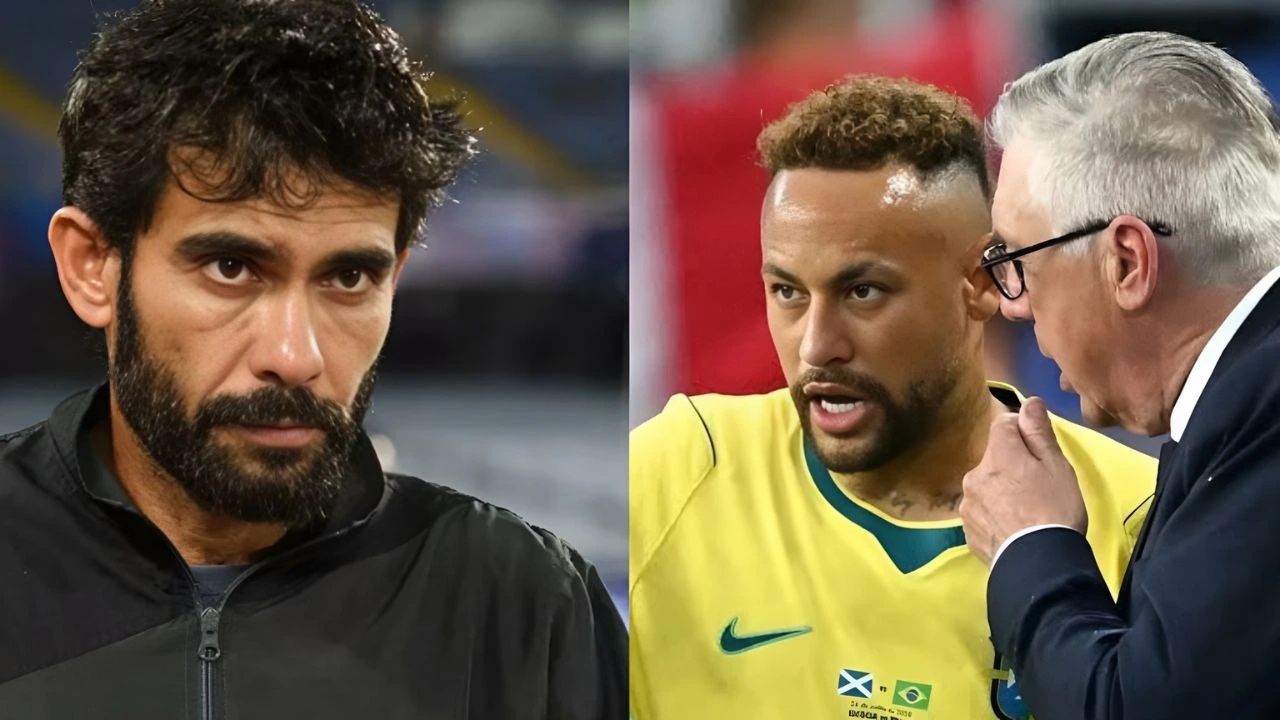
Scotland are about to play Brazil at a World Cup in Miami, and if that sentence still feels surreal to read, imagine how it feels for a country that spent 28 years watching these tournaments from their living rooms. This is Group C’s final matchday, and it is a genuine, high-stakes, everything-on-the-line occasion, the kind of match that gets talked about for decades regardless of the result.
Brazil need a point to guarantee their place in the knockout rounds. Scotland need a result that history says they almost certainly will not get, against an opponent they have never beaten across ten previous meetings. But they are here, they are in with a chance, and on Wednesday evening at Miami Stadium in Miami Gardens, Florida, the Tartan Army gets its moment.
What Scotland need and what stands in their way
The group picture going into this final matchday is straightforward enough. Brazil sits top on four points alongside Morocco, who play Haiti simultaneously. Scotland are third on three points, one point behind both teams above them, having beaten Haiti 1-0 in the opener before losing 1-0 to Morocco, a defeat that stung particularly because the goal came 70 seconds into the game and Scotland never really recovered their shape or composure after it.
A Scotland win tonight sends them through automatically in the top two regardless of what happens in the other game. A draw keeps them in third place, where they would need either Haiti to beat Morocco, which is extremely unlikely, or rely on being one of the eight best third-placed teams across all twelve groups, which is a realistic but nerve-shredding outcome that involves watching results come in from ten other groups late into the night.
A narrow defeat could still keep the third-place route alive depending on goal differences elsewhere, but that is the kind of mathematics that requires a lot of other things to fall right. The cleanest outcome is a Scotland win, and everything Steve Clarke will say publicly before this game will be built around believing that is possible.
Brazil without Raphinha and potentially with Neymar
The biggest team news from the Brazil camp is the absence of Raphinha, who picked up an injury in the Morocco game and will not feature here. Raphinha has been one of the most consistent players at both club and international level over the past eighteen months, and losing him is a genuine blow to Carlo Ancelotti‘s attacking options.
The question is what Ancelotti does to replace him, and the answer that has generated the most excitement is the potential inclusion of Neymar, who has returned to full squad training after his long injury absence and could make a dramatic appearance either from the start or off the bench.
Neymar at 34 and carrying injury history is not the Neymar of 2017, but the argument for including him against a Scotland side that will sit deep and defend is compelling. He brings unpredictability, he brings the ability to create something from nothing in tight spaces, and he brings an aura that genuinely matters at this level of competition.
Brazil‘s performances in this tournament have been solid without being spectacular, a 1-1 draw against Morocco followed by a controlled 3-0 win over Haiti, with Matheus Cunha in particularly sharp form in that second game. But they have been missing something in the final third when teams compress the space, and that is precisely what Scotland are going to do. Neymar, even at reduced capacity, addresses that problem in a way that Ryan Luiz Henrique or Enriquez simply cannot.
Vinicius Junior remains Brazil’s most dangerous player and the biggest tactical headache for Scotland‘s back five. He scored against Haiti and will be licking his lips at the prospect of running at whatever fullback Clarke puts in front of him. Scotland will need to double up on Vini consistently and accept that this will occasionally leave gaps elsewhere, because allowing him one-on-ones in wide areas at pace is not a game plan, it is a disaster waiting to happen.
Scotland and Brazil's predicted starting XI and tactical approach
Steve Clarke has shown throughout this qualification campaign and these opening two matches that he is not going to change his fundamental defensive approach regardless of the occasion. The 5-4-1 or 5-3-2 shape that has kept Scotland competitive in big matches will be the starting point here, and the question is not whether Clarke will set up defensively but whether he can find a way to add a threat on the break that actually tests Alisson and the Brazil backline.
Angus Gunn starts in goal; he has done nothing wrong in the tournament and deserves to keep his place. The back five is likely to be Anthony Ralston on the right, some combination of Souttar, Hanley or McKenna in the centre depending on fitness, with Kieran Tierney and Andy Robertson providing the width and the attacking outlet from wing-back positions. Robertson in particular will be crucial, when Scotland have their best moments, it is usually because Robertson has got forward and created something on the left side.
In midfield, Scott McTominay is the name everyone is watching. He has been quiet by his own standards in this tournament, but his ability to make late runs into the box and arrive unmarked has been Scotland’s most reliable source of goals in major tournaments.
Bruno Guimarães will be tasked with tracking him specifically, and if McTominay can escape that attention even once Scotland will have a chance. John McGinn, Scotland’s only goalscorer in the tournament, provides energy and the ability to pop up in dangerous areas and Kenny McLean, who gave Scotland real quality when he came on against Morocco, finding pockets of space and picking clever passes to cut through the block, deserves serious consideration for a starting role here rather than coming off the bench once the game has already developed.
Up front, Lyndon Dykes will work as hard as he always does and give Scotland a physical presence and a target for direct balls. Che Adams offers a different dimension and the ability to link play more fluently, and Clarke will have to decide whether to go with one or both of them at various points. Shankland gives Clarke a poacher option off the bench for the final quarter if Scotland need to chase the game or protect a lead.
Scotland predicted XI (5-3-2): Gunn; Ralston, Souttar, Hanley, Hendry, Robertson; McTominay, McLean, McGinn; Christie, Dykes.
Brazil predicted XI (4-3-3): Alisson; Danilo, Marquinhos, Gabriel Magalhães, Alex Sandro; Bruno Guimarães, Casemiro, Paquetá; Luiz Henrique, Cunha, Vinicius Junior.
The historical weight Scotland carry into this game
Scotland have played Brazil four times at previous World Cups, 1974, 1982, 1990, and 1998, and the record is three defeats and one draw. The 1974 game was a genuine contest that ended 0-0.
The 1982 edition saw Dave Narey give the entire nation fifteen minutes of hope with a stunning long-range strike before Brazil produced one of the great second-half performances in World Cup history to win 4-1. The 1990 and 1998 meetings were defeats that ended Scottish campaigns that had promised more. And across all competitions in ten meetings, Scotland have never beaten Brazil.
That history matters psychologically, but it is also worth noting that this Brazil side is not the Brazil of any of those previous eras. Their qualifying campaign was a mess; they lost to Bolivia at one stage and went through multiple coaches in a short period.
The Ancelotti appointment has stabilised things and the talent is obviously there, but this is a team playing with an element of pressure and restriction rather than the freedom and samba flair that made Brazil the most entertaining side in world football for decades. Several Brazilian supporters and analysts have openly said they would not be shocked by a draw or even a defeat here, which is a remarkable thing to say about a five-time world champion going into a group stage decider.
The Tartan Army moment and what this means
For a generation of Scottish fans who grew up with Ikechi Anya as the most exciting player in the squad and who watched Scotland draw against Lithuania and lose 3-0 to Slovakia in 2016 European qualification, being at a World Cup and playing Brazil in Miami feels genuinely extraordinary.
The Tartan Army has been everything this tournament needed, arriving in their thousands, bringing kilts and culture and an atmosphere that has made neutral observers fall in love with them as a footballing nation. They drank parts of Boston dry before the first game and they will do the same in Miami.
What the players feel going into this game is probably a complicated mix of belief, anxiety, and the weight of knowing that this is the kind of match most of them will never play in again. Steve Clarke is one of the more underrated coaches in this tournament, he has worked with limited resources, taken a small country to their first World Cup in 28 years, and won their opening group game.
His team is disciplined, organised, and hard to beat. The question is whether discipline and organisation are enough against a side of Brazil‘s individual quality, or whether Scotland can find those moments of individual brilliance, a McTominay run, a McLean pass, a Robertson cross, that change the game.
FIFA World Cup 2026: Match prediction
The honest prediction is a Brazil win. Their individual quality, even without Raphinha, is simply too much for Scotland to handle over 90 minutes if they play at anything close to their best level. Vinicius Junior against whoever Scotland put at right wing-back is a matchup that will cause problems all night. If Neymar comes on and finds any rhythm at all, he adds a dimension that Scotland simply do not have an answer for.
But and this is important; Scotland are not going to be rolled over. Clarke will have them organised, compact, and hard to break down for at least the first hour. If Scotland can keep it goalless into the final twenty minutes, all the pressure transfers to Brazil, the crowd nerves creep in, and anything becomes possible. McTominay has scored in big moments before. McLean has scored wonder goals from distance. Robertson on his best day can hurt anyone.
The most likely outcome is Brazil 2-0 Scotland, a professional and controlled win that keeps the Seleção on track while leaving Scotland to hope that the third-place route comes through. But a 1-0 defeat or even a 1-1 draw is absolutely within the range of outcomes, and if Scotland score first the entire dynamic of the game changes.
However it ends, Miami Stadium on Wednesday evening is going to be one of the moments of this World Cup, the anthem, the noise, the occasion and Scotland, whatever their limitations, have earned the right to be in it.
Frequently Asked Questions
Yes. A victory over Brazil would guarantee Scotland a place in the knockout rounds and mark one of the biggest results in the nation’s football history.
No. Scotland have never defeated Brazil in 10 previous meetings, including four encounters at the FIFA World Cup.
Neymar has returned to full training and could feature against Scotland, either as a starter or from the bench, after recovering from injury.
Scott McTominay remains Scotland’s most dangerous attacking weapon, thanks to his ability to make late runs into the box and score important goals.
A draw would leave Scotland relying on results elsewhere and potentially the ranking of the best third-placed teams to reach the knockout stage.

Amar Pal Singh Bhalla is a sports writer covering cricket, football and tennis.
Based in India, he has followed the game for the last few years and writes
match analysis, previews and features for Beyond The Score