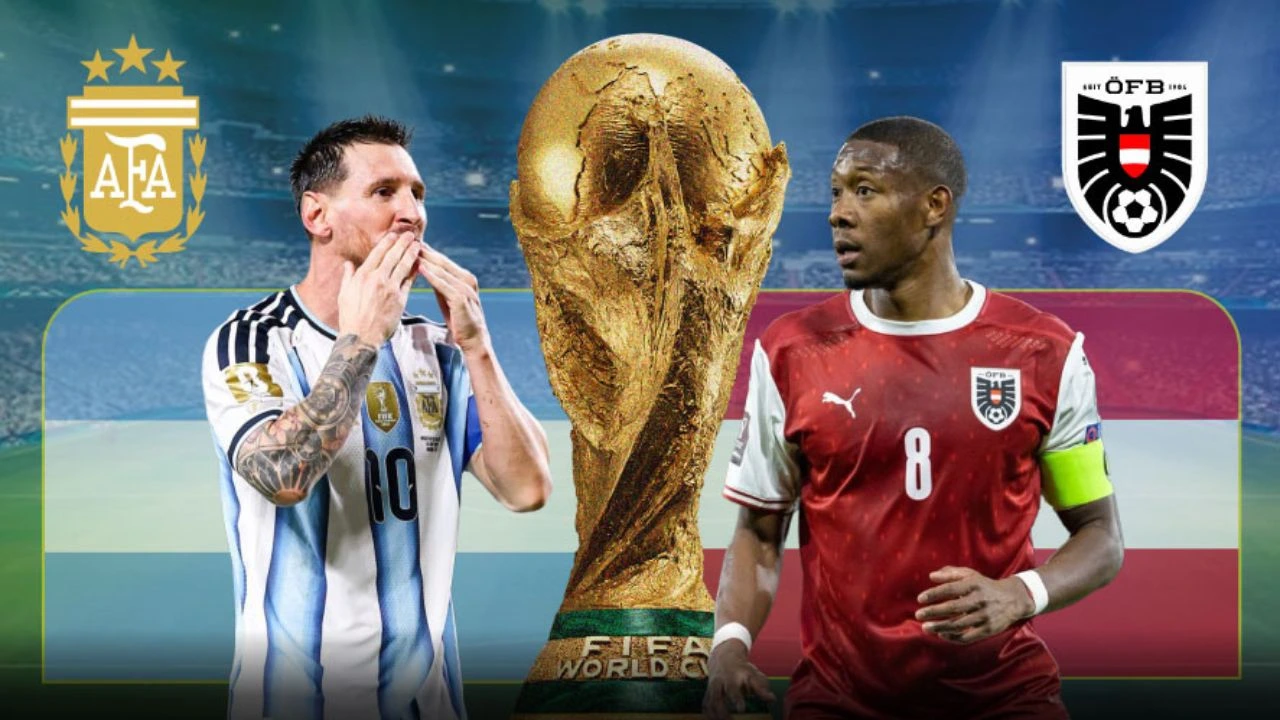
Four years after Lionel Messi dragged Argentina to FIFA World Cup glory in Qatar, the greatest footballer of all time arrives in Dallas carrying the weight of history on his shoulders once more.
A stunning hat-trick against Algeria in the opening FIFA World Cup group game has drawn him level with Miroslav Klose as the all-time leading scorer in World Cup history with 16 goals and the air-conditioned grandeur of AT&T Stadium, the home of the Dallas Cowboys, provides the perfect stage for him to claim that record outright.
Standing in his way is an Austrian side managed by Ralf Rangnick, the godfather of gegenpressing, a man who looked at Argentina’s squad ahead of this match and found, in his own words, few if any weaknesses, and then told his players to bet their savings on an Austrian victory anyway. This is what the FIFA World Cup is built for.
FIFA World Cup 2026: The weight Messi carries into Dallas
The circumstances surrounding Messi’s involvement in this FIFA World Cup tournament were uncertain until remarkably late. The Inter Miami attacker had not fully committed to playing in North America until close to the tournament’s beginning, and even after committing, the broader picture around him carried emotional complexity that went beyond football.
It emerged after his hat-trick against Algeria in FIFA World Cup 2026 game that his father is currently recovering from an unspecified health issue, which contextualised the tears Messi shed after scoring his first goal of the tournament. A man approaching his 39th birthday, playing what is almost certainly his final FIFA World Cup, breaking down at the moment of achieving something historic while carrying private grief, it was the kind of scene that reminds everyone watching why sport at its highest level operates on frequencies that pure analysis cannot fully reach.
What followed the tears was clinical. A second goal in the 60th minute. A third in the 76th. Three goals from three shots on target. At 38 years old, playing in fits and starts rather than with the relentless dynamism of his Barcelona peak, Messi is not the same physical force he was in 2022 let alone in 2014 or 2006. But the ecosystem Scaloni has built around him has evolved precisely to accommodate what he is now rather than what he was.
The Argentina players press, cover, run and work on his behalf, freeing him to find pockets of space and deliver the moments of individual quality that no defensive system has ever been reliably built to stop. Midfielder Alexis Mac Allister said after the Algeria FIFA World Cup match that it became clear in that game that Messi is the most important of them all, which from a man of Mac Allister‘s quality is a statement of considerable generosity and complete accuracy simultaneously.
FIFA World Cup 2026: Rangnick's gamble and Austria's genuine belief
Austria’s presence in this FIFA World Cup is itself a story of transformation. They had not qualified for the FIFA World Cup tournament since 1998 when Ralf Rangnick took over the national team in 2022 and began rebuilding not just the tactical system but the psychological identity of Austrian football.
The 3-1 victory over Jordan in their opening FIFA World Cup 2026 fixture was not a statement of dominance but it was a statement of competence and organisation, and within it were signs of the pressing intensity and structured build-up play that Rangnick has spent the last decade teaching across multiple clubs and now a national team.
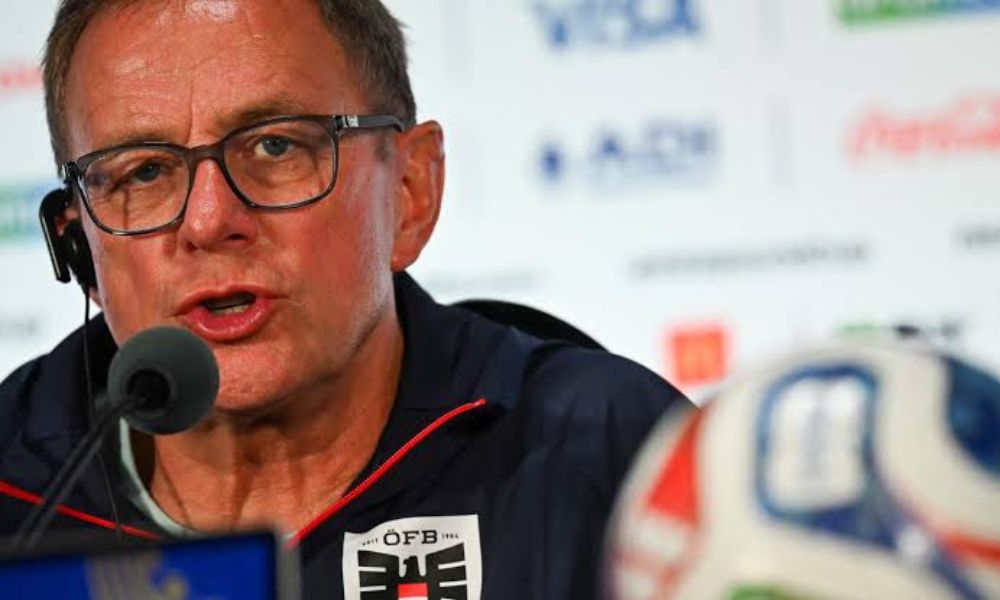
His press conference ahead of the Argentina FIFA World Cup 2026 match was a masterclass in controlled confidence. He acknowledged finding few weaknesses in Argentina’s squad. He described them as individually outstanding. And then he told the assembled journalists that if they wanted to make a lot of money they should take their savings and bet on Austria.
It was not bravado for its own sake, it was the calculated psychological framing of a manager who understands that his team needs to believe in the possibility of victory before they can manufacture it, and who is experienced enough to know that publicly expressing belief in the underdog is one of the few tools available to him on the eve of a match like this.
Whether the players believed it entirely is a separate question. described the match as a bonus game with less pressure than the Jordan fixture, which from a 32-year-old playing his second World Cup suggests a maturity of perspective that will serve Austria well across ninety minutes against the world champions.
FIFA World Cup 2026: Gegenpressing meets South American combinations
The central tactical question of this match is whether Austria’s pressing system can disrupt the rhythm of an Argentina side built around close combinations and quick one-touch football in tight spaces.
Rangnick’s teams press in coordinated waves, attempting to force the team in possession into errors in their own half by eliminating passing options simultaneously rather than chasing the ball individually. Against Jordan this worked with considerable effectiveness.
Against Argentina, who play precisely the kind of close combination football that is most resistant to structured pressing because the distances between their players are so small and their technical execution under pressure is so refined, the question is whether Austria can press with sufficient intensity for long enough to create meaningful disruption.
Argentina’s approach when faced with a high press is to condense their shape, increase their numbers in central areas, and play quickly through the lines using one and two-touch combinations. The risk in this approach is that if a pressing team wins the ball high up the pitch against a condensed shape, the counter-attacking opportunity is immediate and dangerous.
Austria’s ability to exploit those moments, particularly through the pace and directness of Christoph Baumgartner and Romano Schmid, will be central to whether their tactical plan produces anything beyond defensive solidity.
The full-backs have an overlapping nature and will look to create width and crossing opportunities, meaning Argentina’s wide midfielders will need to track those runs while simultaneously supporting the pressing triggers. It is a demanding set of requirements across ninety minutes in the Texas heat, even with the stadium’s climate control locked at 21 degrees.
Also READ: Top 10 truth bombs Cristiano Ronaldo dropped in the Piers Morgan interview
FIFA World Cup 2026: Personnel questions and the shape of both squads
Argentina face a defensive disruption with Montiel unavailable due to injury, bringing Nahuel Molina into the right-back position. Molina came on as a substitute in the Algeria match and performed with his characteristic energy and attacking intent, so the change represents a shift in profile rather than a significant drop in quality, though it introduces an element of unfamiliarity into a defensive structure that has kept clean sheets in four consecutive matches. Romero had moments of uncertainty in the Algeria game and will need to be sharper against Austrian forwards who press aggressively and look to exploit spaces behind a high defensive line.
In midfield, the question of rotation versus continuity is one that Scaloni is navigating carefully. Enzo Fernandez, Mac Allister and De Paul all played the full 90 minutes against Algeria, and while the gap between fixtures provides some recovery time, the pressing demands of the Austria match make freshness a meaningful consideration.
There is a case for introducing Giuliano Simeone or Welthyn Barco to provide pace and directness in behind the Austrian defensive line, exploiting the spaces that open up when Austria commit numbers forward in their pressing sequences. Julian Alvarez is expected to replace Lautaro Martinez up front, giving Argentina a more mobile and technically varied attacking option alongside Messi, who will turn 39 on Wednesday.
Austria’s selection decision centres on the striking position. Marko Arnautovic, the 37-year-old whose physical presence and willingness to create chaos in opposition defensive lines makes him a legitimate threat despite his age, came off the bench against Jordan and made an immediate impression. The question is whether Rangnick starts him here given the intensity requirements of the game, or whether he preserves him as an impact option later.
Steven Posch, the right-back who broke his jaw in the Jordan match, is unavailable, meaning Konrad Laimer, who has played the position for Bayern Munich, is expected to step in. Laimer’s intelligence and ground coverage make him a capable deputy, and his presence in that role reflects the general quality depth that Austrian football has developed under Rangnick’s stewardship.
FIFA World Cup 2026: What victory means for both nations
For Argentina, victory in Dallas would place them on the cusp of the knockout rounds as Group J leaders with one game remaining, giving Scaloni the opportunity to manage his most important players carefully in the final group fixture against Jordan and arrive at the round of 32 with maximum freshness.
It would also, almost certainly, give Messi the record outright, the 17th World Cup goal that would move him past Klose as the greatest scorer in the tournament’s history. Messi himself has consistently described statistics as just numbers and nothing more, and the people around him are careful to communicate that the record is not the motivation.
But the moment itself, should it arrive, would carry a weight of meaning that transcends the number. A 39-year-old in his final tournament, breaking a record held by someone who was never considered the greatest player who ever lived, doing it on behalf of a team that would go to war for him if he asked them to — these are the moments that the World Cup produces and that no other competition can replicate.
For Austria, victory would be genuinely historic, a result that places their entire recent footballing development in context and announces Rangnick’s project to the world in the most definitive terms possible. A draw would represent a significant achievement and leave their qualification aspirations alive.
A defeat, depending on the margin and manner, need not be a disaster given the enormity of the opposition. But Rangnick said bet on us, and his players need to play like they believe he was serious rather than generous. The presser was the statement. The pitch is where the answer gets written.
Frequently Asked Questions
Argentina and Austria are set to face each other in a crucial Group J fixture at the FIFA World Cup 2026, with both teams aiming to strengthen their chances of reaching the knockout stage.
Yes. Messi enters the match level with Miroslav Klose as the all-time leading scorer in FIFA World Cup history. A goal against Austria would see him claim the record outright.
Argentina are in a strong position after winning their opening match against Algeria. Another victory would move the defending champions closer to securing a place in the knockout rounds.
Lionel Messi, Julián Álvarez, Alexis Mac Allister and Enzo Fernández are expected to be key for Argentina, while Marcel Sabitzer, Christoph Baumgartner and Marko Arnautović could play crucial roles for Austria.
Austria’s best chance lies in executing Ralf Rangnick’s high-pressing system effectively, forcing turnovers in dangerous areas and limiting the time and space available to Messi and Argentina’s midfielders.

Amar Pal Singh Bhalla is a sports writer covering cricket, football and tennis.
Based in India, he has followed the game for the last few years and writes
match analysis, previews and features for Beyond The Score