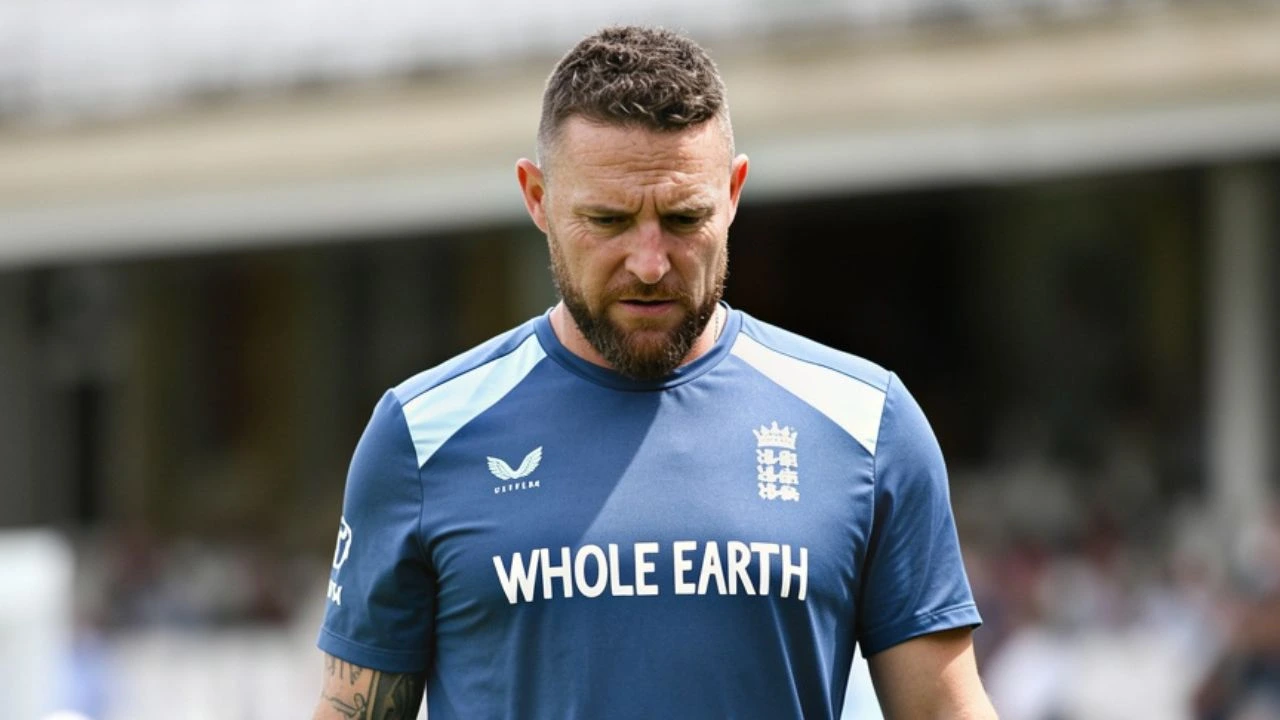
When Brendon McCullum walked into the England dressing room in 2022, the timing was almost perfect. A side that had been beaten down, over-coached and scared of its own shadow suddenly had someone telling them to go out and play without fear, trust themselves and stop worrying about what the press thought.
The first series, a 3-0 sweep of New Zealand, felt like a statement. Bazball was born, everyone was excited, and for a while it genuinely felt like English cricket had found something. Four years later, the same man is at the centre of a dressing room civil war, England have just been hammered 4-1 in the Ashes, they still haven’t managed to win a series against India or Australia, and the whole thing is unravelling in the most public and embarrassing way possible.
The time for debating whether McCullum should stay is over. He has to go.
Bazball worked because of who was already there
The thing about those first two years that tends to get brushed under the carpet now is that Brendon McCullum didn’t walk into a vacuum. He walked into a dressing room that already had Ben Stokes, Joe Root, Jonny Bairstow, and Stuart Broad, senior players who had been around long enough to know what they were doing and just needed someone to take the handcuffs off.
Bazball didn’t create those players. It liberated them. Bairstow had one of the most extraordinary summers of anyone’s career in 2022, and a huge part of the early narrative around Bazball being a revolution was built on the back of his performances. When those senior players started cycling out and younger ones came in, the whole thing began to creak, because those newer players didn’t need someone to tell them to stop being afraid, they needed structure, coaching and leadership, the very things Brendon McCullum has never really been about.
That shift has been visible for a while now. The results against top sides tell the story plainly enough. A 61%-win percentage sounds respectable on paper, but it hides the fact that England have consistently failed when it actually matters, against the two best Test sides in the world, India and Australia, in a series context, the record is poor.
You can dress it up in philosophy all you want, but Test cricket eventually comes down to winning the matches that are hardest to win, and Brendon McCullum‘s England keep falling short in exactly those moments. The Ashes being lost 4-1 wasn’t a blip, it was a verdict.
The England dressing room has rotted from the inside
The Ben Stokes nightclub incident and everything that came after it might look on the surface like a curfew dispute that got out of hand. But pull back and it’s actually a symptom of something much deeper, a culture problem that has been building for months.
Brendon McCullum‘s whole approach has always been loose, instinct-driven and trust-based. Don’t over-coach, don’t put too many rules in place, let the players breathe. There’s a version of that philosophy that works brilliantly when everyone is on the same page. There’s another version of it that looks like shambolic management, and that’s what England have right now.
The curfew situation is genuinely baffling. Players weren’t clearly told the rules. Gus Atkinson, by all accounts, had no real idea the curfew was even in force. Brendon McCullum himself had to admit, in front of cameras, that things weren’t communicated clearly enough, which is a damning thing to have to say publicly about your own setup four years in.
A lack of attention to detail has apparently been a consistent issue throughout this entire regime, and when you combine that with McCullum’s press conference where he appeared to publicly question Stokes’s mental health, only for Stokes to then go and play for Durham days later, you end up with a situation that is almost impossible to recover from. Stokes was reportedly incandescent. The trust is gone.
Rob Key made it worse but Brendon McCullum owns this too
Rob Key is clearly at the centre of a lot of what’s gone wrong, the chaotic handling of the Stokes situation, the failure to back the captain publicly when he needed it, the bureaucratic mess that turned a manageable incident into a two-week psychodrama. There’s a legitimate argument that Key’s fingerprints are on the messiest parts of this whole saga, and the criticism he’s getting is largely deserved.
But Brendon McCullum isn’t some passive bystander in all of this. He was empowered by the ECB, he runs the dressing room culture, and it is his culture that produced a situation where curfew rules weren’t clearly communicated, where senior players felt blindsided, and where the captain of the England cricket team was reportedly contemplating retirement over the way he’d been treated. That’s not a Rob Key problem alone, that’s a leadership problem, and Brendon McCullum is the head coach.
The Ben Stokes-Brednon McCullum relationship had already fractured quietly during the Ashes, when Stokes made his unhappiness with Brendon McCullum plain in his end-of-tour report.
Key reportedly backed Brendon McCullum to stay, and that decision has now led directly to where England are today, a dressing room where the captain, the coach and the director of cricket are all pulling in different directions, and the national selector apparently has to act as a peacemaker. That is not a functional setup. Something has to give, and it isn’t going to be Stokes, who has the backing of the public, the media and seemingly most of the players.
What comes next matters more than what comes out
The conversation about Brendon McCullum‘s replacement is going to dominate cricket coverage for weeks, and there will be no shortage of names thrown around, Justin Langer has been mentioned repeatedly, Gary Kirsten has the credentials, and Alec Stewart‘s name tends to come up whenever there’s a vacancy of any significance in English cricket.
What matters more than the specific name is the type of coach England actually need now. Brendon McCullum‘s approach, maximum freedom, minimal structure, trust the players to figure it out, made sense as a shock to the system four years ago. It doesn’t make sense as a long-term coaching philosophy for a team with a significant youth intake that needs guidance, technical coaching and clear accountability.
The young players coming through now probably need the opposite of what Brendon McCullum offers. They need structure and someone who challenges them, not someone who tells them the press don’t matter and to play without fear. The fear was never their problem.
The technical deficiencies, the inability to consistently post competitive first and second innings totals, the collapse to 300 or under when the conditions ask something of them, that’s the problem. Those are coaching problems. Brendon McCullum has had four years and hasn’t solved them. It’s time to find someone who can.
Also READ: How Mohammed Siraj rose from the streets of Hyderabad to become India’s Test hero
Frequently Asked Questions
Critics argue that England’s recent struggles, including a heavy Ashes defeat and continued failures against India and Australia, show that McCullum’s Bazball approach is no longer delivering results at the highest level.
Bazball is England’s aggressive Test cricket philosophy introduced by Brendon McCullum and Ben Stokes in 2022. While it initially transformed England’s fortunes, recent defeats have led to questions about whether the approach can consistently succeed against elite opposition.
No. Since taking charge in 2022, McCullum has not guided England to an Ashes series victory, with England recently suffering a 4-1 defeat to Australia.
Names frequently linked with the role include Justin Langer, Gary Kirsten and Alec Stewart.
Reports suggest tensions emerged following the Ashes and intensified after the controversy surrounding Stokes’ nightclub incident and subsequent public comments, raising questions about the relationship between England’s captain and coach.

Amar Pal Singh Bhalla is a sports writer covering cricket, football and tennis.
Based in India, he has followed the game for the last few years and writes
match analysis, previews and features for Beyond The Score