Netflix has spent years getting people to watch stories whenever they want. Now, it wants them to show up at the same time.
That is what makes its 2030 FIFA World Cup deal interesting. Not because Netflix is entering football for the first time, or because traditional broadcasters have suddenly forgotten how to show a match. They haven’t. Football has been filling television screens for decades, and broadcasters know exactly why people sit through 90 minutes, added time and sometimes a penalty shootout that seems determined to ruin everyone’s evening. The question is what Netflix thinks it can do differently with an audience that already knows where to watch football.
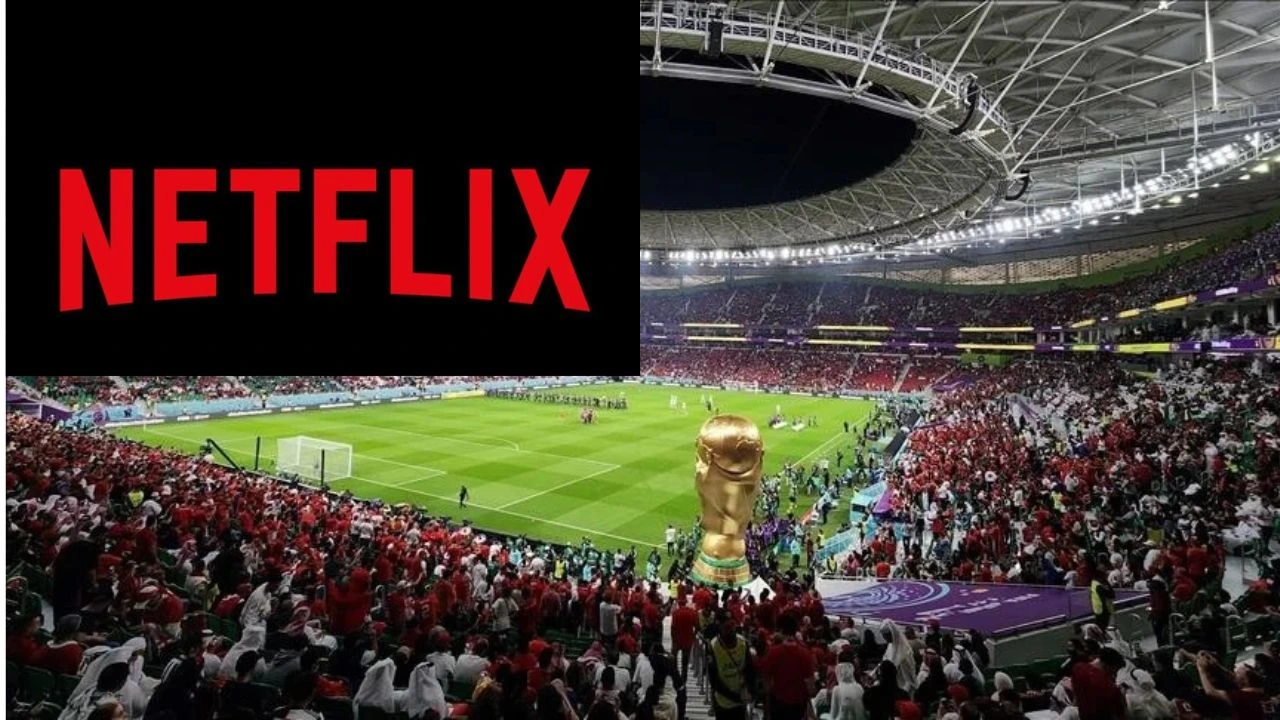
Netflix has secured exclusive rights to stream all 104 matches of the 2030 World Cup in Spain and Andorra. The tournament will mark 100 years since the first World Cup in Uruguay in 1930. Spain will co-host it with Portugal and Morocco, while Uruguay, Argentina and Paraguay will stage centenary celebration matches. The deal is significant, but it doesn’t mean the World Cup is moving to Netflix everywhere. These rights apply to Spain and Andorra, while other countries have their own broadcasting arrangements.
What makes Spain particularly interesting is that it isn’t just another market where Netflix has bought a sporting event. Spain will be one of the host nations, and the tournament will become part of everyday life there for a month. People will discuss matches at work, watch games with friends and follow teams they might otherwise ignore. Netflix is buying the rights in a country that will be living inside the competition, not simply tuning in from a distance.
And that creates a challenge I find more interesting than the deal itself. Can Netflix handle a country watching together? Imagine Spain playing a quarter-final. Thousands of people might open the app at almost the same time, all expecting the stream to work without a problem. A traditional broadcast network has decades of experience delivering major events to huge audiences. Streaming has improved enormously, but a World Cup hosted on home soil is a different test from getting people to watch a popular series. If the stream struggles during a decisive moment, viewers won’t care how good Netflix’s documentaries are. They’ll remember the match they couldn’t watch properly.
There is a simpler problem, too, and it has nothing to do with internet speeds. A dedicated football fan will probably find the match, work out the subscription and make sure everything is ready before kick-off. A casual viewer might simply switch on the television and watch whatever is on. Parents who don’t follow football closely may not want to open an app, search through its menus and find a group-stage match between two countries they barely watch. But leave that same match on a familiar television channel, and they might sit down and watch it anyway. Some of the best World Cup memories begin with people who weren’t planning to watch a game in the first place.
This is where the argument about streaming gets complicated. Netflix offers convenience to people who already use it, but that doesn’t automatically make football more accessible to everyone. The same applies to subscription costs. A fan who watches every match may consider a month’s subscription perfectly reasonable. Someone who only wants to watch their national team may not. And people who already pay for television, internet and other streaming services might not be thrilled about adding another payment just because a tournament comes around every four years.
The problem isn’t that streaming is inherently worse than television. It can offer a better viewing experience, more flexibility and the freedom to watch matches on different devices. But it can also introduce new frustrations. A service can have excellent picture quality on an ordinary evening and still struggle when millions of people want to watch the same event. A platform can offer every match and still make it harder for casual viewers to stumble across one. Having the rights is one thing; making the tournament easy to watch is another.
We’ve seen how much the viewing experience can shape people’s opinions of sports broadcasting. A service that delivers a poor-quality stream can make fans resent the broadcaster even when the match itself is excellent. On the other hand, a reliable streaming platform could be a welcome change for viewers who are tired of expensive packages and disappointing picture quality. The important point is that Netflix won’t win people over simply by being Netflix. It will have to deliver when the game matters.
There is also a question about whether the World Cup should be treated like any other piece of premium entertainment. Spain’s broadcasting arrangements provide a useful distinction here. Netflix will stream all 104 matches, but one match per matchday will be available for free, and a national free-to-air broadcaster will carry every Spain match, both semi-finals and the final. That means the tournament won’t be entirely locked behind a Netflix subscription, even though the platform holds the exclusive streaming rights.
I think that distinction matters because a World Cup isn’t just another show that people choose to watch. It is a sporting event with a much wider audience than the people who follow football every weekend. It brings in families, casual viewers and people who may not watch another match for years. Making the biggest games freely available helps preserve that shared experience, while the paid service can cater to those who want every fixture. It is a compromise between the commercial value of the tournament and the idea that some sporting events should remain accessible to the public.
The Olympics offer another interesting comparison. Spain’s audiovisual legislation includes the Summer and Winter Olympic Games among events that can be designated for free-to-air coverage. But free access doesn’t necessarily mean every event will receive the same amount of television time. Broadcasters have limited channels and airtime, so they still have to decide what to show. Events involving Spanish athletes, particularly those with medal prospects, can naturally receive greater attention than competitions with less domestic interest. A viewer may technically have access to the Olympics without being able to watch every sport live on a traditional channel.
That comparison also exposes a difference between the Olympics and the World Cup. The Olympics spread attention across dozens of sports, many of which compete for television time. The World Cup has one central competition, a fixed schedule and a sport with a massive international audience. People might casually watch a match because it happens to be on, even if they have no particular interest in either team. The broadcaster doesn’t have to persuade them to search for it. The game is already there.
For Netflix, that could be the attraction. It already has a direct relationship with people who pay for entertainment. A World Cup can give existing subscribers another reason to open the app, while attracting people who would never subscribe just to watch a series. Netflix has said it plans to offer pre-match coverage, half-time programming, post-match shows and daily round-ups around the 2030 tournament. It wants to offer more than a stream of 22 players chasing a ball.
But there is a business question hiding behind the announcement. Netflix hasn’t disclosed how much it is paying for these rights, so it is difficult to judge the deal’s cost against its potential returns.
+1 Will the tournament bring in new subscribers? Will those people stay after the final? Or will they sign up for a month, watch their team’s matches and cancel before Netflix can recommend them the next big thriller?
A World Cup subscriber might not be a Netflix customer in the usual sense. They might have no interest in the platform’s films or series. Their entire reason for signing up could be that their country is playing. Netflix will have to work out whether that temporary interest can become something more lasting. A successful tournament could bring enormous attention, but attention during a World Cup and a habit of paying for a streaming service are two different things.
For Indian fans, there is another important detail. This deal doesn’t mean the 2030 World Cup will be available on Netflix India. FIFA has a separate agreement with Zee covering the 2026 and 2030 men’s World Cups and other competitions in India through 2034. The Spanish deal is about a particular market, not a worldwide streaming takeover.
So, what does Netflix know about football that traditional broadcasters don’t? Perhaps nothing that broadcasters haven’t understood for decades. They know that football attracts huge audiences, that live sport creates urgency and that the biggest matches can bring people together in ways ordinary programming cannot. Netflix may simply believe it can use its existing platform to capture more of that attention.
The more interesting question is whether a streaming service can become part of the experience rather than merely the place where a match is shown. Nobody remembers how smoothly an app recommended a series when their country lifted a trophy. They remember where they watched it, who was sitting beside them and whether they were screaming before the ball even crossed the line. Netflix can buy the rights to the moment. Whether it can become part of the memory is a different question.

Amar Pal Singh Bhalla is a sports writer covering cricket, football and tennis.
Based in India, he has followed the game for the last few years and writes
match analysis, previews and features for Beyond The Score