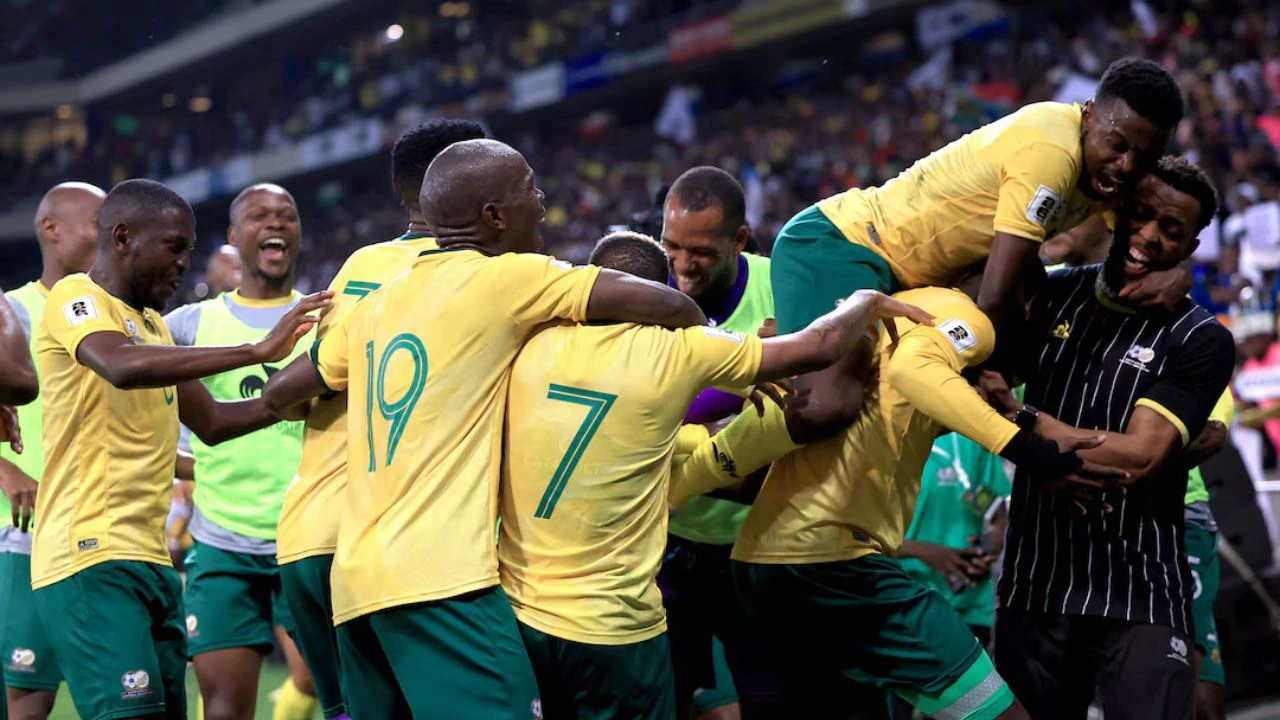
There will be plenty of time in the coming days to analyse exactly what went wrong for South Korea at this World Cup, and that conversation is going to be uncomfortable for everyone involved. But on Wednesday night at Estadio BBVA in Guadalupe, Mexico, the story belonged entirely to South Africa.
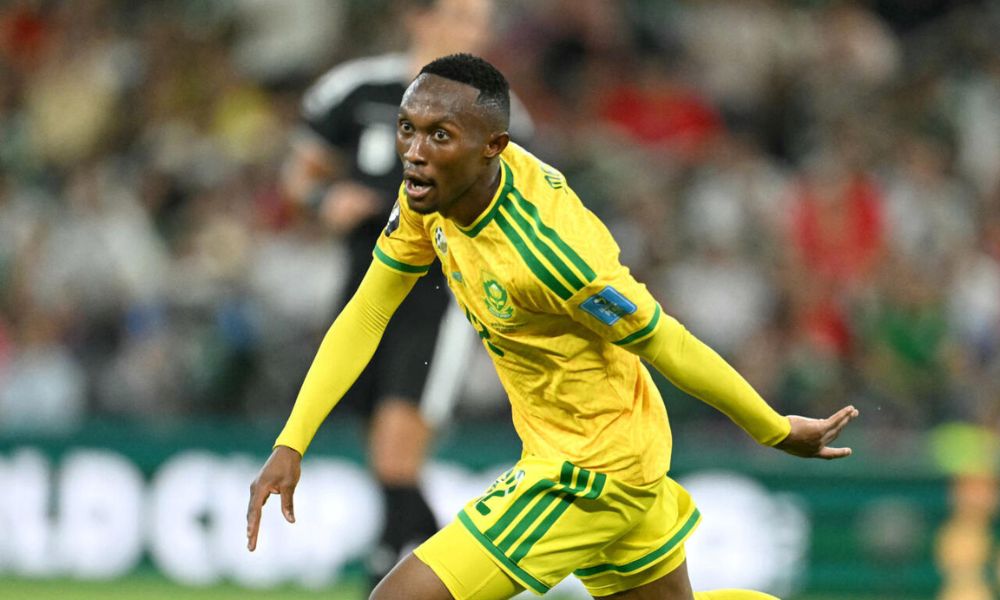
Thapelo Maseko‘s 63rd minute strike, a clean, composed finish from the centre of the box after a razor-sharp counterattack, sent Bafana Bafana into the round of 32 for the first time in their history, and it did so against a South Korea side that arrived needing only a draw and somehow contrived to lose a match they should never have lost. Final score 1-0, and the fallout from the South Korean camp is going to last considerably longer than 90 minutes.
The decision that defined the evening for South Korea before a ball was kicked
When the South Korea starting lineup was announced and Son Heung-Min‘s name was missing, the jeers that rang around the stadium from the Korean supporters told the entire story of what everyone thought about the decision before the match had even started.
Hong Myung-Bo dropped his captain, a player who has started 12 consecutive World Cup matches for his country and who is quite literally worshipped in South Korea, for a must-not-lose group stage decider. South Korea only needed a draw. They had the most experienced match-winner in their squad available and fit. The logic for leaving him out was never clearly explained, and by the 63rd minute when Maseko‘s shot hit the net, it looked like one of the worst tactical decisions of this entire tournament.
The argument in Hong‘s defence is that Son alone could not have guaranteed anything, he came on at half-time and was unable to change the game either, which at least provides some cover for the decision. But the timing and the occasion made it inexplicable. Son carries aura, experience, and the ability to create something from absolutely nothing in tight situations.
That is precisely what South Korea needed against a South Africa side set up to defend deep and hit on the counter. Leaving him out from the start meant starting with a blunter attacking instrument in a game where South Korea already had possession dominance but desperately lacked the final cutting edge to do something with it.
South Africa's defensive masterclass and the goal that won it
Hugo Broos set his side up in a low block that gave South Korea 68% possession and essentially dared them to break it down, and for long stretches of the game, South Korea simply could not.
The first half had moments of South Korean promise, Kim Min-Jae met Lee Kang-In‘s corner with a goal-bound header in the second minute that was only cleared off the line by Aubrey Modiba, and Lee Kang-In himself lashed an effort just wide from inside the area shortly after.
But as the half wore on, South Africa grew into the game and Thapelo Maseko on the right wing became increasingly dangerous. Kim Seung-Gyu had to make a crucial double save on the half-hour mark, first parrying a long-range Mbatha effort before smothering the follow-up from point-blank range.
The goal when it came was everything South Africa had been threatening and everything South Korea had been warned about. Tshepang Moremi, who had come on as a substitute just seconds earlier in the 62nd minute, burst down the left side, cut inside with sharp movement and stroked a precise pass across the box.
Maseko was waiting at the far end of it, took one touch to check back onto his left foot, and sent a low shot arrowing past Kim Seung-Gyu‘s dive into the bottom right corner. It was a clinical finish from a player who had been South Africa’s most dangerous attacking outlet all evening, and it was entirely deserved.
South Korea's second-half desperation and why it was not enough
Hong threw everything at it in the second half. Son came on at half-time alongside two other substitutions, which told you everything about how wrong the first-half gameplan had gone.
The system was changed, with Kim Min-Jae sacrificed to bring on Park Jin-Seop as a deep-lying playmaker, allowing Hwang In-Beom to push further up the field. The wing-backs were pushed higher, essentially playing as wingers. More deliveries went into the box than South Africa could comfortably deal with at times, but none had the precision or the guile to pick out a South Korean shirt in a dangerous position.
Son himself was unable to produce the moment of magic that would have changed everything. He had chances, he worked hard, he tried to find space in the channels, but South Africa’s defensive structure held and their back four stayed compact under sustained pressure. The xG figures at full time were almost identical, 1.10 for South Africa, 1.00 for South Korea, which tells the story of a match where South Africa’s one genuine chance was taken with brutal efficiency, and South Korea’s genuine chances came to nothing.
What this means for South Africa and their history
This result deserves to be celebrated for what it is, a genuinely historic achievement for South African football. Bafana Bafana have now qualified for the round of 32 of a FIFA World Cup for the first time ever, and they have done it with a tactical performance that showed real maturity and defensive resilience.
Broos had them organised, disciplined, and dangerous on the break, and the fact that South Africa had just 32% possession but still generated an xG of 1.10 tells you how efficiently they used their moments when they had them. Maseko was outstanding all evening and will be the name on everyone’s lips coming out of Group A. They now face Canada in Los Angeles in the round of 32, and nobody should be writing them off lightly after this performance.
The move six spots up the FIFA world rankings to 54th is a reward for genuine progress, and it reflects a squad that has been quietly building under Broos for some time. The draw against Czechia in the opener suggested they had something, the Mexico loss showed their limitations against top-level opposition, but this win over South Korea in a group stage decider was the performance that defines what this generation of South African football can achieve.
The South Korea fallout and what happens next
Park Ji-sung, a man who rarely says anything critical publicly, has already spoken out about South Korea repeating the same mistakes as the 2014 World Cup and placing primary blame on the football federation for allowing the same structural problems to persist.
That is a significant statement from one of the most respected figures in Korean football history, and it reflects a frustration that goes well beyond one bad tournament result. The federation, the manager, the preparation, the decision-making, all of it is going to face scrutiny in the days ahead and given the scale of the opportunity that was wasted here, that scrutiny is completely justified.
South Korea needed only a draw against South Africa to confirm a round of 32 match in Los Angeles, in front of what would have been an enormous Korean community crowd, essentially a home game. Instead they are third in Group A on three points with a goal difference of -1, waiting nervously to see if they qualify as one of the eight best third-placed teams across all twelve groups.
The mathematics still give them a chance, somewhere between 50% and 90% depending on which model you look at, with the crucial results likely coming from Group E and Group F games still to be played. But none of that changes the fact that Hong Myung-Bo took one of the biggest gambles of the tournament by dropping Son Heung-Min for a match that only required a draw, and it did not just fail, it spectacularly backfired in front of the entire football world.
Whether South Korea advance as a third-placed team or not, the conversation about Hong’s future as manager and the Korean Football Association’s direction is already happening loudly and it is not going to stop anytime soon. The only question left is whether there is a round of 32 match in Seattle to navigate before that reckoning arrives.
Frequently Asked Questions
Son Heung-min was left on the bench in one of the biggest selection calls of the FIFA World Cup 2026 group stage. The decision sparked criticism as South Korea only needed a draw to qualify and ultimately lost 1-0.
Yes. Despite the defeat to South Africa, South Korea still have a chance of progressing as one of the tournament’s best third-placed teams, depending on results in other groups.
Thapelo Maseko scored the decisive goal in the 63rd minute, finishing a well-worked counterattack to send South Africa into the Round of 32.
South Africa are set to face Canada in Los Angeles after finishing second in Group A.
If South Korea advance as one of the best third-placed teams, they will still reach the Round of 32, but their route through the knockout stage is likely to be significantly more difficult.

Amar Pal Singh Bhalla is a sports writer covering cricket, football and tennis.
Based in India, he has followed the game for the last few years and writes
match analysis, previews and features for Beyond The Score