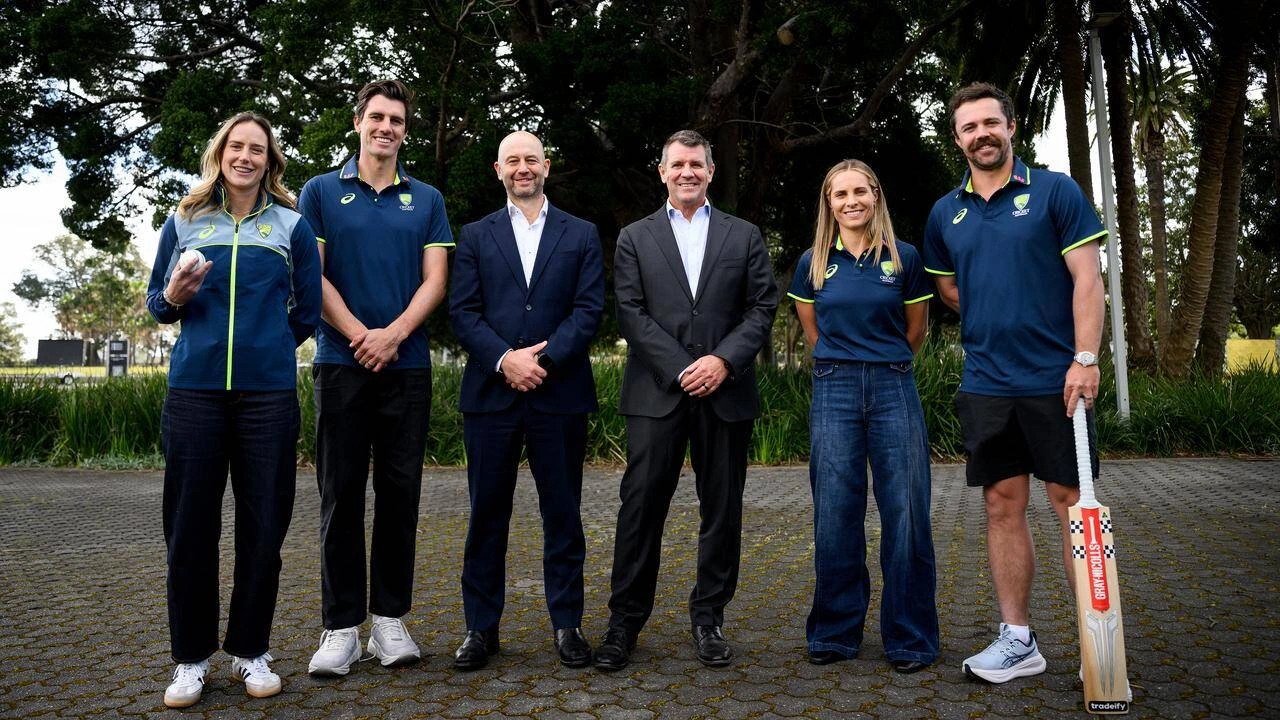
The Big Bash League (BBL) is finally getting the thing people have been talking about for years: private money. Cricket Australia has now approved a model that will allow private investment into the BBL and WBBL, with the Melbourne Renegades becoming the first club to go through the sale process. The plan is for new ownership to come in from the 2027-28 season, while the current summer carries on more or less as it was supposed to. CA will still control the things it clearly doesn’t want investors controlling, including the international schedule, player availability, salary caps and media rights.
But when I look at the whole thing, there’s one question I still have because private ownership can solve quite a few problems without necessarily solving the one that matters most to people watching the cricket. Who is actually going to be playing?
You can bring in better investors, improve the commercial side, make the clubs more valuable and give them more freedom to operate, but if the Australian players people most want to see are still unavailable for large parts of the season, there is going to be a limit to how far the competition can go. That is particularly true in Australia because the biggest names the BBL can sell to its own audience are often the same players Cricket Australia is protecting for Test cricket.
That isn’t really a criticism of Test cricket, either. In fact, I think it is probably one of the reasons Australian cricket has managed to keep the format in a healthier position than many other countries. Australia still treats Test cricket as the main event. CA has been very clear again this week that Test cricket remains the priority and that private owners won’t suddenly get to demand Pat Cummins or Mitchell Starc whenever they want them. Todd Greenberg said centrally contracted Australian players’ primacy remains Test cricket, while CA chairman Mike Baird made the point that player availability will stay in the governing body’s hands.
Yes. The point is more that the Test players are the ticket sellers, whoever they may be, because Australia values and respects Test success over other formats. Maybe you are right. Australia definitely respects Test cricket more than most countries, especially when you compare the big three, and I hope that never changes. But we also can’t guarantee that it won’t. Priorities change, and what people value in sport can change too.
As Affleck’s Batman famously said, ‘We’ve seen what promises are worth. How many good guys are left? How many stay that way?’ I guess the same applies here. We know what Australia values today. I’m just not sure what it will value 2-3 years from now.
That is actually why I am not as worried about the Australian player problem in the BBL as I might have been if this whole thing was happening immediately. The important detail in all of this is the timing. The private ownership model is being built with 2027-28 in mind, not next summer. And by then, the Australian stars everyone is talking about today will be at very different points in their careers. Pat Cummins and Travis Head will be in their mid-30s, while Mitchell Starc will be approaching his late 30s. Starc’s international workload has already been carefully managed, and Cummins has spent years balancing Test cricket, white-ball cricket and the physical demands that come with being Australia’s most important fast bowler.
We don’t know exactly when any of them will stop playing Test cricket. That’s the thing. There’s no set date for any of this. A player might think he wants to keep going for another few years and then his body says otherwise. Or he might just decide he’s had enough.
Sometimes a younger player comes along and makes that decision easier. And sometimes you get to a point where flying around the world for every Test series just doesn’t feel worth what it takes out of you anymore. That probably matters even more for fast bowlers. Starc has already talked about managing the demands of his career, and Cummins has admitted that the schedule is a big reason he hasn’t played the BBL since 2018-19. He said this week that he’d like to play more Big Bash cricket if the January window opens up.
The timing actually makes a difference here. If Cummins, Starc and Head are still playing Test cricket regularly in 2027-28, then the BBL will have pretty much the same problem it has now. But if even one or two of them are starting to move on from Tests, things look different. A player who has spent years saying no to the BBL because there’s another Test series coming up, another overseas tour, another stretch of cricket he needs to get through, might look at it very differently once that part of his career starts winding down. At that stage, giving up a full BBL season is no longer giving up the same thing.
A full BBL season then becomes a much easier decision. It keeps you playing at home, it keeps you earning, it gives you a proper domestic competition to commit to rather than appearing for a handful of matches whenever the international calendar allows it, and there is something else that shouldn’t be underestimated: it keeps you visible. Australian cricket is very good at creating stars through Test cricket, but once a player steps away from international cricket, there is always the possibility that the public moves on surprisingly quickly. Playing a full BBL season gives an older Australian star a way of remaining part of the cricket conversation without having to put his body through another five-Test tour.
That could actually become one of the biggest selling points of the new BBL without anybody needing to force it. The competition doesn’t necessarily have to convince Cummins to choose it over the Australian Test team while he is still at the peak of his career. It probably shouldn’t even try. The opportunity comes later, when the choices naturally become different.
And there is already evidence around the game that international players are starting to find ways of balancing these two worlds. New Zealand has been particularly interesting in this respect, with players using casual contracts that allow them to play franchise cricket while remaining eligible for national selection. It isn’t exactly the same situation as Australia, because the history and importance of Test cricket are different, but the direction of travel is obvious. International players are increasingly having to work out what parts of the cricket calendar they can realistically commit to rather than simply accepting that national duty will always dictate everything.
The BBL is also changing some of its other structures at the same time. Cricket Australia announced last month that the overseas player draft would be scrapped, returning clubs to a direct-signing system, while also removing the minimum requirement for overseas players. The idea is to give clubs more flexibility and, importantly, more room to build their squads around the players they actually want.
That matters because private investors aren’t going to look at a BBL club purely as a cricket team. They are going to look at the players as assets, the audience as an asset, the city as an asset and the ability to turn all of that into something commercially bigger. And if the biggest Australian players are the ones who sell the most tickets and attract the most attention, eventually somebody is going to ask how to get more of them onto the field.
The answer cannot simply be throwing more money at them while telling Cricket Australia to get out of the way. CA has already made it clear that isn’t happening. The Test schedule will remain protected, and that probably makes sense. The BBL also has to accept that it exists within Australian cricket rather than above it. The Boxing Day Test, the Sydney Test and the broader international summer still matter enormously to Australian supporters and broadcasters. CA says those Test matches followed by BBL games have actually produced some of the league’s strongest ratings, which tells you there is a relationship between the two competitions rather than necessarily a war between them.
The more interesting question is whether private investment can make that relationship work better. If owners bring more money into the clubs, can some of that eventually find its way into player contracts? Can the BBL become financially attractive enough that an Australian player who is finished with Test cricket doesn’t immediately look overseas? Can the clubs build identities that are strong enough for fans to care about them independently of whoever happens to be available from the national team?
Those questions are probably more important than whether one particular Australian star plays every match. Because even if Cummins, Starc and others eventually become available for a full BBL season, there will always be another generation behind them. Australia is not going to stop producing Test cricketers, and the same dilemma will come back with the next group. The BBL needs a structure that works with that reality rather than depending entirely on one generation of stars.
The player side of the privatisation debate is still important too. Cricket Australia and the Australian Cricketers’ Association haven’t yet reached a new agreement, with the current deal running until 2028, so there is still a lot to work out about how the money generated by private investment is distributed. If the BBL becomes significantly more valuable but the players don’t feel that value in their contracts, it would be strange to expect them to suddenly rearrange their careers around it.
That, to me, is the part that will decide whether this whole experiment actually works. Selling the Renegades is one thing. Finding investors for the other clubs is another. Cricket Australia’s model allows the states to decide whether and when they want to sell stakes in their BBL clubs, and there is already a clear split over how quickly they want to move. Victoria, Tasmania and Western Australia have backed the idea, while NSW has remained opposed, with Queensland and South Australia more cautious about the whole process
But eventually the BBL has to become something players themselves want to be part of, especially Australian players. Not because somebody tells them it is good for Australian cricket, and not because an owner has paid a large amount of money for a licence, but because the competition is genuinely worth giving a significant part of their career to.
Maybe that is why I don’t think the absence of today’s Test stars is necessarily fatal to the BBL’s privatisation plans. It is a problem right now, absolutely. Pat Cummins hasn’t played in the competition since 2018-19. Mitchell Starc‘s availability remains limited by Australia’s international schedule. Travis Head is hardly going to walk away from Test cricket in his prime just because a BBL owner wants him for six weeks.
But cricket changes very quickly. The players we think are untouchable today eventually become veterans deciding how much cricket they actually want to play. Test cricket may remain the biggest thing in Australian cricket, and I hope it does. I would rather Australia protect that than turn the BBL into another competition that simply throws money at players and asks the national team to work around it.
At the same time, I don’t think we should pretend today’s priorities are guaranteed forever. Ten years ago, the franchise cricket landscape looked different. Ten years from now, it will look different again. Players will have different earning opportunities, different workloads, different bodies and probably different ideas about what a successful career looks like.
Yeah, it’ll be interesting to see if the privatisation can move the dial.
Because, perhaps the biggest opportunity for the BBL isn’t convincing Australia’s best Test players to choose it instead of Test cricket. It is making sure that when those players eventually reach the point where they have to decide what the later part of their careers looks like, the BBL is one of the first places they actually want to be.
Also READ: Rohit Sharma: 5 uncomfortable reasons Indian cricket keeps asking about his retirement

Amar Pal Singh Bhalla is a sports writer covering cricket, football and tennis.
Based in India, he has followed the game for the last few years and writes
match analysis, previews and features for Beyond The Score