There is something slightly bizarre about the way Indian cricket talks about Rohit Sharma now. We have reached a stage where an innings by Rohit is rarely allowed to remain just an innings. If he makes 11, somebody starts discussing retirement. If he makes 26, the ODI World Cup 2027 suddenly feels too far away. If he makes 138, the same people who were writing his obituary two days earlier quietly move the obituary date by a few months. Then another series comes around and we begin the whole exercise again.
Rohit is still playing ODI cricket, but somehow the bigger conversation around him is always about how long he is going to keep playing it.
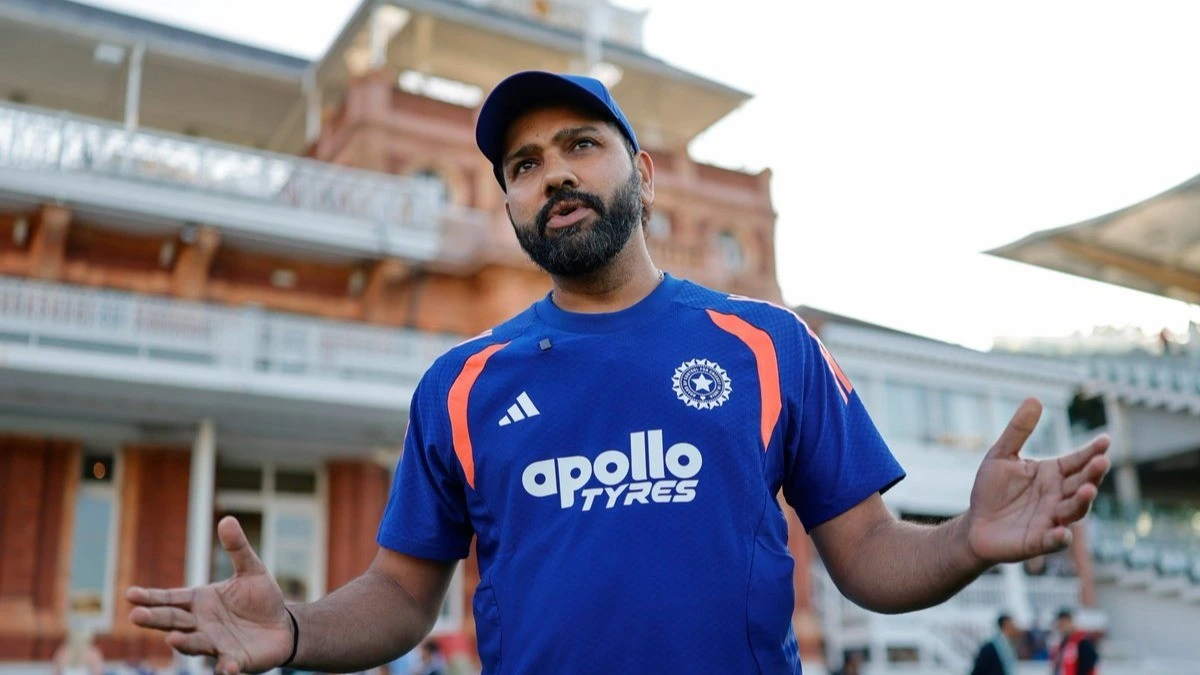
The latest round became particularly strange because the Board of Control for Cricket in India had to publicly address it after its September 3 review meeting. BCCI secretary Devajit Saikia questioned why there was so much speculation around Rohit’s future and pointed towards the obvious fact that the 39-year-old had just scored 138 at Lord’s. The board has not announced that Rohit is guaranteed a place at the ODI World Cup 2027, because no sensible selection process should be doing that this far out, but neither has it announced that his ODI career is approaching its end.
In fact, the message coming out of the board has been almost the opposite: Rohit remains relevant because he is still producing performances that make the argument for keeping him alive.
And that, really, is where the conversation should begin. Not with whether Rohit Sharma is going to play the 2027 World Cup, because nobody can know that in September 2026, but with why we have become so fascinated by the date on which he will stop playing.
There is a difference between asking whether a player is still good enough and being obsessed with when that player will finally disappear. Indian cricket seems to have crossed that line with Rohit. His performances are increasingly treated as evidence in a retirement trial. Every innings is presented as either another argument for his survival or another warning that the end is approaching. The cricket itself has somehow become secondary to the question of how much longer the cricket is going to last.
The numbers make the obsession even stranger. Rohit has now scored 11,895 ODI runs, with 34 hundreds and three double-centuries. His average is still around 49, his strike rate is above 93, and he owns the highest individual score anyone has ever made in the format, 264 against Sri Lanka. These are not numbers that prove a player should be selected forever. Nothing does. They do, however, establish an important fact: we are not talking about a player who somehow wandered into the Indian team on reputation and has been hanging around ever since. We are talking about one of the most productive ODI batsmen the game has ever seen, who happens to be approaching the final stage of his career.
That distinction matters because age has increasingly become the loudest argument against him. Rohit was born in April 1987, which means that when the 2027 World Cup begins he will be 40. That sounds enormous in modern international cricket, particularly for a batsman who fields and opens the innings. There is no pretending otherwise. Forty is not 30. Recovery is different, fitness becomes more important, and the selectors have to think about what the team will look like beyond the next tournament. But there is something intellectually lazy about turning age itself into proof that a player is finished. A number on a birth certificate tells us how old somebody is. It does not tell us how many runs he is going to score on Sunday.
The funny thing is that Rohit’s own career has repeatedly made a mockery of simplistic age-based assumptions. He was 36 during the 2023 World Cup and scored 597 runs at a strike rate of more than 125. He had already moved into a completely different phase of his career, had become captain, and had adopted an extraordinarily aggressive approach at the top of the order. He didn’t look like a batsman trying to conserve whatever was left. He was trying to determine how much damage he could do before somebody got him out. And that tournament remains one of the best examples of how Rohit can still change the entire character of an Indian innings even when Virat Kohli is scoring more runs in the same tournament.
Then came 2025, when he scored 650 ODI runs in 14 matches, including two centuries and four fifties. In 2026, before the latest round of retirement speculation, he had already produced another substantial body of work, including the 138 at Lord’s. His overall last-ten-innings sequence currently gives him 454 runs at an average of 45.4, with one hundred and two fifties, while striking at 100. You can absolutely look at those numbers and say that he isn’t producing at the level of his absolute peak. You can question whether India should take a 40-year-old into a World Cup. You can ask whether somebody younger might offer greater long-term value. All of those are legitimate cricketing questions. What the numbers don’t say is that Rohit has stopped being a productive ODI batsman.
And then there is Lord’s, which almost felt like a parody of the entire conversation. Rohit had made 11 and 26 in the first two ODIs against England. India lost the second match. Suddenly the usual machinery started up again: Rohit’s age, Rohit’s future, the next World Cup, the next opener, the need to look ahead. Then at Lord’s he walked out and made 138 from 110 balls, with 17 fours and five sixes, his 34th ODI hundred. India lost the match, which somehow made the innings even more revealing because Rohit’s hundred could not be dismissed as the easy explanation for an Indian victory. He had simply batted brilliantly while his team still lost.
That should have been enough to change the nature of the discussion. Instead, it merely interrupted it.
I find this whole Rohit thing a bit strange. We don’t seem to give the guy much room anymore. Even when he has a really good innings, it somehow just leads to another question. He scores a hundred and instead of saying, okay, maybe he’s still got it, the next thing is usually, can he do it again? And then if he does, it’ll be something else. Can he do it against better teams? Can he do it in a big tournament? Can he keep doing it for another year? It just keeps moving. At some point you have to wonder if we’re actually judging his cricket anymore or just looking for an answer that nobody can really give us in advance.
No player can give you a guarantee about his future form. Not Rohit. Not Virat Kohli. Not Shubman Gill. Not Yashasvi Jaiswal. Nobody. Selection is supposed to operate on probabilities. Who gives India the best chance right now? Who is improving? Who is declining? Who fits the role? Who is available? Who performs against the opposition we are likely to face? That is the conversation. The moment we start asking whether a player is ‘too old’ before answering whether he is still good enough, we have allowed age to become a substitute for analysis.
And perhaps Rohit has made that particularly difficult because his peak was so ridiculous that anything less now looks like failure. This is the part people forget when they compare him with the Rohit of a few years ago. In 2019 he scored 1,490 ODI runs and seven hundreds. He scored 648 runs in the World Cup alone, including five centuries. That is not merely a good season but one of the most extraordinary individual tournament performances in ODI history. In 2023, he scored 597 World Cup runs while striking at more than 125. When you have watched a player produce those numbers, your brain begins to treat them as his normal level. So when he scores 650 ODI runs in a year, you see decline because you are comparing 650 with 1,490 rather than comparing 650 with what most international batsmen actually produce.
Rohit has suffered from the same strange problem that follows almost every great athlete towards the end of a career: his own greatness becomes the standard used to argue that he is no longer great. We aren’t really comparing him with the available Indian openers anymore. We are comparing him with the best version of Rohit Sharma that exists in our memory. That is an impossible opponent. The 2019 version of Rohit would beat almost every batsman in almost every comparison. If that is the benchmark, then of course the current Rohit looks diminished. But selection isn’t supposed to ask whether a 39-year-old is still as good as the 32-year-old who produced one of the greatest World Cup batting campaigns ever. It is supposed to ask whether the 39-year-old is still good enough for the job he is being asked to do.
There is another uncomfortable thing we need to admit: Indian cricket has never been particularly good at allowing great players to simply age. We love our legends when they are winning. We love talking about their records, their comebacks, their greatest innings, their milestones.
But once they enter the final stage of their careers, the conversation changes very quickly. Suddenly every young player waiting in the wings becomes ‘the future’, and every failure by the older player becomes proof that the future should arrive immediately. We did it with Sachin Tendulkar. We did it with MS Dhoni. We have done it with Virat Kohli. And now Rohit is experiencing the same thing.
The problem isn’t succession planning. Succession planning is necessary. The problem is the idea that preparing for the next generation requires humiliating the previous one. India can prepare Yashasvi Jaiswal for the future without pretending Rohit Sharma cannot bat anymore. India can give another opener opportunities without announcing that Rohit is finished. India can experiment during bilateral cricket while still respecting the fact that a player with 11,895 ODI runs might occasionally be useful. These aren’t contradictory positions. In fact, that’s precisely what a strong cricket system should be able to do.
And this is where the 2027 World Cup discussion has become slightly ridiculous. The tournament is still more than a year away. India has an enormous amount of ODI cricket to play before then, and even the BCCI’s latest review meeting was about building a roadmap rather than handing out guaranteed World Cup places. The board is also talking about workload, preparation and the broader structure of India’s future schedule. So why are we behaving as if the squad needs to be locked today?
The whole point of the next year is to find out. Maybe Rohit scores 700 more runs and makes the decision easy. Maybe he struggles badly and makes it easy in the other direction. Maybe he remains somewhere in the middle, in which case the selectors have to make an actual cricketing judgement. That’s how sport works. You gather information and then make a decision. What we don’t need is to manufacture the ending in advance.
Rohit retiring from T20Is after the 2024 World Cup made sense. India had just won the World Cup, he had played his last game in the format, and there was already a pretty clear idea of what came next. The Test retirement was different because, by then, his batting had actually been going downhill for a while. When he was left out of the Sydney Test in January 2025, it wasn’t because of one bad innings or one bad series. He had managed just one fifty in his previous 15 Test innings. You could argue about whether he should have been dropped, but at least there was a cricketing reason behind the conversation.
The ODI situation is different. He has not announced his retirement. The board hasn’t told him to leave. He has not gone through a prolonged period of being unable to score runs. In fact, the latest ten-innings numbers give you an average above 45 and a strike rate of 100, and somewhere inside those ten innings is a 138 at Lord’s. That does not automatically make him India’s best option, but it makes the idea that his ODI career has somehow already reached its natural conclusion far less convincing.
There is also a tendency to forget what Rohit actually brings beyond the raw run tally. He isn’t just another opener who happens to have accumulated 11,895 runs. His ability to destroy the first ten overs has been one of the defining features of modern ODI cricket. His career changed the way Indian fans understood the role of an opener because he could spend the first few overs assessing conditions and then suddenly turn a 45-ball 35 into a 100-ball 150 without making the transition look particularly dramatic. That ability is difficult to quantify with one statistic. You can see it in the scoreboard, in the way fielding captains move people around and in the way an opposition team knows that if Rohit gets through the first ten overs, the entire shape of the innings can become dangerous.
And even now, at 39, that possibility hasn’t disappeared. His 138 at Lord’s wasn’t a nostalgia act. It was’t a farewell innings. It was a genuinely high-level ODI performance against England, in a match where India were chasing 388. Rohit and Shubman Gill gave India a 147-run opening partnership, and Rohit’s subsequent partnership with Kohli kept India in a chase that ultimately ended 27 runs short.
That is exactly why the retirement debate feels premature. There is still enough cricket inside Rohit Sharma to make the decision complicated.
Great players don’t all get the same kind of ending. Some leave when they’re still at the top, some hang around for a bit, some have one really good last tournament and call it a day, and some just know themselves that it’s time to stop. Rohit doesn’t have to retire after one big hundred just because that would make for a nice farewell story. And he doesn’t have to keep going till 2027 just because everyone likes the idea of a World Cup being the final chapter. At the end of the day, it’s his career, and there’s no rule saying a great career has to end in some perfect little cricket story.
There is no guarantee Rohit will play in the 2027 World Cup, and there shouldn’t be. A place in a World Cup squad cannot be reserved forever because somebody once scored 264 or because he has 11,895 ODI runs behind his name. At the same time, there is no cricketing reason to decide today that he won’t be there simply because he will be 40.
That decision can wait, and perhaps that is the most uncomfortable part for everyone who wants a definitive answer right now. Rohit could have a poor run over the next year and make the decision for the selectors himself, or he could continue scoring enough runs to make leaving him out look like an unnecessary act of generational change for the sake of it. He could even remain somewhere in the middle, which is where selection actually becomes difficult because then you have to weigh his current output against the alternatives, his fitness against the demands of the tournament, and his experience against the possibility that a younger player could offer India something different. That is what selectors are supposed to do. They are not supposed to predict the exact date on which a great player’s career will stop being useful.
And perhaps that is what bothers me most about the way Rohit’s future is discussed.
We’ve somehow made Rohit’s retirement a bigger topic than his actual cricket. Before people even talk about his runs, they’re talking about his age, and before he gets another game, there’s already a discussion about what comes next. Every series seems to turn into another argument about whether India should move on. The funny part is that Rohit keeps doing just enough to make that conversation messy. He scored 650 ODI runs in 2025, has averaged 45.4 in his last ten ODI innings, and has 11,895 ODI runs, 34 hundreds and three double-centuries. Then he goes to Lord’s at 39 and smashes 138 off 110 balls. None of this guarantees that he should be playing in 2027, obviously. But if we’re going to have this conversation, surely we can talk about his cricket too, instead of looking at his age and deciding the rest from there.
Eventually, Rohit Sharma will stop playing ODI cricket, just as every player before him has done and every player after him will do. Maybe he will decide himself that he has had enough. Maybe the selectors will eventually decide that somebody else is better. Maybe his body will make the decision before either of them gets to. There is no way of knowing, and there is really no need to know yet.
What Indian cricket should be doing now is preparing for the future without behaving as though the future has already arrived. Give the next generation enough cricket to develop, keep evaluating Rohit honestly, and when the time comes, make the decision on what the player is actually giving the team rather than on what we think a 39-year-old is supposed to be giving it.
Rohit’s career does not need us to manufacture a farewell. It has already been extraordinary enough. The only thing left to decide is whether he still has enough cricket in him to make the final chapter worth continuing, and for now, the rather inconvenient answer is that we simply don’t know yet.
Amar Pal Singh Bhalla is a sports writer covering cricket, football and tennis.
Based in India, he has followed the game for the last few years and writes
match analysis, previews and features for Beyond The Score