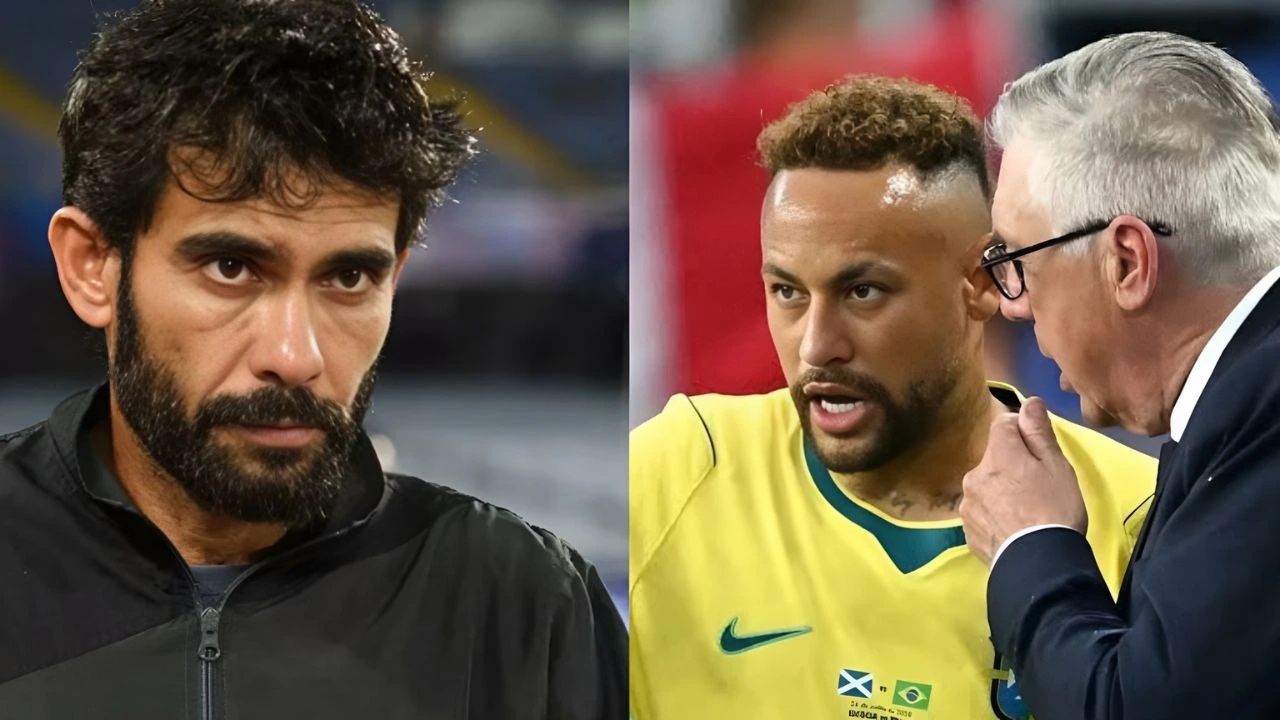
There was a point before India played Panama when this match seemed to be about something completely different. Brazil’s Carlo Ancelotti had been asked about Indian football and its culture ahead of Brazil‘s meeting with India, and his comments created the sort of conversation that can easily take over a football match before the football has even started.
Khalid Jamil was given the obvious opportunity to respond, but he did not want to enter that argument. His answer was simple: everyone is entitled to their opinion, and he wanted to focus on Panama.
I actually like what happened next because Jamil eventually got to answer Ancelotti‘s Brazil without having to answer him at all. Indian team played Panama, a World Cup team ranked 44th in the world against India’s 138th, and instead of spending 90 minutes demonstrating why the gap exists, they spent large parts of the game making that gap look rather less comfortable than it should have been. Indian team drew 1-1, which is the part everyone will remember, but the more interesting question before Brazil arrive in Kolkata is what Panama had to do to get that draw and what India discovered about themselves while forcing them to do it.
Jamil had actually been talking about this before Ancelotti‘s comments became a talking point. He had described playing stronger teams as a pleasure and said that doing it more often would help India improve. He also spoke about players taking responsibility and staying united against opponents ranked far higher than them. Panama were ranked 44th, Brazil fifth and Uruguay 20th when the three-match sequence was set up, and all three had been at the 2026 World Cup.
That is why the Panama match mattered beyond the result. India did not need another friendly where everyone could say the players tried hard and then move on. They needed to know whether the ideas Jamil was trying to build could actually survive against a team with a considerably higher level of international experience. Panama had 14 players in their squad who had been part of their World Cup campaign, so this was not some experimental side that had accidentally wandered into Bengaluru. It was a genuine test of where India‘s new team stood.
And for long periods, India looked like they had understood the assignment better than Panama did. Panama had the greater possession and the greater overall threat, which is hardly surprising given the difference between the two teams, but India did something important whenever they recovered the ball: they did not immediately treat possession as something that needed to be given back. They looked forward.
Ryan Williams kept trying to run behind the defence, Manvir Singh‘s movement gave India another option, and Akash Mishra provided the delivery that eventually turned one of those movements into the opening goal. Williams scored in the 41st minute after getting behind Panama‘s defence, and the goal was not simply a case of a striker receiving a lucky ball and finishing it. There was movement before the pass, there was space to attack and there was enough confidence in India‘s transition to actually exploit it.
That is where I think the Brazil connection becomes interesting, because saying “India scored against Panama” is not really the point. Brazil will not watch the match and suddenly decide India are dangerous because Ryan Williams scored one goal. That would be ridiculous. The useful information is in how India created that goal. Williams has spoken about working on movements in training, and the combination with Manvir helped pull Panama‘s defensive structure apart enough for Mishra to find him.
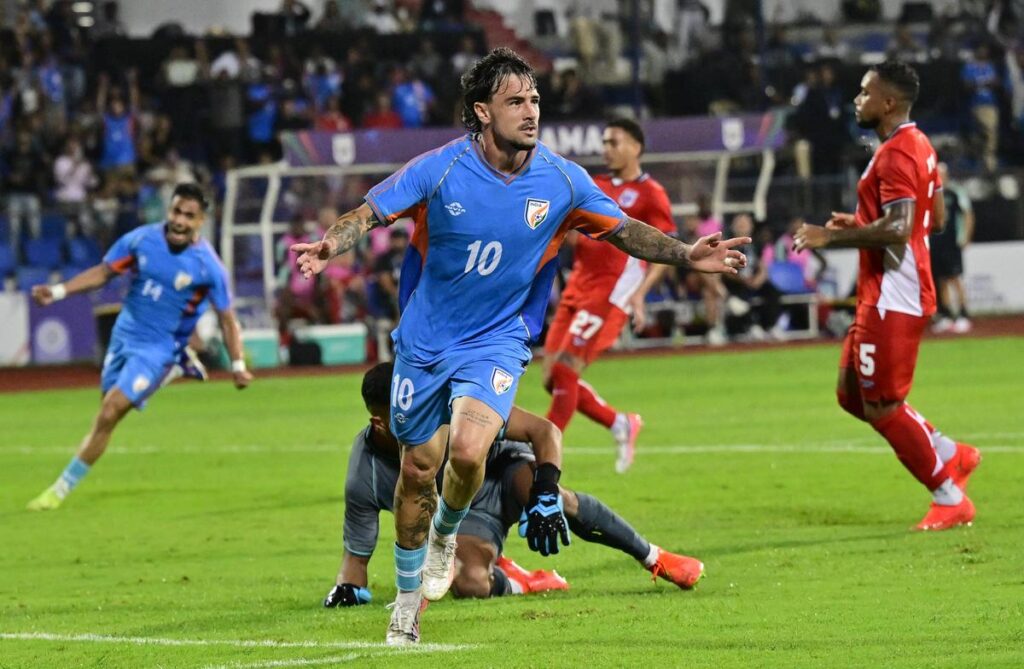
India had identified a way of attacking space rather than simply hoping the opponent made a mistake. That distinction matters when you are playing a team as strong as Brazil. Against a superior opponent, you may only get three or four moments in an entire match where the defensive structure is genuinely vulnerable. If you spend those moments passing sideways because you are too impressed by the shirt in front of you, the opportunity disappears. If you recognise the space quickly enough, you at least give yourself a chance.
Panama then spent the second half showing India exactly why they were the higher-ranked side. They changed things at the break, increased the pressure and eventually got their equaliser through Omar Valencia in the 68th minute. The goal came from distance rather than some beautifully constructed move through India‘s defence, but Panama began to impose themselves more as the match went on and forced India into deeper defensive positions.
Gurpreet Singh Sandhu had to make saves, India had to block attempts and Panama started looking much more like the team their ranking suggested they should be. This is also where I would resist turning the match into some exaggerated story about Panama being exposed as a terrible side. They were not. They had more of the ball, created danger and showed their quality after the interval. A friendly does not suddenly reveal the “biggest weakness” of a World Cup team after 90 minutes.
But it did reveal something India could attack.
The moment Panama lost control of the spaces behind their defensive line, India looked capable of hurting them. The problem for Panama was that India did not need to dominate possession to create those situations. That may actually be the more useful lesson for Jamil.
India are not going to suddenly become a possession-heavy team because they drew with Panama. They don’t need to. Their route against stronger opponents may be much more about compact defending, winning the ball and immediately asking the opposition defenders a different question. Can you recover quickly? Can you deal with Williams running behind you? Can you track Manvir’s movement? Can you stop Akash Mishra from finding that pass? Can you prevent India from turning one recovery into a transition before your midfield has reorganised?
Panama eventually found answers to some of those questions, but they did not find all of them. That is why the final stages of the match matter so much. Once Valencia had equalised, India did not simply retreat and accept the draw. They still had opportunities to win.
In the 80th minute, Edmund Lalrindika and Manvir Singh were involved in chances that could have put India back in front, and even later Manvir had another opportunity after a combination involving Pramveer Singh and Sahal Abdul Samad. The AIFF’s own account noted that India came within 22 minutes of what would have been an extraordinary victory. That does not mean India deserved to win more than Panama, because Panama had plenty of chances of their own, but it does mean the equaliser did not end India’s ambition.
And that is probably the part Jamil will be happiest about.
A weaker team can have a good first half against a stronger opponent. It happens. The stronger side relaxes, the underdog scores, the game changes and eventually normality returns. What is harder is to concede the equaliser and still believe you can hurt the opponent again. India did that. The players did not suddenly start behaving as though the draw was something they had to protect at all costs. There were mistakes, there were periods when Panama pushed them backwards and there were moments when India looked stretched, but they continued searching for the next attack. For a coach rebuilding a national team, that may be more valuable than the result itself.
There is also a less comfortable part of the story that should not be ignored. India looked more dangerous when Williams was available as an outlet, and once he went off in the second half, some of that direct threat naturally disappeared. That tells Jamil something too.
If India’s attacking plan depends heavily on one player being able to run behind the defence, hold the ball or carry the team forward after a turnover, better opponents will identify that quickly. Brazil certainly will not need much convincing to study where India’s transition threat comes from. The Panama match therefore gave India both encouragement and homework: the attacking structure works, but it needs more than one route. If Williams is closed down, if Manvir is isolated, if Mishra cannot make that pass, India need another way of turning a defensive recovery into something meaningful.
That is why I don’t think the real story of this 1-1 draw is that Panama “escaped” because India were secretly the better team. They weren’t. Panama had enough chances to win and their second-half response showed the difference between the two sides.
The more interesting story is that Panama had to respond to India rather than simply control them from start to finish. A 94-place ranking difference should normally make a match feel predictable. Instead, India created enough uncertainty that Panama had to make changes at half-time, push harder after the equaliser and remain alert until the final whistle. For Indian football, that is a much more useful development than pretending one friendly has changed the hierarchy of the sport.
And now comes Brazil, which makes the whole thing slightly more fascinating.
Brazil will not make the same mistakes Panama made. They have players who can punish India much more severely when they lose the ball, and Carlo Ancelotti has spent his entire career understanding how to prepare teams for exactly these situations. The match against Brazil is scheduled for October 3 at Kolkata’s Salt Lake Stadium, followed by Uruguay on October 6.
This is also a new Brazil cycle under Ancelotti, with the coach beginning to reshape the squad after the 2026 World Cup and looking towards 2030. So there is an obvious temptation to treat the India-Brazil match as a gigantic mismatch and leave it there, but that would make the Panama result almost meaningless. The whole point of playing these opponents is to discover what India can do when the difference in quality becomes uncomfortable.
And Jamil has now discovered something.
India can defend against a stronger side like Brazil without completely surrendering the match. They can attack the space behind a higher defensive line. Williams can make international defenders turn and run. Manvir‘s movement can help create openings. Akash Mishra can provide the kind of forward pass that changes the direction of an attack. Gurpreet can keep the team alive when the pressure arrives. And perhaps most importantly, the players did not look paralysed by the reputation of the opponent. Jamil had spoken before these matches about the importance of not being overawed by stronger teams, something he had learned himself during India’s 2000 tour of England. Panama was the first serious chance to see whether his current players had absorbed that idea.
They did, at least for large portions of the night.
Now Brazil will test whether they can do it against a team that is better at almost everything Panama brought to Bengaluru. That is where this gets interesting for me. The question is not whether India can beat Brazil. It would be silly to reduce the whole exercise to that. The question is whether India can still find those same moments when the opponent is quicker at closing them down, better at recovering the ball and far more dangerous when India make a mistake. Can Jamil‘s team still defend with enough discipline to remain compact against Brazil, while keeping enough players forward to make the transition dangerous? Can Williams and Manvir find space when Brazil‘s defenders are already expecting the run? Can India survive the periods when Brazil inevitably take control without becoming so passive that they invite pressure for 45 minutes?
Panama has at least given Jamil something to work with before he walks into that game.
And there is a funny little symmetry to the whole thing. Ancelotti from Brazil spoke about Indian football before the Panama match, and Jamil basically refused to participate in the conversation. He did not try to prove Indian football was already good enough. He did not try to win a press conference. He simply said everyone was entitled to an opinion and moved on to the match in front of him. Then his players went out against a World Cup team, scored first, conceded, continued attacking and came within a few moments of winning the game.
Maybe that is the answer Jamil was always going to give.
Not because India have suddenly solved their football problems. They haven’t. Not because a 1-1 draw against Panama suddenly makes them equals of the teams they are preparing to face. It doesn’t. And certainly not because Brazil should now be afraid of India. There is no evidence for that.
But Brazil should have a reason to pay attention.
Because Panama arrived in Bengaluru expecting to be the stronger side, and by the time the final whistle came, they had spent 90 minutes discovering that India were not interested in behaving like a team that knew its place in the FIFA rankings. The 1-1 scoreline says Panama survived. The match itself says something slightly more useful: India have found a way of making stronger teams uncomfortable, and Khalid Jamil now has to find out whether that way survives when the opponent is Brazil.
That is what October 3 is really going to tell us.
Amar Pal Singh Bhalla is a sports writer covering cricket, football and tennis.
Based in India, he has followed the game for the last few years and writes
match analysis, previews and features for Beyond The Score