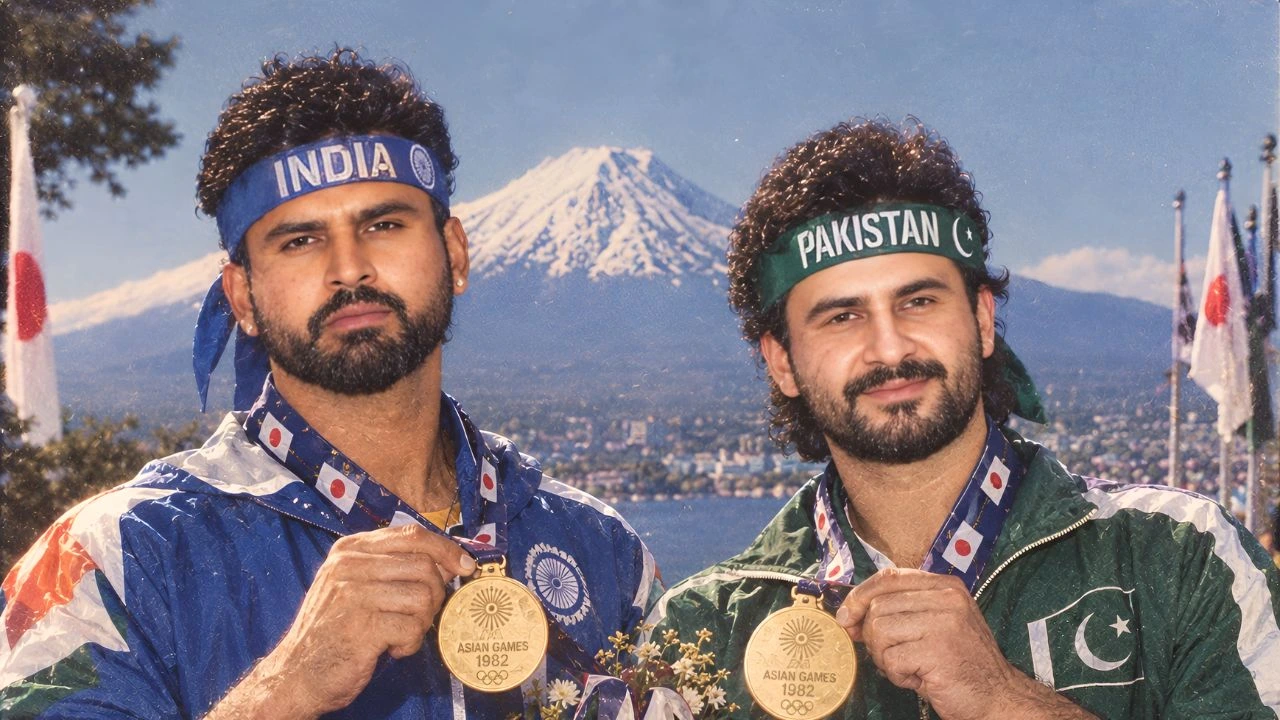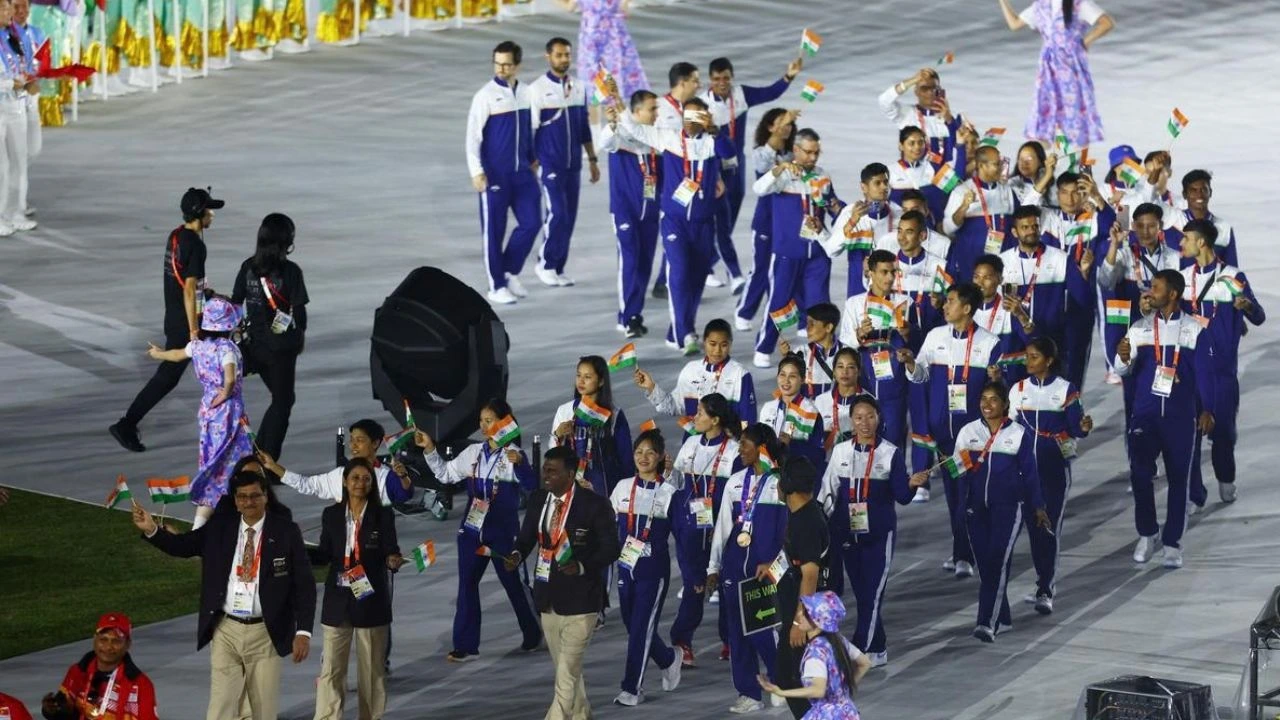
I have a terrible memory for names, especially when it comes to sports I don’t regularly watch. I can remember that an Indian won something, remember the final score, remember that I was sitting somewhere watching it and probably even remember the ridiculous amount of time I spent looking up the rules, but ask me for the athlete’s name a week later and there is a good chance I will stare at you like you have asked me to remember the fourth person in a school photograph from 2004.
The Asian Games 2026 make this worse because every few hours there is another Indian athlete appearing in a sport that most of us probably haven’t watched since the last Asian Games, and suddenly we are all experts for fifteen minutes. I found myself doing exactly that in Nagoya. Watching something I had never properly followed, seeing an Indian win, getting excited, searching the athlete’s name, reading a little about them and then moving on to the next event. It wasn’t even because I didn’t care. Quite the opposite. I cared for those ten minutes. I wanted them to win. I wanted to know who they were. Then another event started and my brain moved on as if the previous person had never existed.
I can remember that a batsman scored 137 against Sri Lanka in some completely forgettable bilateral series ten years ago, but ask me who won an Asian Games medal last Tuesday and suddenly my brain behaves like somebody has unplugged the router. I know I saw it. I know I was interested. I know I probably even sent the result to someone. The information was there for a few minutes and then apparently my brain decided there was no long-term storage required. This is probably what happens when you spend too much time watching cricket.
You remember things that have absolutely no practical use and forget things that might actually make you sound like an intelligent person. I can tell you things about a Test match from 2012 that nobody has ever needed to know, but give me three names from an Indian athletics event at the Asian Games and suddenly I need Google. And I suspect this is part of the reason the Asian Games are so strange for Indian sports fans. For two weeks, we discover dozens of athletes we never knew existed, become emotionally invested in them, and then most of us go back to cricket before their medals have even properly dried.
That is partly why I kept looking at the final number and feeling that it wasn’t quite telling me what I thought it was telling me. India finished Nagoya with 85 medals: 21 gold, 27 silver and 37 bronze, and fourth place overall. It is obviously lower than the previous Asian Games, where India won 106 medals and 28 golds, so there is no point dressing that up. The number went down. But this was still India’s second-highest medal haul at the Asian Games, and India finished fourth again.
The late part of the competition was particularly strong, with archery, boxing, wrestling and hockey producing a big chunk of the final gold rush. China finished miles ahead with 341 medals, Japan had 269, South Korea had 150 and India had 85, so nobody should pretend we have suddenly arrived at the top table and started ordering dessert with the big three. We haven’t. But neither does 85 suddenly become a bad sporting performance because 106 existed three years earlier. Both things can be true, and I think Indian sports conversations would be much healthier if we stopped feeling that we have to choose one.
Asian Games 2026: The Golds We Lost
The uncomfortable part is that there really was a reason people started counting what had gone wrong. India won 28 golds in Hangzhou and only defended eight of them in Nagoya. Twenty of those 28 gold medals disappeared, across shooting, athletics, archery, badminton, equestrian, squash and tennis. In Hangzhou, India had won nine individual gold medals across shooting, athletics and archery, and none of those individual titles were successfully defended this time. That is a proper question, not social-media nitpicking.
Why did it happen? Why did so many individual champions fail to repeat? Why did badminton fall away so badly? Why did some sports that looked like reliable sources of gold suddenly become sources of silver and bronze instead? Those are exactly the things federations and coaches should be sitting down to discuss now that everyone has gone home.
But there is another part of that same statistic which makes it more interesting. India didn’t simply lose 20 golds and replace them with nothing. Thirteen new routes to gold appeared in Nagoya. Boxing went from no golds in Hangzhou to three. Women’s hockey moved from bronze to gold. India won a historic women’s golf gold. New medal-winning sports appeared in the mix, while archery changed the events in which it produced its golds. So the medal map moved around rather than simply collapsing.
That distinction matters because looking only at ’20 lost’ gives you a very different picture from looking at ’20 lost, 13 new gold routes.’ The second picture is much messier, which is probably why I find it more useful. Sport is messy. One athlete gets injured, another improves, somebody else has a bad day, a teenager arrives earlier than expected, a team that finished third becomes champion. The medal table doesn’t care about any of that. It just moves the number around.
Badminton was probably the easiest disappointment to understand because the expectations were so obvious. We have spent years building a certain confidence around Indian badminton, and in Nagoya there wasn’t much to celebrate at the top end.
Dhiraj Bommadevara was another result that personally bothered me because I had followed him and genuinely expected him to be fighting for gold. You can call those disappointments what they are without turning the athletes into villains. That distinction seems to get lost very quickly. A disappointing campaign is not the same thing as a disappointing athlete. The first is something you can analyse. The second is often just something people say because they are angry that their prediction didn’t come true.
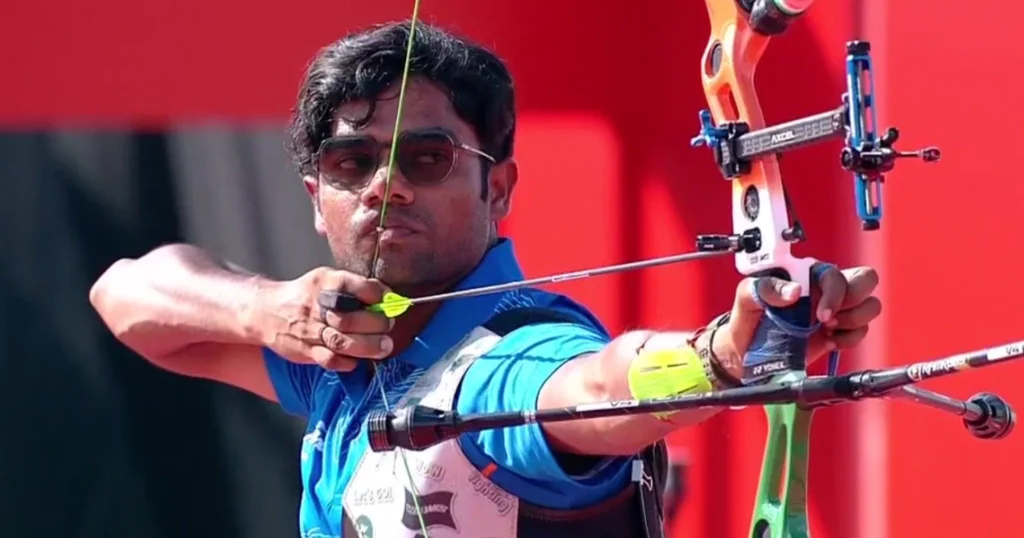
And this is where I actually understand the criticism about the 20 lost golds, provided we use it properly. Don’t use it to tell an athlete who finished second that they have embarrassed 1.4 billion people. Use it to ask why a champion wasn’t replaced by another champion. Use it to see where India has depth and where it still depends on one person. Use it to understand why shooting can still produce 15 medals even after losing all seven of its Hangzhou golds, why athletics can produce 24 medals without winning gold, and why archery can return with nine medals while its golds come from a different mix of events. That is the useful part of losing gold medals: they tell you where the system needs to become deeper.
4th place used to mean something very different
I think we sometimes forget how recently fourth place at the Asian Games would have felt like an enormous achievement. In 2014, India finished eighth with 57 medals and 11 golds. In 2018, India finished eighth again but improved to 70 medals and 16 golds. Hangzhou then produced the huge 106-medal haul and 28 golds, and now Nagoya has brought 85 medals and another fourth-place finish. It isn’t a straight line because sport doesn’t work like that, but the direction is still obvious. Ten years ago, even finishing in the top five was incredibly difficult for India. Now finishing fourth for a second consecutive Games is something we can discuss almost as though it were an underachievement. That is a strange kind of progress, but it is progress all the same.
The comparison with South Korea is where I think the frustration becomes useful. They finished with 39 golds and 150 medals. India had 21 and 85. There is still a considerable gap, and I don’t want to pretend otherwise. But India has moved closer to the point where South Korea is a reference point rather than some completely unreachable sporting universe. The population comparison makes that even more uncomfortable.
South Korea has roughly one twenty-eighth of India’s population and a much smaller land area, yet it continues to produce athletes across a remarkably wide range of sports. Japan is another obvious example. China is the extreme one. India has a population comparable to China’s, but China’s 169 golds and 341 total medals make the difference in sporting infrastructure and depth impossible to ignore.
Then there is Uzbekistan, which might actually be the comparison that stays in my head longer. Uzbekistan won exactly 21 gold medals, the same as India, despite having a population of only a few tens of millions. India had enough silver medals to finish above them, but the gold tally was identical.
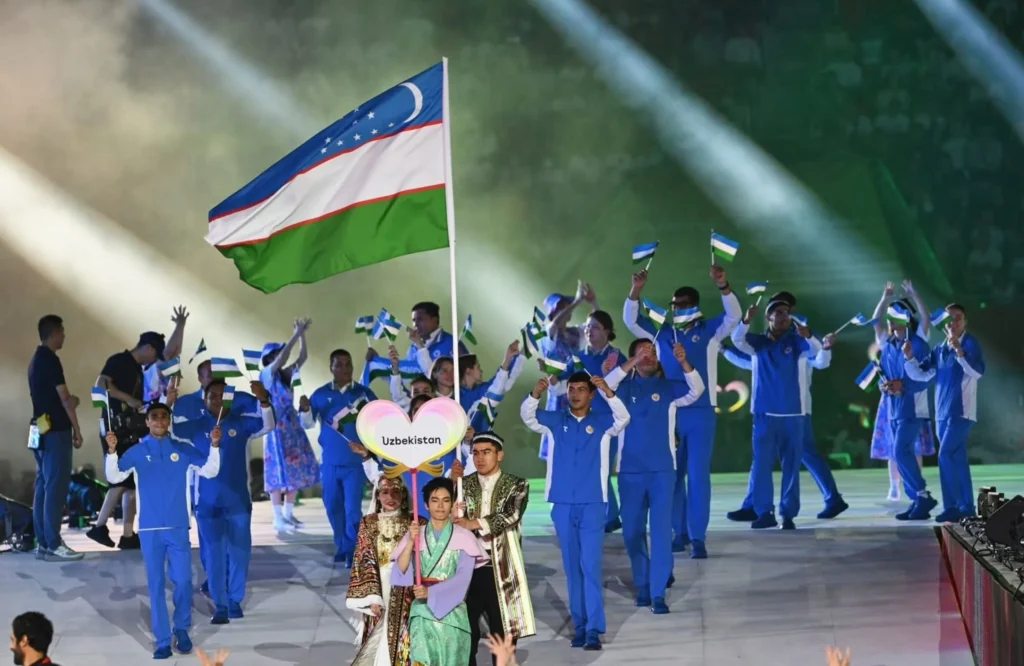
Of course Uzbekistan has its own strengths, especially in combat sports, and you cannot simply take a country with a completely different sporting history and say, ‘Why can’t India do that?’ But the comparison should still make us uncomfortable in a useful way. If a country that is dozens of times smaller can produce the same number of Asian Games champions, then India’s huge population isn’t doing anything by itself. A population only becomes a sporting advantage when you actually find the people inside it who are good at something.
That is why I don’t quite buy the simple argument that India should have won hundreds of medals because there are 1.4 billion of us. A billion people don’t automatically become swimmers, sprinters, fencers or archers. Most of them will never have access to those sports. Some will never even know that certain sports exist. A child cannot decide they are going to become a great fencer if they have never seen fencing outside a movie. A talented swimmer is not going to magically appear because India has a large population if there isn’t a pool, a coach and a system around them.
The real population question isn’t ‘How can 1.4 billion people win more medals?’
It is ‘How many of those 1.4 billion people have ever been given a genuine chance to discover what they are good at?‘
And this is where Nagoya gets more interesting than the medal table.
The India we didn’t see 10 years ago
I kept noticing Indians competing in places where we didn’t normally have much of a sporting presence. Pole vault. Golf. Wushu. Teqball. Sailing. Soft tennis. Kurash. Rowing. Even if some of those athletes didn’t come away with medals, they were there, which sounds like a ridiculously small thing until you think about how sport actually develops. You cannot become good at a sport you never enter. You cannot build a generation of fencers if fencing never reaches schools. You cannot find a swimmer who could potentially become world class if the child never has access to serious swimming. You cannot complain that India is bad at sailing while barely giving anybody a boat.
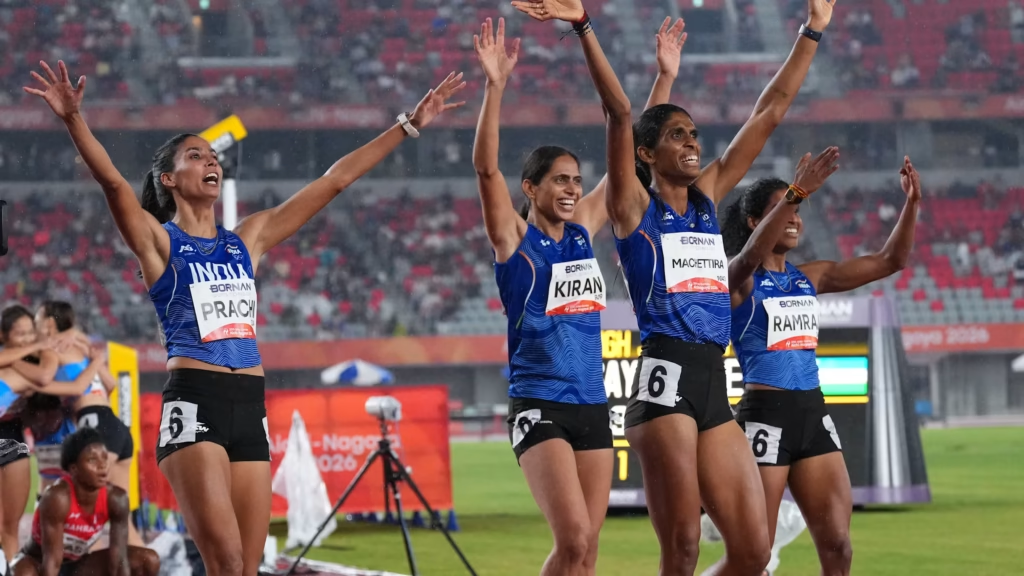
India ended with medals across 21 sports, including 24 in athletics, 15 in shooting, nine in archery and six each in boxing and wrestling, but there were also medals in sports such as sailing, wushu, kurash, rowing, soft tennis and sepak takraw. Pranavi Urs won a women’s individual golf gold. Mixed martial arts appeared among India’s medal-winning sports too.
Some of these may never become major Indian sports, and that is completely fine. We don’t need to dominate everything. What matters is that the sporting map is becoming a little wider. A decade ago, the number of Indian sports that the average fan could name without thinking was embarrassingly small. Now I keep finding myself searching names and rules because an Indian athlete is doing something I don’t fully understand. I actually like that problem.
The contingent itself tells another part of the story. India sent 495 athletes to Nagoya compared with 661 in Hangzhou, after using a much stricter selection approach. The reported criterion was essentially that athletes should be around the top six in Asia to make the team, which meant football, handball, basketball and several athletes in sports such as judo and wushu were left out.
The result was a smaller team but a slightly better return per athlete: around 17.2 medals per 100 athletes in Nagoya compared with 16 in Hangzhou. So yes, the total medals went down, but the medal-per-athlete ratio improved. Whether this is the right long-term strategy is a much bigger question, because sending fewer athletes also means giving fewer people international experience, and sometimes the person you exclude is precisely the person who surprises you. But it is worth recognising that the strategy wasn’t simply ‘India sent fewer athletes and won fewer medals.’ The picture is more complicated than that.
I actually like the debate around that because it gets to something Indian sport has struggled with for years. Do you send a huge contingent because the Asian Games should be an opportunity for athletes to experience major competition, even if they are unlikely to win? Or do you become ruthless and send only people who have a realistic chance of a medal? The second approach gives you a better medal-per-athlete number, but the first approach might create the next generation. There isn’t a perfect answer.
If an athlete is ranked seventh in Asia today, they might be sixth next year and third the year after that. If you never send them because they weren’t good enough today, you might be saving a plane ticket while losing an opportunity.
That is why I get uncomfortable when people look at an athlete who came fourth or fifth and call them embarrassing. We say India doesn’t invest enough in sport, and then we behave as though an athlete has no value unless they return with a medal. Those two attitudes don’t really fit together. An athlete finishing fourth at an Asian Games might be exactly the athlete you want to support for the next four years.
Somebody producing a personal best might be closer to a breakthrough than the bronze medallist who happened to have a poor final. Somebody entering a sport for the first time might be building something that will only become visible at the next Olympics. We are very good at celebrating the finished product and not particularly patient with the manufacturing process.
And there were enough examples of that spirit in Nagoya. Parveen Hooda‘s performance, the volleyball team fighting against Qatar, Sujeet Kalkal coming back from 2-7, athletes producing season-best and personal-best performances, people refusing to let a bad start decide the rest of their competition.
These moments aren’t as easy to put into a medal tally, but I remember them more than I expected to. Maybe because there is something much more human about watching somebody realise that a competition isn’t going their way and still finding a way to stay in it. A gold medal tells you the ending. A comeback lets you watch the person getting there.
The girls changed the conversation
And then there were the women, who I think deserve a much bigger part of the Nagoya story. I don’t want to turn this into a lazy ‘girls outperformed boys’ headline because the exact comparison depends on which sports and which events you count, and there were plenty of excellent performances from Indian men too. But the number of major women’s achievements was impossible to miss.
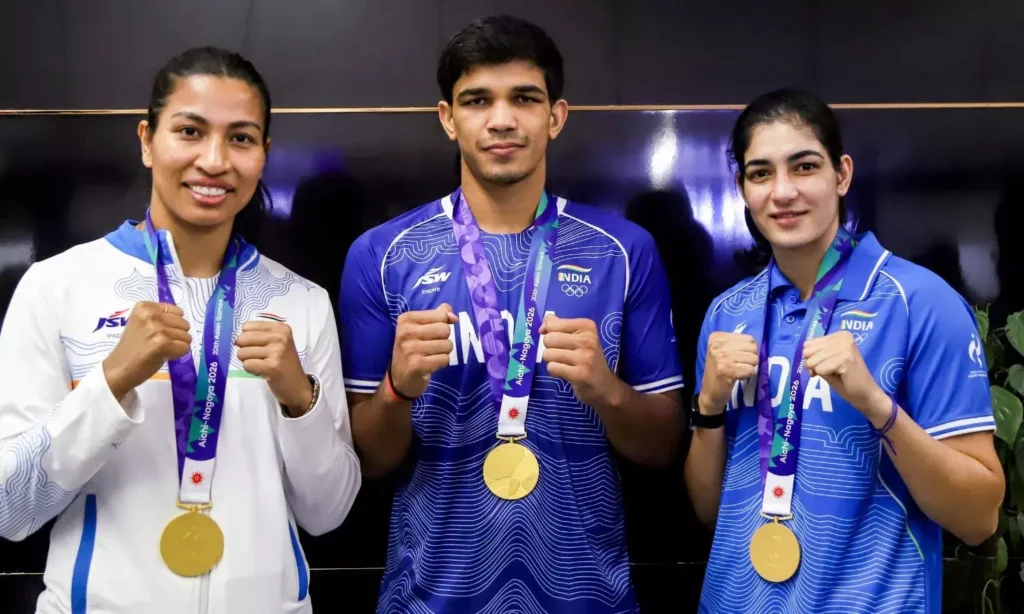
The women’s hockey team won Asian Games gold for the first time in 44 years. The women’s recurve team won India’s first gold in that event and ended South Korea’s 28-year run of winning the title. Kumkum Mohod became the first Indian woman to win the individual recurve gold. Lovlina Borgohain and Parveen Hooda won boxing golds. There were historic performances across shooting, archery, hockey and other events.
The archery story alone is ridiculous when you actually stop and look at it. India had never won the women’s team recurve title at the Asian Games. South Korea had won every edition since 1998. Then Ankita Bhakat, Kirti Sharma and Kumkum Mohod beat South Korea 5-3 in the final. A few days later Kumkum won the individual title too. That isn’t simply another gold medal for India. It changes what the next Indian archer in that event grows up believing is possible. A girl who watches that final doesn’t just see three athletes winning a medal. She sees an Indian team beating the country that had owned the event for 28 years. That is a different kind of sporting inheritance.
The same applies to women’s hockey. For somebody who has followed Indian sport for a long time, a women’s hockey gold after 44 years feels like one of those results that should probably be much bigger than it will eventually become. We will remember the medal tally. We will remember the photograph. Then the next cricket series will start and most of the country will move on. But somewhere a young girl who has spent years being told that sport is something you do until your studies become serious now has another example sitting in front of her. It doesn’t guarantee that she becomes an athlete. It doesn’t magically fix the sporting system. But it gives her one more possibility to consider, and those possibilities are where sporting cultures begin.
I think that is also why the ‘medal or nothing’ approach misses something important. If India is genuinely trying to become better at sport, then the goal cannot simply be to find 20 people who can win gold medals at the next Asian Games. It has to be about making more sports visible, getting more children into them, finding coaches, building facilities, keeping athletes in competition, giving women equal opportunities, and allowing athletes to fail without making failure the end of their careers. The gold medal is the final photograph. The sporting system is everything that happened before somebody stood on that podium.
There is another part of this that I don’t think we talk about enough. India has a lot of athletes now competing in categories where we simply didn’t have much of a presence before. Some will never win an Asian Games medal. Some might not even make the next team. But they are creating a path for somebody else.
The first Indian child who takes up a sport seriously often has a much harder job because there is no obvious route. Once there are ten athletes doing it, there are coaches. Once there are coaches, there are competitions. Once there are competitions, there are rankings. Once there are rankings, somebody starts asking why India isn’t winning. It is a slow and slightly boring process, which is probably why nobody likes talking about it.
We have more than 4 years to figure it out
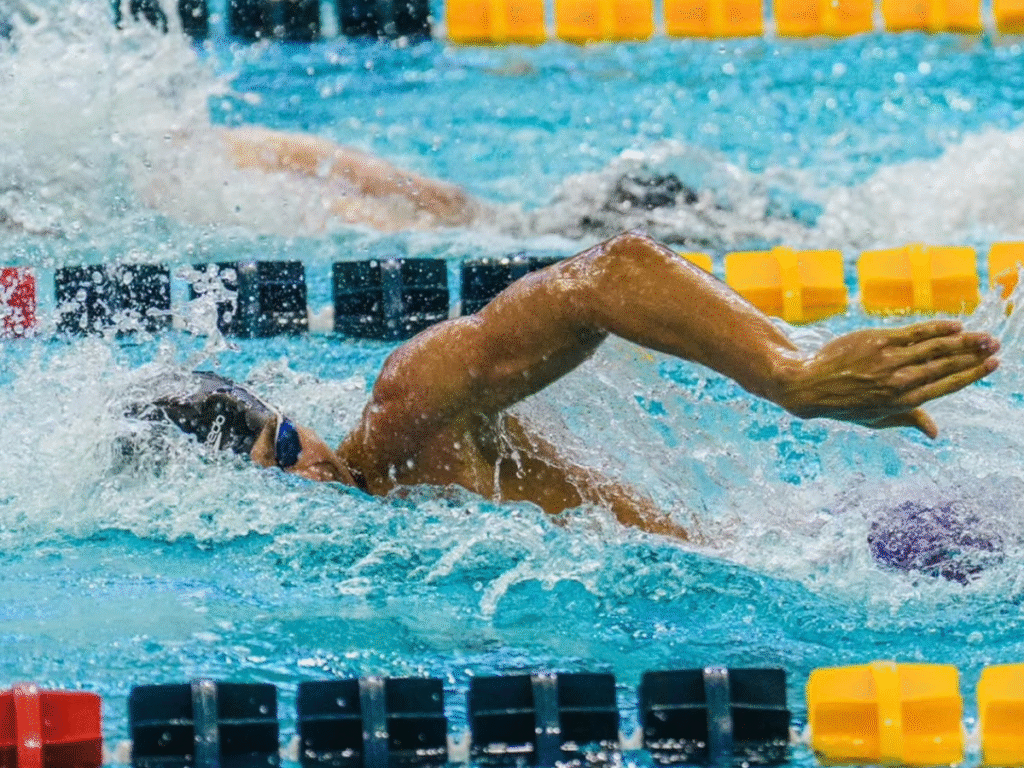
Swimming is the obvious place where India should be thinking much more aggressively. Every time somebody brings up swimming, it sounds like we are repeating the most obvious sentence in Indian sport, but there is a reason people keep repeating it. Swimming has a huge number of medal events, and countries with deep swimming programmes can build a medal count in a way that isn’t possible in sports with only one or two medal opportunities.
China and Japan have benefited enormously from that depth. India doesn’t need to wake up tomorrow and become a swimming powerhouse, but developing a serious pipeline of swimmers could change the mathematics of Indian sport over time. The same logic applies to fencing, judo, taekwondo, sailing, surfing and equestrian. Some of these sports are expensive, some require facilities we don’t have, some need specialist coaching and some have very small talent pools. But if India wants to close the gap with South Korea and Japan, it cannot keep looking for medals only in the sports where it already feels comfortable.
The Para Games are another part of this conversation that will arrive very soon. The Asian Para Games are scheduled for 18–24 October in Aichi-Nagoya, only a couple of weeks after the main Games finish. India has developed a strong para-sport programme over recent years, and I wouldn’t be surprised if the medal conversation becomes interesting again once those Games begin. It also reminds you how strange our definition of a ‘sporting year’ can be. We spend two weeks discussing one set of athletes, then the event ends and there is another group of Indian athletes about to do exactly the same thing, often with even less attention waiting for them.
And the calendar itself may get more interesting. The next Asian Games are officially scheduled for Doha in 2030, although organisers have said they are open to moving them to 2031 if the Olympic Council of Asia and IOC decide that holding the Games one year before the Olympics would make them useful as an Olympic qualifying platform. So your earlier thought about a 2031 Asian Games wasn’t completely out of nowhere; it is actually being discussed now. If that happens, the idea of athletes having major multi-sport targets in a much tighter cycle becomes very interesting, particularly when you add the 2028 Olympics, the Commonwealth Games and the Paralympic cycle into the picture.
Imagine what that could mean for a young athlete who is 18 today. There are major competitions coming often enough that one bad tournament doesn’t have to feel like the end of the road. You can have a poor Asian Games, go back, improve, compete at the Olympics, come back for another Asian Games, then another major event. That is how sporting careers are built. Not every competition has to produce a medal. Sometimes the value of the competition is that an athlete learns what international pressure feels like before the next opportunity arrives.
And that brings me back to the thing that bothered me most about some of the reactions to Nagoya. We have athletes who are quietly working for years and then, when they don’t win, we call them failures. It makes no sense. The criticism should go where it belongs. Question the federations. Question the coaching. Question the selection system.
Question the facilities. Question why a country with India’s population still has such a narrow sporting base. Question why South Korea can consistently produce athletes in sports where India barely participates. Question why Uzbekistan can match India’s gold tally with a fraction of the population. Question why some champions disappear between one Asian Games and the next. All of that is fair.
But don’t look at somebody who has spent ten years training, finished fourth by a few centimetres or lost a close final, and tell them they embarrassed the country.
That person is probably already angry enough.
What I liked about Nagoya was that India gave us plenty of reasons to celebrate without requiring us to pretend everything was perfect. The country retained fourth place. It won 85 medals. It produced 21 golds. It had historic women’s victories, new champions, new medal-winning sports and a late surge that showed the team had plenty of fight left when the Games were almost over. At the same time, it lost 20 of its previous 28 golds, failed to defend a remarkable number of individual titles, disappointed badly in badminton and still sits a long way behind China, Japan and South Korea in overall sporting depth.
I actually like that uncomfortable middle ground more than either extreme. Saying “India won 85 medals, everything is fantastic” is silly. Saying “India has 1.4 billion people and only won 85 medals, what an embarrassment” is equally silly. The truth is much more interesting because India is clearly getting better while still being nowhere near as good as it could be. Those two things don’t cancel each other out.
There is enormous room left. That should be exciting rather than depressing.
If India gets serious about swimming, develops fencing and judo, builds better sailing and equestrian programmes, keeps investing in para sport, expands access to athletics and less familiar sports, improves talent identification, and stops treating fourth place as an insult, there are plenty of medals sitting somewhere in the future. Not guaranteed medals, obviously. Sport doesn’t work like a mutual fund. But opportunities. More people competing. More people discovering sports. More athletes reaching international level. More athletes failing once and coming back better the next time.
And perhaps that is why I don’t want to remember Nagoya simply as the Asian Games where India dropped from 107 medals to 85. That is true, but it is a very small way of looking at two weeks of sport. I want to remember it as the Games where India lost a lot of golds but also found new ways to win them. A golfer won. Women broke old records. Archers beat South Korea. Hockey had a double success. Boxers arrived with golds. Wrestlers fought their way back. Athletes produced personal and season bests. Teams stayed alive when matches looked gone. New sports appeared in the medal conversation. And there were hundreds of athletes whose names most of us will probably forget, despite the fact that they spent years getting good enough for us to watch them for those few minutes.
I will probably forget some of them too.
That is the annoying part.
But perhaps next time I won’t forget quite as many. And perhaps the kid who watched Kumkum Mohod win gold, or watched the women’s hockey team win after 44 years, or saw an Indian athlete competing in a sport they had never heard of, won’t have the same problem I have. Maybe they will remember the name because, for them, that athlete won’t be some random person who appeared on television during the Asian Games. They will be the reason they picked up a bow, stepped into a pool, walked onto a hockey field, tried a golf club, or searched YouTube for a sport they had never cared about before.
The medal table will eventually become old news. The possibility it leaves behind doesn’t have to.
And that is probably what I keep coming back to when I look at those 85 medals. India didn’t win enough to pretend the job is done. It didn’t lose enough to call the campaign a failure either. It came fourth, again, after a decade in which fourth place has gone from something difficult to something that now feels frustratingly close to the next level. There are still huge gaps, ridiculous amounts of talent we haven’t found, sports we haven’t taken seriously enough and systems that need fixing. But there are also more Indian athletes standing in more places than there used to be.
Maybe that is the real thing India brought home from Nagoya: not just 85 medals, but a slightly bigger idea of what an Indian athlete can look like, and where an Indian athlete can come from.
Amar Pal Singh Bhalla is a sports writer covering cricket, football and tennis.
Based in India, he has followed the game for the last few years and writes
match analysis, previews and features for Beyond The Score