Harmanpreet Kaur stepping down as India captain across all three formats feels strange, at least to me, because there isn’t an obvious failure sitting at the end of it.
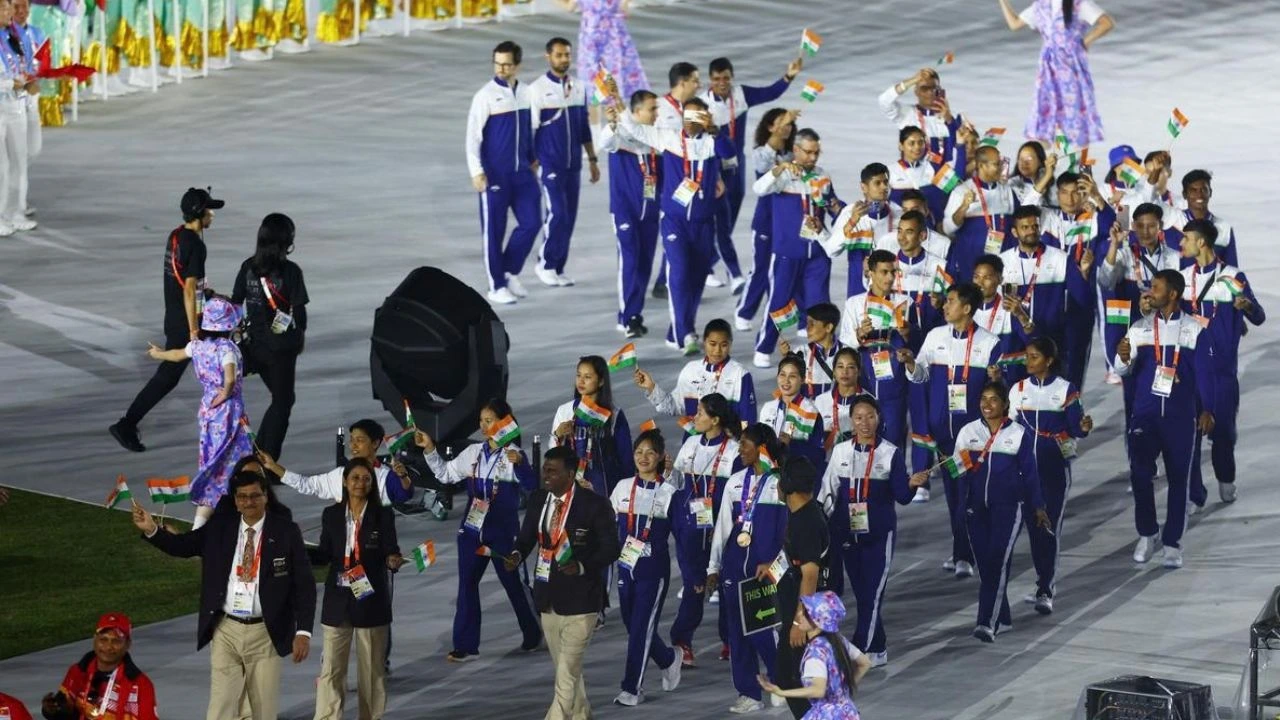
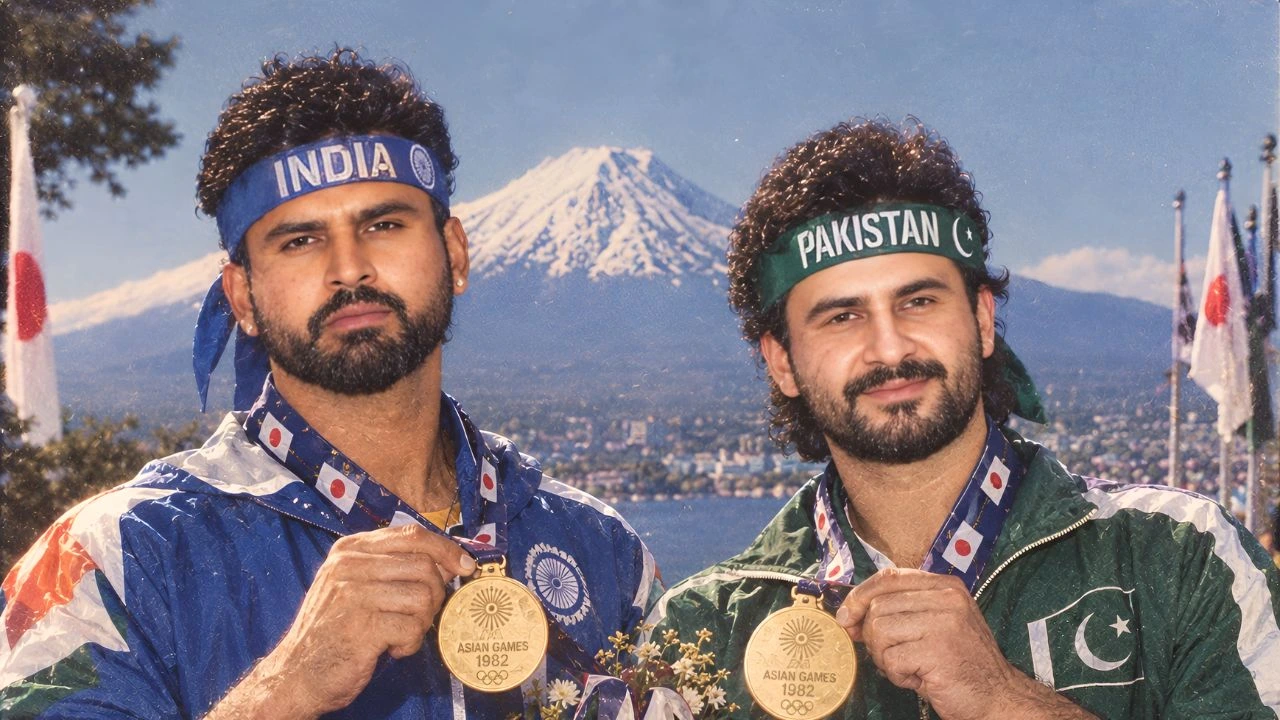
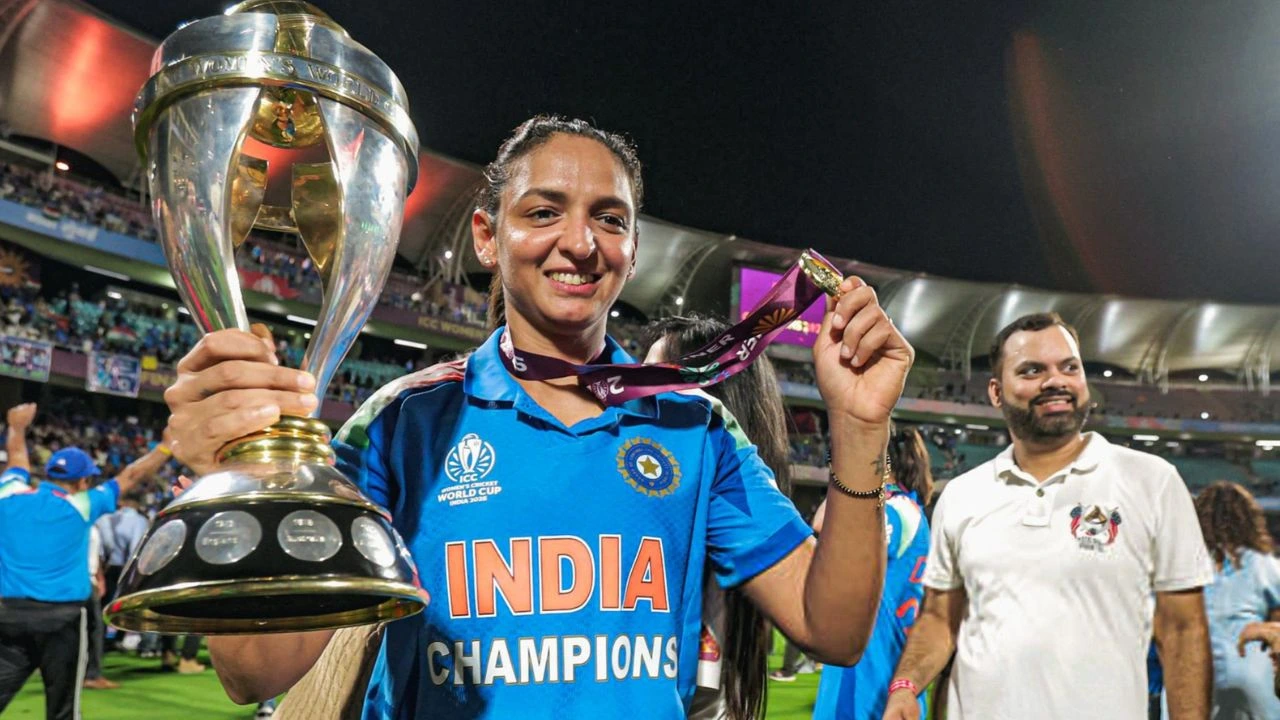
India won the 2025 ODI World Cup under her, added another Asian Games gold medal in 2026, and Harmanpreet herself still wants to play. She leaves after leading India in five Tests, 51 ODIs and 155 T20Is, having first taken charge of the T20I side in 2016 and later becoming the ODI captain after Mithali Raj‘s retirement. She has also become the most-capped player in women’s international cricket.
If this were a captain being moved on after a string of failures, the explanation would be easy. It isn’t.
Harmanpreet’s captaincy produced enough success to make that argument impossible, but also enough questionable decisions and disappointing tournaments to make a simple celebration feel dishonest. There are things she got right, things she got badly wrong and a few things that probably looked wrong only because we already knew the result. That makes judging her captaincy more interesting than simply looking at the trophies at the end.
The first thing that gets lost in all of this is how long Harmanpreet has actually been around.
She made her international debut in 2009, before women’s cricket in India had anything resembling the professional structure it has now. There was no WPL, no regular television exposure, no enormous domestic league feeding young players into international cricket. By the time she became captain, she had already spent years being one of the few Indian women capable of changing a match with the bat.
The 171 against Australia in the 2017 World Cup semi-final made that reputation permanent. India were in trouble, the match had been reduced by rain, Australia were the tournament favourites and Harmanpreet produced 171 not out from 115 balls. India reached the final. They lost it to England by nine runs. That innings eventually became part of the mythology around her career, but the defeat was important too because it established something that would follow her into captaincy: India could get close. They just couldn’t finish.
Harmanpreet was already India’s T20I captain by then, having taken the job in 2016, and by 2018 the leadership question had become much bigger than simply giving the armband to the next senior player. Her personality was part of the attraction. She wasn’t going to be a quiet captain who simply accepted whatever was happening around her. She wanted India to play aggressively and she was willing to make decisions that could upset senior players.
That sounds like a strength until one of those decisions goes wrong, which is exactly what happened in the 2018 T20 World Cup semi-final against England.
Mithali Raj was left out after scoring two half-centuries earlier in the tournament. India had beaten Australia in the group stage with a combination that did not include Mithali, so there was a cricketing argument for not changing a winning side. But India then collapsed to 112 and England won by eight wickets. Harmanpreet defended the decision afterwards, and later reports made it clear that the call had involved the captain, Smriti Mandhana, coach Ramesh Powar and selector Sudha Shah rather than Harmanpreet simply ordering Mithali out.
That matters when assigning blame, but it doesn’t make the decision immune from criticism. India had chosen combination over one of their most experienced batters in a knockout match and then watched the batting collapse. You can understand why they made the call and still think they got it wrong. I don’t see a problem with holding both views.
That became one of the recurring features of Harmanpreet’s captaincy.
Could Harmanpreet explain every decision, or were some simply wrong?
A decision could be perfectly explainable without necessarily being a good decision. India reached the 2020 T20 World Cup final after winning all their group matches, which was progress, but Australia destroyed them in the final and won by 85 runs. It was disappointing, but it wasn’t evidence that Harmanpreet had failed as captain. India had reached a final they had never reached before. The bigger problem was what happened afterwards. They reached the Commonwealth Games final in 2022 and lost to Australia again.
Harmanpreet made 65 in India’s chase, but she also brought herself on during Australia’s innings and conceded 17 runs in an over. Australia eventually won by nine runs. That over is fair to question because captains have to be judged on their tactical decisions, particularly in finals. But taking one over and pretending it explains why India lost would be just as lazy. Australia were good, India had moments where they could have closed the game and didn’t, and Harmanpreet’s own batting had actually given them a chance. The captain can be part of a defeat without being the whole explanation.
How much of India’s failures should really be placed on the captain?
The Mithali question became even more complicated after 2022 because Harmanpreet eventually had to become the person who inherited her team rather than simply the person waiting behind her. Mithali retired, Jhulan Goswami followed, and suddenly the two figures who had defined Indian women’s cricket for years were gone.
Harmanpreet took over the ODI captaincy, but she wasn’t inheriting a settled side. India had already gone out of the 2022 ODI World Cup before the knockout stage, and the team needed to find a way forward without the two senior players who had been central to it for so long. Smriti Mandhana was becoming more important, Deepti Sharma was developing into one of India’s most useful all-rounders, Richa Ghosh was emerging behind the stumps and with the bat, while players such as Jemimah Rodrigues and Shafali Verma were still trying to establish exactly where they fitted.
Harmanpreet’s job wasn’t simply to keep winning. She had to help move the team from one generation to another. That transition wasn’t perfect, but it wasn’t a disaster either, and I think that part of her captaincy often gets overlooked because it doesn’t produce a single memorable scorecard.
There was another side to Harmanpreet’s captaincy around this period that deserves more attention. When Deepti Sharma ran out Charlie Dean at Lord’s in 2022, the reaction became bigger than the match itself. England were angry, the debate around the dismissal went everywhere and Deepti suddenly found herself at the centre of a very uncomfortable conversation. Harmanpreet didn’t move away from it. She backed Deepti and made it clear that she stood by her player.
That matters because leadership is also about what you do when your player becomes the easiest person in the room to throw under the bus. Harmanpreet could have distanced herself from the decision and probably made life easier for herself. She didn’t. You can question plenty of her decisions as captain, but this was one of those moments where she understood exactly what being the captain was supposed to mean.
Then came the 2023 T20 World Cup semi-final, another match that tells us something uncomfortable about Harmanpreet. Australia made 172, India were struggling in the chase and Harmanpreet came in and started dragging the game back towards India. She scored 52 and had India in a position where the target was within reach. Then came the run-out, with her bat getting stuck in the ground as she slid towards the crease. India lost by five runs. There isn’t really a captaincy lesson to extract from that dismissal. It was bad luck. But there is a wider question because Harmanpreet was again the player India needed to rescue them.
For years, India had depended heavily on her ability to walk in when things were going wrong and change the game. That made her indispensable, but it also created a problem. A good captain eventually wants the team to stop needing the captain to rescue every difficult situation. By 2023, India were getting better at sharing responsibility, but they still hadn’t completely escaped that dependence.
And then came the one incident where I don’t think there is much room for defending the behaviour.
In the third ODI against Bangladesh in July 2023, Harmanpreet was dismissed, struck the stumps with her bat in frustration and then criticised the umpiring during the presentation. The ICC charged her with two separate breaches, she accepted the sanctions and received a two-match suspension. There was a legitimate argument that some of the umpiring had been poor. That doesn’t really alter the judgment on what Harmanpreet did. A player can be angry with an umpire. A captain can complain privately. Once the match is over, though, there is a responsibility to understand that the captain is representing the team. The subsequent tension around the presentation ceremony only made the episode uglier.
When does Harmanpreet’s aggression stop being a strength and become a problem?
This wasn’t Harmanpreet being unfairly criticised for showing emotion. She crossed a line. Her aggression is part of what made her such a dangerous player, but it also meant she sometimes had to learn the harder part of leadership, which is knowing when the fight is over.
India still won gold at the 2023 Asian Games, and took the team to the 2024 Women’s Asia Cup final, which meant Harmanpreet’s captaincy was already carrying a decent collection of trophies even before the biggest one arrived.
But the T20 World Cup in 2024 changed the conversation again. India lost their opening game to New Zealand by 58 runs, then beat Pakistan and Sri Lanka before losing to Australia. Harmanpreet scored an unbeaten 54 against Australia and almost dragged India through the chase, but the defeat left India needing help elsewhere and they failed to qualify for the semi-finals. This was probably the strongest moment for the argument that India needed a new T20 captain. Harmanpreet had been in the job for years, the team had repeatedly reached the business end of tournaments without winning one and the next generation was ready to take more responsibility. If the selectors had decided after that tournament that it was time to change the captain, it would have been perfectly reasonable.
They didn’t, and that decision now looks very different because Harmanpreet then led India to the 2025 ODI World Cup title. This is where outcome-based analysis becomes dangerous.
Was India right to retain her after the 2024 T20 World Cup?
Keeping her after 2024 turned out to work brilliantly, but that doesn’t mean the decision was obviously correct when it was made. India entered the 2025 World Cup and lost three league matches.
They needed to beat New Zealand to qualify for the semi-finals. Then they chased 339 against Australia, with Jemimah Rodrigues making 127 and Harmanpreet scoring 89. India went into the final and beat South Africa by 52 runs. Deepti Sharma took five wickets, Shafali Verma made a huge contribution and India finally won the women’s ODI World Cup for the first time.
Harmanpreet, who had spent years being reminded of the 171 and the defeat at Lord’s, finally had the trophy.
The World Cup changed Harmanpreet’s captaincy record, but it shouldn’t rewrite it. Winning the tournament proves that she was capable of leading India to the biggest prize. It doesn’t prove that leaving Mithali out in 2018 was correct. It doesn’t make the Commonwealth Games tactical calls correct. It doesn’t excuse Bangladesh. It doesn’t turn India’s 2024 T20 campaign into something it wasn’t. It simply means that after years of getting close, Harmanpreet eventually led a team that finished the job.
And the way India won matters because she wasn’t doing everything herself anymore. Jemimah took over the semi-final against Australia. Deepti became a central player. Shafali came into the side and made a huge impact. The team was finally capable of winning without waiting for Harmanpreet to produce another 171. In some ways, that might be the best evidence of her captaincy: the team she eventually led didn’t need her to be the entire team.
The WPL belongs in this discussion too because it gives us another version of Harmanpreet as captain. She led Mumbai Indians to the inaugural WPL title in 2023, which was hardly an irrelevant achievement. Franchise cricket isn’t international cricket and the comparison shouldn’t be forced, but the WPL gave Harmanpreet a different group of players, different pressures and a different kind of leadership responsibility.
It also changed the environment around Indian women’s cricket.
When Harmanpreet first became a senior player, young Indian cricketers had very few opportunities to play alongside international stars. By the time she was captain of Mumbai Indians, those young players were coming through a professional league and increasingly had their own voices. Harmanpreet’s role therefore had to change whether she liked it or not. She could no longer be the only senior player in the room who knew what international pressure looked like.
That becomes important when looking at her batting now. There was always an awkward relationship between Harmanpreet’s place in the XI and her captaincy.
When she was captain, removing her wasn’t simply a selection decision about a batter. It meant removing the leader as well. That made her position more protected than it would have been for an ordinary player, and that is something the selectors will now be able to avoid. Harmanpreet has said she still wants to play, and that is probably the healthiest way for the final part of her career to work. She can now be judged on what she contributes with the bat and ball rather than whether India still need her to make decisions. If she is good enough, she plays. If somebody younger is better, that player should play. Her past should count for experience, not automatic selection.
That is also why stepping down after the 2026 Asian Games shouldn’t automatically be described as an admission that her captaincy had run its course. India had just won another gold medal under her. She had already delivered the World Cup.
She remained one of the most experienced players in the squad. There was still a reasonable case for her to continue, particularly in ODIs and Tests where experience has a different value. The BCCI could have gone either way. Instead, the decision was to remove the captaincy across all three formats and leave Harmanpreet as a player. It is a cleaner transition, although whether it was necessary right now is something we’ll only know later.
The 2026 T20 World Cup belongs somewhere in that conversation as well. India had another difficult tournament, and once again the questions around Harmanpreet weren’t really about one tactical decision. There were problems with the balance of the side, the bowling and the way India handled pressure. That matters because Harmanpreet’s critics can easily make the same mistake her defenders make in the opposite direction: attaching every problem to the captain.
A captain doesn’t select every player, coach every skill and bowl every over. But when the same problems keep appearing, the leadership structure inevitably comes under examination. After the disappointment of 2024, India chose continuity. After another difficult T20 cycle, they chose change. You can disagree with the timing without pretending the decision came out of nowhere.
And this is probably where I would disagree with anyone who says Harmanpreet should have been removed much earlier simply because India kept losing knockout matches.
A captain isn’t judged only by how many finals she loses. If that were the case, the answer would always be to replace the person immediately after every disappointment, and eventually nobody would stay in a job long enough to build anything. Harmanpreet’s India needed time to move beyond Mithali and Jhulan. It needed younger players to become reliable international performers. It needed the WPL to change the depth of the system. It needed the players themselves to learn how to handle pressure. Harmanpreet was part of that process. She wasn’t solely responsible for it, but removing her after every bad tournament would have ignored the bigger transition happening around her.
At the same time, there were moments when a change would have been understandable. After 2024 was probably the clearest. India had failed to reach the semi-finals of a T20 World Cup, and Harmanpreet’s own T20 form had become part of the discussion.
If the selectors had handed the captaincy to somebody younger at that point, nobody could have reasonably said they were throwing away a winning formula. What happened next is what makes the decision difficult to judge. Harmanpreet went on to lead India to the ODI World Cup, which means the people who retained her can point to a huge reward. But that reward came in a different format and doesn’t prove that the T20 decision was right. This is the sort of thing that becomes very easy to distort when you already know how the story ended.
There is also a question about whether Harmanpreet’s captaincy sometimes became too personal. The Bangladesh episode suggests that it could. So did some of the public reactions after defeats. But there was another side to that personality. Players often need a captain who will stand in front of the criticism rather than disappear when things go wrong. Harmanpreet was generally willing to do that.
She defended selections she had been part of. She spoke about the team after bad defeats. She continued to put herself in situations where the criticism would come back to her. You can think she got some decisions wrong and still recognise that she did not run away from the responsibility.
Her record reflects all of that mess.
She has a World Cup title now, but she also has the 2020 final defeat. She has Asian Games gold medals, but she also has the Commonwealth Games final loss. She has the 171, but also the 2023 semi-final run-out. She has the World Cup-winning captaincy, but also the 2024 T20 World Cup group-stage exit. She has shown the ability to trust players and the ability to get things badly wrong. She has been a calming presence at times and the centre of controversy at others. None of those things cancels the others out, which is probably why trying to put her captaincy into one sentence has always felt a little silly.
And perhaps the biggest question now is what survives after the captaincy goes.
The next captain will inherit the World Cup-winning team, which sounds wonderful until you realise that it also means inheriting the expectation that India should win again. Harmanpreet inherited a side trying to prove it belonged among the best. The next captain inherits one that has already proved it can win the biggest trophy. That is a very different job. There is more depth, more professional cricket, more experience and more pressure. The next captain won’t have the excuse that women’s cricket in India is still finding its feet. Harmanpreet and the generation before her helped remove that excuse.
I don’t think Harmanpreet’s future should be treated as a ceremonial one either. She isn’t retiring, and that means she still has to earn her place. The interesting thing is that she can now finally do that without the captaincy hanging over every selection meeting.
What does Harmanpreet Kaur look like when she is no longer India’s captain?
If she scores runs, they will be Harmanpreet’s runs. If she doesn’t, there is no captaincy argument to protect her. If a younger player takes her place, that will be part of cricket rather than a referendum on whether India has betrayed one of its greatest players. For somebody who has carried so much responsibility for so long, that might actually be a useful way to finish.
Looking back at her captaincy, I find myself drifting back to the Mithali decision because it captures the whole thing. At the time, India had a reason. The combination had worked. The captain backed it. The team lost badly. Years later, we still argue about whether Mithali should have played. There isn’t a perfect answer because we never get to see the alternate match. The same is true of Harmanpreet’s decision to continue after 2024. It looked questionable. Then India won the ODI World Cup. Now it looks much easier to defend. But the fact that the eventual result was brilliant doesn’t mean the decision was obvious when it was made.
Harmanpreet made some very good calls. She made some poor ones. Some were collective decisions that got attached to her because she was the captain. Some mistakes were entirely her own. Some defeats had very little to do with her. And some of the biggest successes came because the players around her eventually became good enough to take games away from her and win them themselves.
That might be the most interesting thing she leaves behind. Harmanpreet spent years being the player India needed when a game was slipping away. By the end, India had enough players to rescue her instead. The World Cup was won without her needing to produce another 171. She doesn’t leave the captaincy with every question answered, and maybe that’s fine. Cricket rarely gives you that kind of ending anyway.
Now Harmanpreet Kaur has to find out what her career looks like when the armband is somebody else’s problem.
Also READ: Asian Games 2026: What did India really win in Nagoya beyond the medals?
Amar Pal Singh Bhalla is a sports writer covering cricket, football and tennis.
Based in India, he has followed the game for the last few years and writes
match analysis, previews and features for Beyond The Score