There was probably a point during this Asian Games final game against India when Sri Lanka realised this wasn’t going to be the kind of afternoon they had imagined.
I don’t know exactly when it happened because cricket doesn’t come with a little warning light saying you are now completely screwed, but somewhere between Smriti Mandhana getting to another milestone and India continuing to pile runs on, the final started slipping away from Sri Lanka. They had reached the gold-medal match, which should have been a big achievement in itself, and they were facing India again after losing the Women’s Asia Cup final earlier this month. So there was a chance here to change the story a little. Instead, India went about their business and by the time Sri Lanka finally got a look at the target, it was 216.
By then, I was wondering whether Sri Lanka needed a batting plan or someone upstairs to help them out.
That is what makes this result more interesting to me than simply saying India have won another gold medal. We already know India are good. They won gold in women’s cricket at the last Asian Games, just won another Asia Cup, and some of these players have been around long enough to have a few records next to their names.
Smriti Mandhana needed only 13 runs to become the first woman to reach 11,000 international runs, and she got there before eventually making 79 from 45 balls. Shafali Verma added 48, Richa Ghosh came in towards the end and nearly smashed her way to a fifty from 22 balls, and India finished with 216/3. India gave you three different batting performances in the same final. Sri Lanka, unfortunately, had to deal with every single one of them.
Mandhana’s 11,000 came and went almost like nothing. She needed 13 runs to get there, took ten balls to do it and then just kept batting. That is probably the strange thing about watching someone play for this long. A number that has taken years to build suddenly comes down to something as small as 13 runs, and then it is done. No big pause, no stopping the innings, nothing. She acknowledged it and carried on. She finished with another 79, which feels almost funny when you remember that the bigger story was already sitting there. 11,000 international runs. By now, Mandhana has reached the stage where even numbers like that can arrive in the middle of an innings and she just keeps going.
And then there was Shafali. I find her career slightly strange to watch because she is still young enough to be spoken about as the future of Indian cricket while simultaneously having enough international experience to feel like part of its present.
She made 48 off 29, got out two short of a fifty and then bowled a few overs too. India didn’t really need her to do anything crazy because Mandhana had already done most of the damage with the bat. And that is what makes this team so difficult to pin down. Someone can have a normal game and it doesn’t really hurt India because there is usually somebody else ready to take over. The openers do their bit, then someone from the middle order gets going. Even if the batting doesn’t quite click, the bowling is still good enough to make life difficult.
Sri Lanka could deal with one player having a good day. The problem was that India kept sending another one.
The score eventually reached 216/3, India’s highest women’s total at the Asian Games, and honestly, that was probably the point when the final started slipping away from Sri Lanka. They now needed 217, after spending the first innings watching India bat without giving them much of a break. And the bowling attack waiting for them had already spent the tournament making life difficult for the opposition. Still, you never completely write off a chase in 20 overs. One big partnership, a few boundaries and suddenly the whole thing can look different. For Sri Lanka, Chamari Athapaththu was the obvious person to start that. She has been doing that job for years, being the player everyone looks towards when Sri Lanka need something special. If she had gone off here, who knows, maybe the chase gets interesting. She made 29 from 21.
Once Athapaththu was gone, I think Sri Lanka’s chances disappeared with her. The wickets kept coming and the innings never developed into anything resembling a chase. Deepti Sharma took 3/6, the rest of India’s bowlers kept the pressure on and Sri Lanka were eventually bowled out for 69 in 15.4 overs. India won by 147 runs, their biggest victory by runs in women’s T20I cricket. That number is ridiculous enough, but the thing that bothers me about it as a writer is that if I simply tell you India won by 147, I have already given away most of the drama.
There wasn’t much drama. There was a final, and then there was India.
The thing is, Sri Lanka aren’t some terrible team either. If they were some weak side that had somehow found their way into a gold-medal match, you could just put it down to the gap in quality. But they had just reached the Women’s Asia Cup final against India. They beat Pakistan in the Asian Games semi-final. They have Athapaththu, they have experienced players and enough quality to beat plenty of teams outside India. The problem starts when they meet India in games like these. They lost the Asia Cup final by 72 runs, and now they have lost an Asian Games final by 147. Those are two very different defeats, but the pattern is hard to miss. And that makes you wonder if the gap between these two teams is bigger than it looks when you just look at the names.
Sri Lanka used to feel like a much more competitive side in these situations, and maybe that is part of why the current gap feels so strange. Chamari and Harshitha Samarawickrama have had to carry a lot of the batting responsibility for Sri Lanka, and when you watch Athapaththu walk back after making 29 in a final like this, you can understand why people keep wondering what this team will look like when she is no longer there. That isn’t meant as a prediction about when she will retire or a criticism of everything around her. It is simply the problem every team eventually has to face when one player has been carrying such a large part of its hopes for so long. Sri Lanka need to find a way of becoming less dependent on the same few names before that question becomes unavoidable.
That is probably the part India should enjoy most about this gold medal. The trophy is nice, obviously. Nobody is going to complain about another gold medal. But the more important thing for a team is reaching the stage where a bad day from one player doesn’t necessarily become a bad day for the team. India didn’t need Mandhana to score a hundred. They didn’t need Shafali to complete her fifty. Harmanpreet Kaur made 19, which would normally be an unremarkable score in a final, and India still reached 216. Richa came in late and smashed 49 from 22. Then Deepti bowled four overs and conceded six runs. You can prepare for one superstar. It becomes considerably harder when the superstar has an ordinary day and India still have enough around her to bury you.
And Richa’s innings is actually a good example of what I mean. She missed a deserved fifty by one run, but by the time she arrived, India already had the platform. She didn’t have to rescue anything. She just had to finish it, and she nearly took the whole thing away from Sri Lanka herself. 49 from 22 balls is the sort of innings that makes a bowling attack look like it has been asked to solve a completely different problem from the one it prepared for. Shafali started the damage, Mandhana kept it going and Richa finished the job. That is a pretty horrible combination to have to bowl against because there isn’t really a quiet period in the innings where you can breathe.
Maybe that is the uncomfortable part for Sri Lanka. They keep getting close enough to India to reach the final, which is actually a compliment. But once they get there, India keep making the distance between the two teams look enormous. There is a difference between being good enough to reach a final and being good enough to make the final competitive. Sri Lanka have shown the first. They still need to show the second against India, particularly when the stakes are highest.
Athapaththu won’t be around forever either, and that makes the question even more important. Sri Lanka can’t build everything around one player and hope that one day she produces something big enough to knock India over. They need more players who can change the shape of a match.
India, meanwhile, are becoming annoyingly difficult to surprise. Mandhana is past 11,000 international runs. Deepti keeps producing with both bat and ball. Shafali can change a game in either discipline. Richa is becoming increasingly dangerous at the back end of an innings. And then there are players like Harmanpreet, Jemimah and the rest of the bowling attack waiting to make things worse for whoever is on the other side.
There are still younger players coming through behind them, which means this isn’t even necessarily the final version of India’s women’s team. That is probably the part other Asian teams should be paying attention to. Beating India once is possible. Building a team capable of doing it regularly is a completely different project.
And this is becoming a slightly funny fixture to watch because India and Sri Lanka keep running into each other whenever an Asian tournament gets serious. There was the Asia Cup, then the Asian Games, and now it almost feels like these two are going to keep seeing each other whether they particularly want to or not.
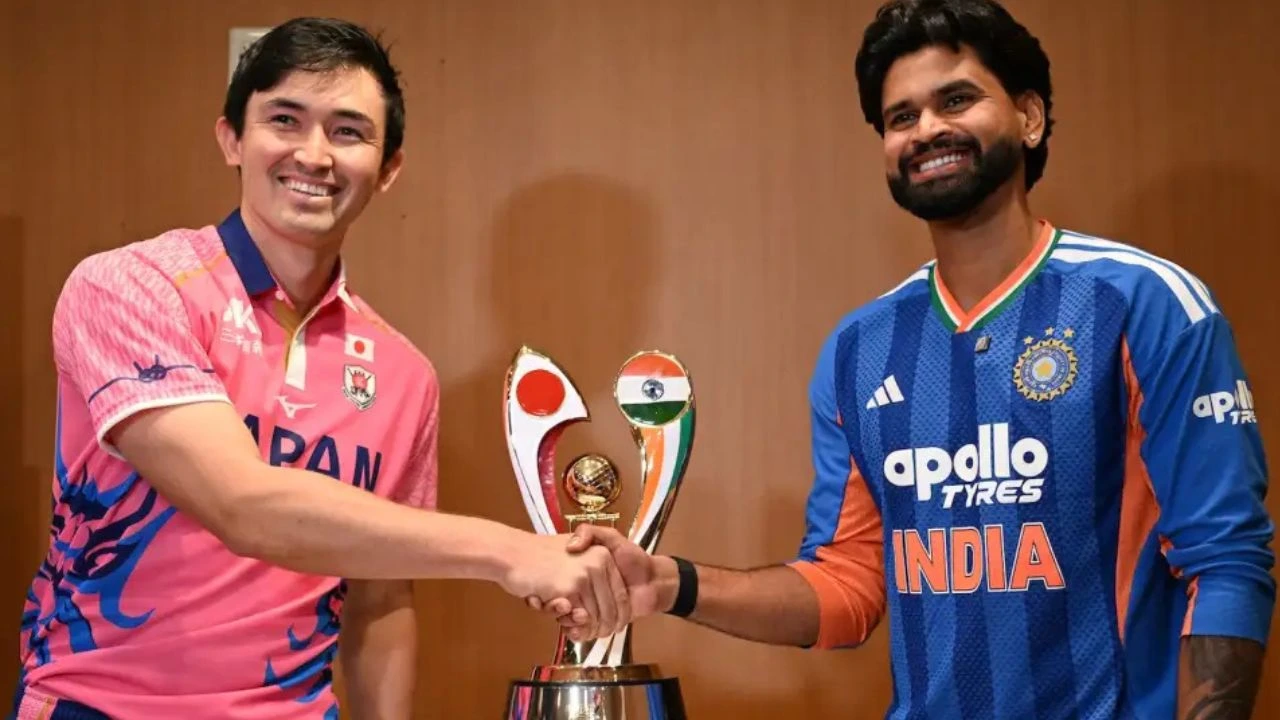
India-Japan in the men’s tournament felt unusual because you don’t see that matchup every week. India-Sri Lanka in women’s cricket is starting to feel like the complete opposite. We keep getting this game. Sri Lanka just haven’t found a way to make the familiarity count for much.
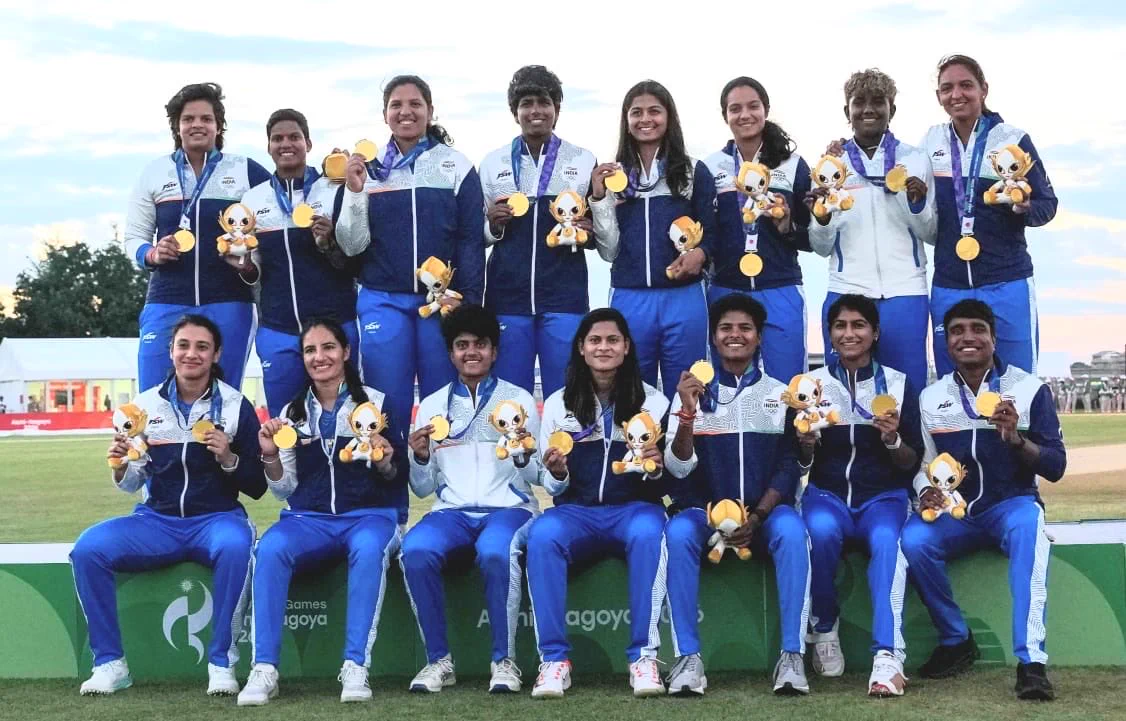
And perhaps that is why this Asian Games gold feels slightly different from a normal tournament win. India came to Japan as defending champions and leave with another gold medal, but the result has also reinforced something that has been developing for a while.
Women’s cricket in Asia is growing, more teams are becoming competitive and more players are getting exposure, but India are moving at a different speed. Sri Lanka can reach finals. Bangladesh can produce good sides. Pakistan can cause problems. There is talent everywhere. Yet when India get everything moving together, the gap can still become ugly very quickly.
There was another interesting little part of this whole tournament that I don’t want to ignore either.
The cricket being played in Japan has actually looked pretty good. The pitch in Tochigi surprised a few people who expected something much worse, especially after all the usual talk about what cricket would look like in a country where the sport is still developing. Instead, the surface allowed players to trust their shots and the match didn’t feel like it was being played on some experimental piece of ground. That matters because if Japan is going to keep hosting cricket and trying to build the sport, the basics have to look right first. You need people watching the game to think this belongs here.
I don’t think Sri Lanka should look at 69 all out and decide the entire project is broken. That would be as silly as looking at India’s 216 and deciding everything is perfect. T20 cricket can exaggerate differences.
A bad powerplay can wreck a chase. One brilliant innings can make a bowling attack look worse than it actually is. And there is a long way between one final and the next. Sri Lanka can point to all of that, but they also have to look at what happened here. They had 20 overs to chase 217 for Asian Games gold, and the chase was over before the 16th over. That’s more than simply losing a final. They had a chance to stay in the game, and it disappeared pretty quickly.
For Mandhana, there is at least one number she will take home that will probably matter long after the gold medal photograph is forgotten. 11,000 international runs. For India, there is another gold medal to add to the collection. For Sri Lanka, there is another final against India to think about. And maybe that is the more interesting story here, because they are going to keep getting another chance. They have enough quality to get there again. The question is whether, when they do, India will still be standing on the other side looking this comfortable.
Sri Lanka came for gold. India took it.
The nasty part is that, by the end, India made it look like Sri Lanka had never really come close to having it.

Amar Pal Singh Bhalla is a sports writer covering cricket, football and tennis.
Based in India, he has followed the game for the last few years and writes
match analysis, previews and features for Beyond The Score